
Last updated November 4, 2026
 Wrought iron
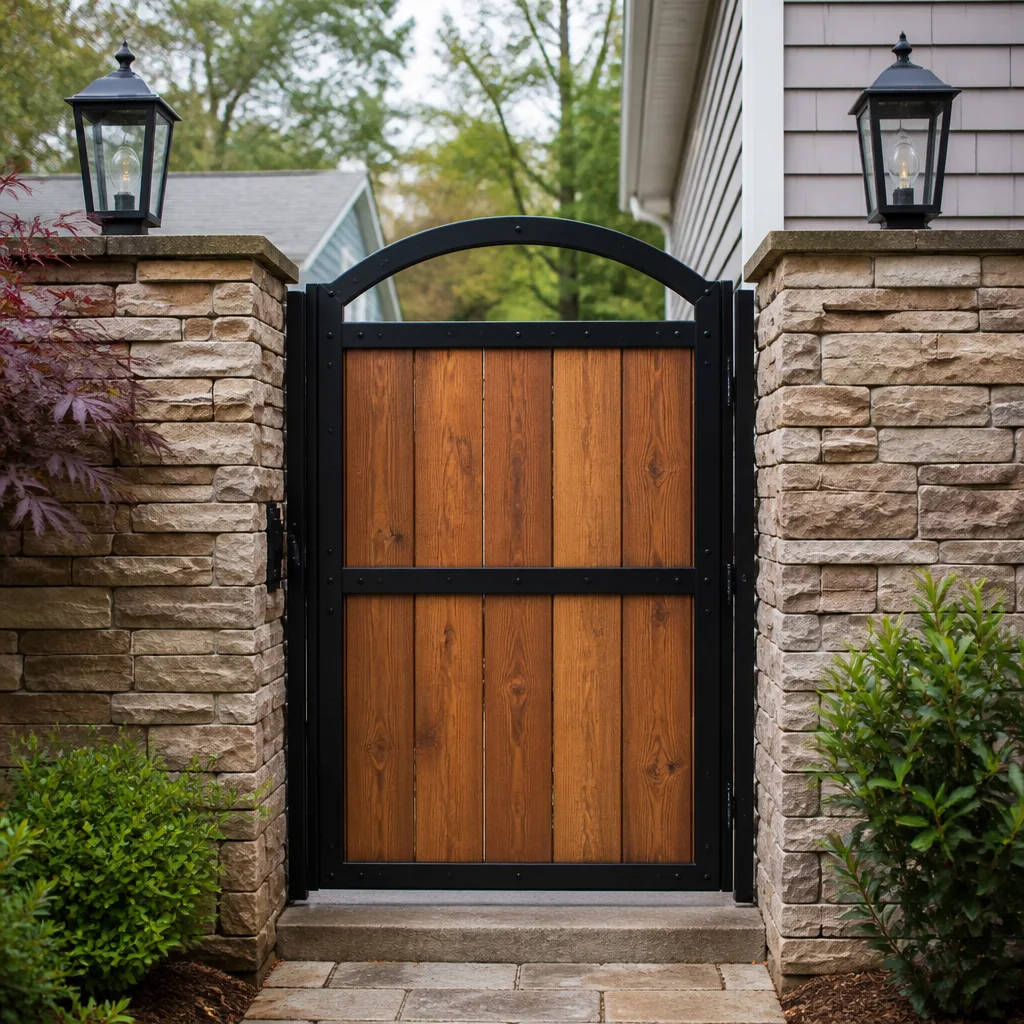 Wood & steel frame
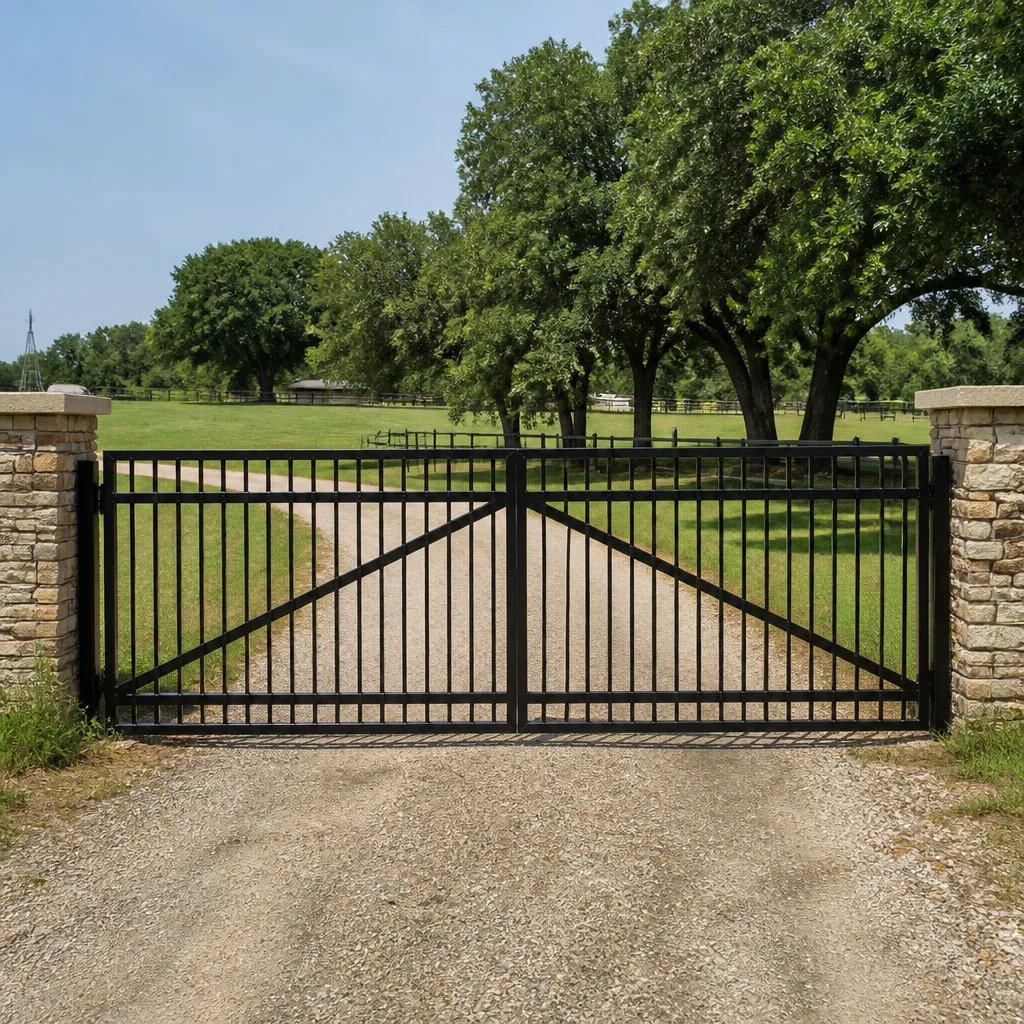 Farm & ranch
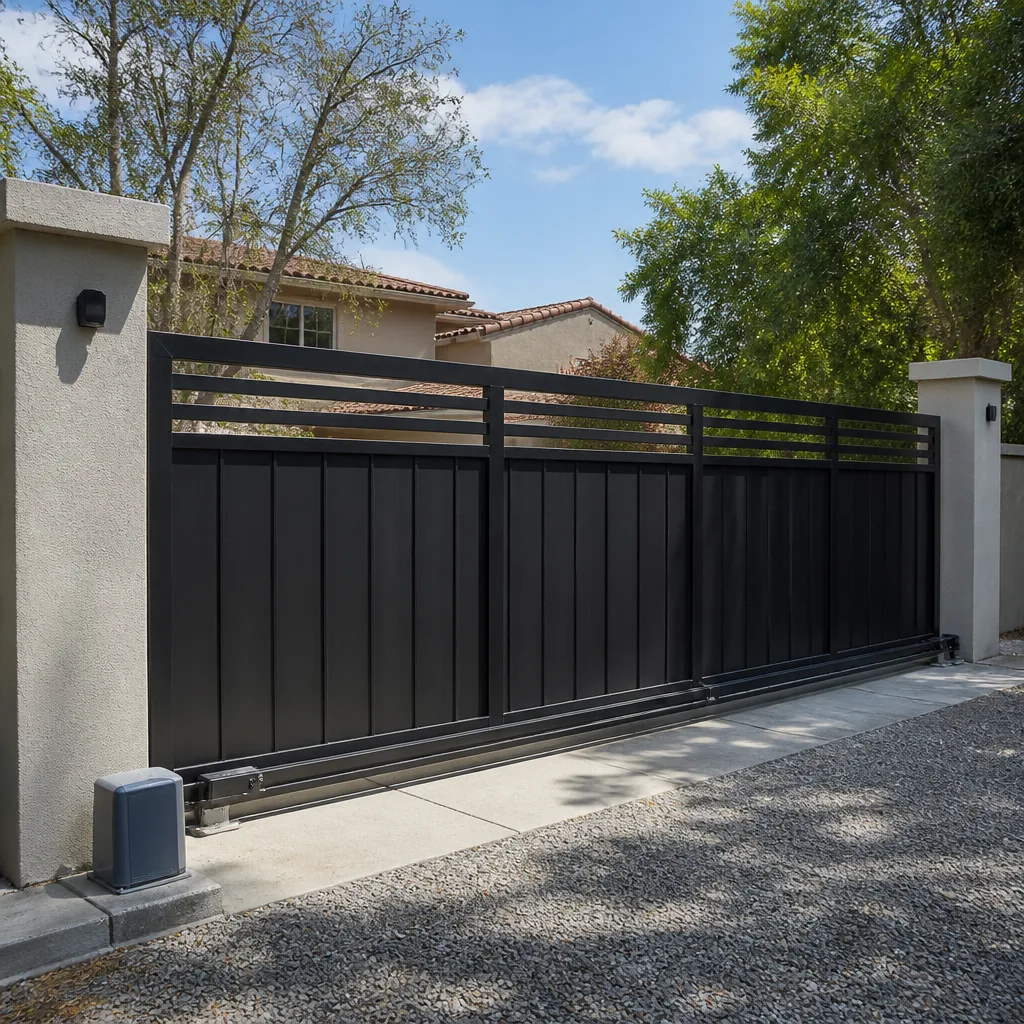 Sliding driveway gates
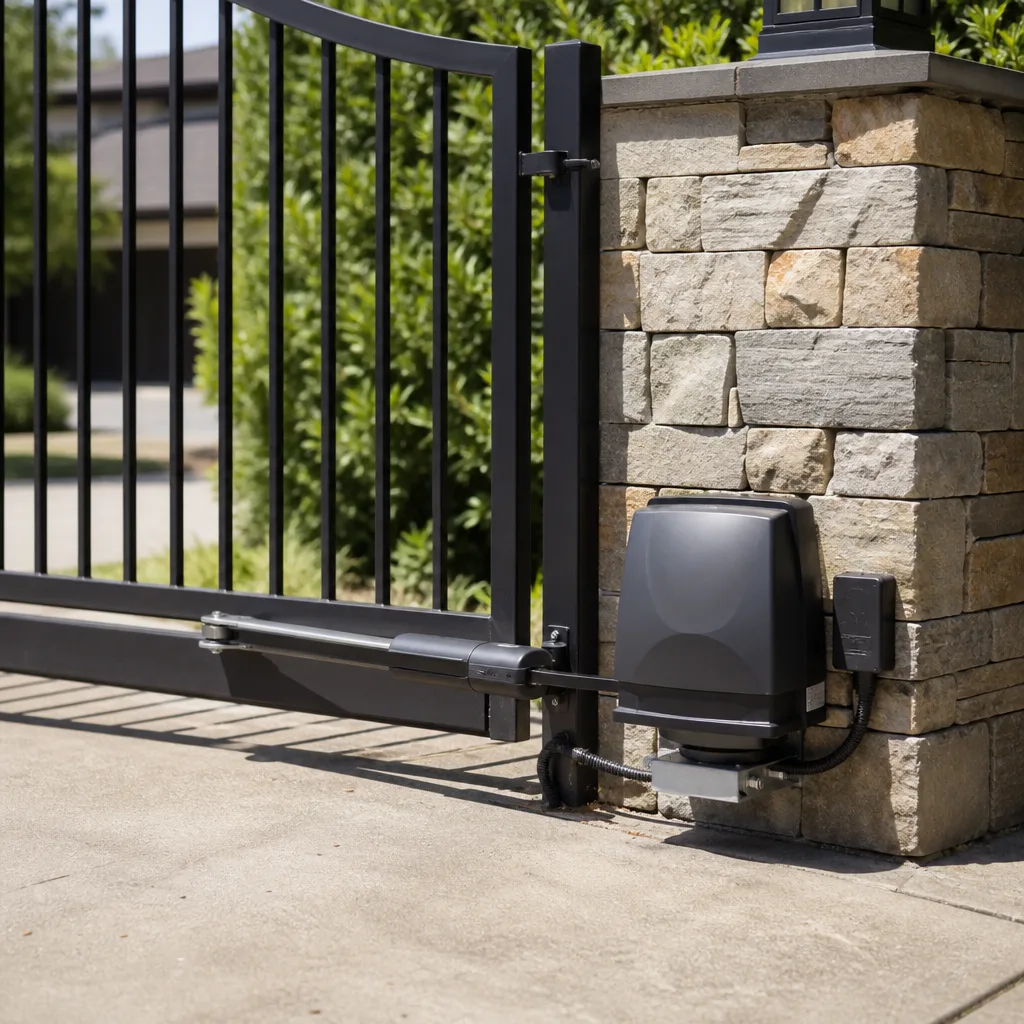 LiftMaster operators
Free on-site gate assessment - hinges, posts, and your LiftMaster or Nice gate operator checked before anything is quoted
The assessment is free and the quote is the invoice.
Get your free estimateSeasonal Gate Repair Care for Eastvale: Year-Round Homeowner’s Guide
The gate calls that spike in August aren’t from gates that broke in August. They’re from gates that were quietly failing in May, when nobody was looking. A hinge pin wearing against its bracket, a capacitor swelling inside the control board, a chain that’s stretched three millimeters past spec. These problems don’t announce themselves until the hottest week of the year, when expanded metal and tired motors finally give out at the worst possible moment. This guide explains how Eastvale’s actual climate pattern (two stress seasons, two repair windows) should shape your gate maintenance calendar. You’ll learn what to check in spring, what to adjust in summer, what to reinforce before Santa Ana season, and why winter is the smartest time for major repairs.
Quick Answer
Seasonal gate repair in Eastvale means preparing for two stress periods: peak summer heat (June through September) and Santa Ana wind season (October through December). The best times for proactive work are April through May and January through March. During those mild windows, you should lubricate moving parts with high-temperature grease, inspect hinges and limit switches, test all safety sensors, and adjust operator force settings before heat or wind pushes a marginal component past its limit.
Styles & brands we work with
- Wrought iron
- Wood & steel frame
- Farm & ranch
- Sliding driveway gates
- LiftMaster operators
Table of Contents
- Eastvale’s Climate Reality: Two Stress Seasons, Not Four
- Summer Prep (April – May): Lubrication That Survives 100°F
- Peak Heat Management (June – September): Speed, Force, and Hydraulic Fluid
- Santa Ana Wind Readiness (October – December): What Actually Fails in 60 MPH Gusts
- Winter Mild Season (January – March): The Repair Window Most Owners Miss
- Seasonal Operator Programming: Settings Most Owners Never Touch
- Residential vs. Commercial: Different Gates, Different Seasonal Risks
- What You Can Safely Check Yourself vs. What Needs a Technician
Eastvale’s Climate Reality: Two Stress Seasons, Not Four
Eastvale doesn’t get a New England-style freeze-thaw cycle or a Pacific Northwest rainy season. We get long dry stretches, afternoon temperatures that regularly cross triple digits from June into September, and the gusty northeast winds that arrive in the fall. That means gate components here fail differently than they do in other climates. Rubber seals crack from UV exposure and dry heat. Grease breaks down and liquefies, running out of hinge barrels and into places it shouldn’t be. Metal expands enough in July that a gate that swung fine in March suddenly scrapes its latch post.
Then come the Santa Anas. A sustained 60 mph gust will find every loose bracket, every tired weld, every chain with too much slack. This is the pattern we see across Eastvale neighborhoods from the newer subdivisions off Hamner Avenue to the equestrian properties on the north side. The gates that fail in wind season are almost always gates that weren’t inspected during the mild months.
Understanding this pattern changes how you maintain your gate. You don’t do the same thing every season. You prepare in spring, manage through summer, reinforce in fall, and replace in winter.
Summer Prep (April – May): Lubrication That Survives 100°F
April and May are your best window for proactive maintenance in Eastvale. Temperatures are mild, rain has mostly stopped, and there’s still time to catch problems before the July heat pushes them over the edge. The single most important task in this window is lubrication. But not just any lubrication.
Standard lithium grease, the stuff most homeowners have in the garage, starts breaking down around 300°F. That sounds like a lot, but the inside of a gate hinge sitting in direct Eastvale sun on a 105° day can reach 140 – 160°F before the gate even moves. Add friction heat from cycling and cheap grease thins out, runs down the hinge, and leaves the bearing surface dry. Worse, it migrates. Liquefied grease from a gate hinge can drip down into the operator motor housing, where it collects dust and eventually fouls the brushes.
Here’s the lubrication protocol that holds up through an Eastvale summer:
- Use a high-temperature bearing grease on hinge barrels and wheel bearings. Look for a grease rated to at least 400°F. These are typically lithium-complex or polyurea formulations. They stay put when ambient temperatures climb.
- Use a dry-film lubricant on slide-track channels and chain links. Wet lubricants attract dust, and Eastvale’s dry season means fine dust everywhere. A dry graphite or PTFE spray lubricates without creating a paste.
- Never spray WD-40 into an operator motor. It’s a solvent, not a lubricant. It strips existing grease and accelerates wear. We’ve taken apart enough burned-out motors to know this mistake well.
- Wipe excess lubricant from any surface where it can drip or migrate downward. If you can see a grease bead hanging under a hinge knuckle, that’s the bead that ends up inside your motor housing in August.
While you’re lubricating, run the full inspection loop: hinges for wallowed pin holes, wheels for flat spots, chains for stiff links, and the operator for any sign of oil seepage around the gearbox. If you find something questionable, this is the season to fix it before the heat makes it an emergency.
Peak Heat Management (June – September): Speed, Force, and Hydraulic Fluid
When Eastvale crosses into consistent 95°+ days, metal expands. Gate frames grow slightly in every dimension. Rails that are bolted to fixed posts can’t grow at the same rate as the gate leaf, so clearances that were comfortable in May get tight in July. Your gate operator senses this extra resistance and compensates by drawing more amperage. Run that way for weeks and you shorten the life of the motor, the gearbox, and the control board.
There are three adjustments that matter during peak heat:
- Force settings: Most residential operators (Ghost Controls, Mighty Mule, and similar) have adjustable force dials on the control board. If your gate was installed with the force dial at 60% and it’s now stalling at 60% because expanded metal creates more friction, you have two choices: fix the mechanical clearance issue, or turn up the force. Turning up the force is a temporary bandage. The proper fix is grinding or shimming the latch or re-aligning the track so the gate moves freely at ambient temperature. A technician can do this in an afternoon.
- Speed settings: On operators with adjustable speed (Elite and DoorKing commercial units typically have this), slower is better during heat waves. A gate moving at high speed carries more momentum into its stops, and that impact stress is magnified when both the gate and its hardware are heat-expanded. Slowing the gate 10 – 20% during summer reduces wear without any real-world inconvenience. It also reduces the chance that a heat-stiffened wheel or hinge causes the operator to trip its force sensor and reverse mid-cycle.
- Hydraulic operators: If your gate runs on a hydraulic operator (common with Viking and FAAC systems), heat changes how the hydraulic fluid behaves. Hot fluid is thinner, which means cycle times can change slightly and the gate may drift past its limit switch. Check that the gate fully closes without slamming and that limit switches are still stopping it at the right points. If you notice a mid-summer change in how the gate sounds or moves, the fluid is often the culprit.
One more thing about Eastvale summers: the sun is unforgiving on control boards. Outdoor operator enclosures in direct sun can get hot enough to shorten capacitor life. If your operator box faces west with no shade, consider an insulated cover or a shade panel. It’s a small change that prevents mid-August board failures.
Santa Ana Wind Readiness (October – December): What Actually Fails in 60 MPH Gusts
Santa Ana winds are a different animal entirely. A 60 mph gust doesn’t just push on the gate. It pushes on the operator bracket, the hinge posts, the latch hardware, and every weld in the frame. If any of those connections is already loose, the wind will find it. We’ve watched this pattern repeat every fall across Eastvale: the calls that come in during wind season are rarely about motors. They’re about gates that tore loose from their tracks, gates that bent at a weak weld, and gates that crushed an unbraced post.
Here’s what to check before the first big wind event of October:
- Post anchors: A gate post should not move when you push on it with full body weight. If the post rocks at all, the footing is compromised. In Eastvale’s sandy loam soil, posts can loosen over time even without wind. A loose post is a safety hazard, not a cosmetic issue. A heavy gate coming off a failed post can damage vehicles, fencing, or people.
- All bracket bolts: Check the operator mounting bracket, the hinge bolts, and the latch striker. Use a wrench, not just your fingers. Bolts can look seated and still be a quarter-turn loose. Wind-driven vibration will finish the job of backing them out.
- Chain tension: Chain-drive gates (common on commercial installations) need proper tension. Too much slack and wind buffeting can bounce the chain off the idler sprocket and jam the gate. Too much tension and you’re loading the bearings when the metal expands in afternoon sun. Check tension in the morning, before heat expansion changes your reading.
- Track alignment on slide gates: Slide gates depend on their rail being perfectly straight. Wind loading on a solid gate panel puts lateral force on the rollers. If your slide gate screeches or binds during normal operation in November, something has shifted. Don’t force it. A gate that comes off its track under wind load is a major hazard.
- Safety edges and photocells: The same gust that pushes a gate can blow debris into the photoelectric beam path. If your gate suddenly refuses to close or reverses unexpectedly during a wind event, check the photocells first. The safety edge on the leading edge of the gate also needs to be intact and sending a signal. A torn safety edge under wind conditions means the gate might not stop when it should.
For gates on exposed north-facing lots or properties without a wind block, reinforcing the latch with a drop-bar or magnetic lock is worth considering. The magnetic lock hardwired into the gate operator is a clean solution for residential driveway gates that get hit hard by Santa Anas. It holds the gate leaf solidly against the latch post so wind can’t push it around enough to trip sensors.
Winter Mild Season (January – March): The Repair Window Most Owners Miss
Eastvale winters are mild. Daytime highs in the 60s and 70s, overnight lows rarely below freezing. That’s a gift for gate maintenance. It means you can do major work in January and February without fighting weather. Motor replacements, hinge rebuilds, post repairs, and concrete work all go faster and set better in cool dry weather than in the summer heat.
Most homeowners only call a gate company when something breaks. Property managers are the ones who figured out long ago that winter is the season for scheduled work. They plan motor replacements in January, hinge and wheel work in February, and full operator upgrades in March. By the time summer hits, the equipment is fresh.
Here’s why winter scheduling matters, specifically for electric gate repair jobs:
- Concrete sets properly: Post footings poured in July can cure too fast, weakening the final strength. January concrete cures slowly and evenly.
- Technicians have more flexibility: The emergency calls don’t spike in winter. We can schedule full-day jobs like motor swaps and control board replacements during January and February without rush.
- Parts availability: Distributors restock after the holidays. That Viking hydraulic pump or DoorKing control board you need is more likely to be on a shelf in January than in August when everyone’s ordering the same part for heat-stressed systems.
If your gate is aging or you’ve been nursing a recurring problem, book the repair during January through March. You’ll get faster scheduling and your gate will be solid before the first heat wave hits. If the gate is holding up but the operator is over eight years old, winter is also the smart time to budget and schedule a motor replacement rather than waiting for a failure.
Seasonal Operator Programming: Settings Most Owners Never Touch
Modern automatic gate operators have more adjustability than most owners realize. Ghost Controls, for example, builds adjustment parameters into its residential openers that a lot of installers set once at initial install and never touch again. On commercial systems from DoorKing and Viking, the on-board diagnostics can tell you exactly how many cycles the gate has run and whether the current draw has been increasing over time (a classic early sign of a mechanical issue).
Two seasonal programming adjustments are worth doing in Eastvale:
- Auto-close timing: During Santa Ana season, you may want to lengthen auto-close delay so the gate doesn’t start closing while a gust is still pushing on the panel. Conversely, during summer you may want a shorter delay if you’re running air-conditioning and want the gate closed behind every vehicle. This is a two-minute adjustment on most boards.
- Force feedback sensitivity: Most operators store force thresholds and can display a current draw reading during operation. Seasonally checking this reading tells you if the gate is working harder than it should be. On an Elite or DoorKing commercial unit, you can compare mid-summer readings against winter baselines. An upward creep in current draw across seasons is the earliest warning of a bearing failing or a wheel flattening.
An experienced gate technician can reprogram these settings seasonally, but many owners handle the basic auto-close timing themselves by following the operator manual. The important thing is knowing that the settings exist. If your gate has been running the same since installation day, it’s leaving performance on the table. It’s also more likely to fail in the specific way that seasonal adjustment would have prevented.
Residential vs. Commercial: Different Gates, Different Seasonal Risks
Residential and commercial gates fail differently when stressed. Homeowners in Eastvale tend to have swing gates on steel or aluminum frames with residential operators from Ghost Controls, Mighty Mule, or Elite. Those systems are sensitive to hinge wear and heat expansion more than anything else. The operator is usually the weakest link: a residential DC motor doesn’t have the duty cycle for a long summer of high-friction operation. Residential operators also have smaller transformers, which means a minor voltage drop on a hot afternoon can shut down the whole board.
Commercial properties and HOAs in Eastvale often run slide gates or barrier arms with operators from DoorKing, Viking, FAAC, or BFT. These systems are built for high cycle counts, but they have their own seasonal failure modes. Slide gates suffer from track contamination during dry dusty months, which increases roller friction and puts more load on the drive sprocket. Barrier arms take a beating in Santa Ana winds, especially if they’re full-length and unbraced. Commercial operators also run on three-phase power in some cases, which means heat-related voltage fluctuations are a real concern in July and August.
If your Eastvale HOA or commercial property has a gate that cycles more than 50 times a day, seasonal inspection isn’t optional. It’s the difference between scheduled downtime in February and an emergency failure on an August afternoon with traffic backed up onto the street.
What You Can Safely Check Yourself vs. What Needs a Technician
We believe homeowners should understand their gate systems. At Gate Repair Eastvale, we’d rather have customers who notice problems early. But there’s a line between informed maintenance and unsafe DIY. Gate operators contain capacitors that hold a charge even after power is disconnected. Heavy gate panels can crush. High-tension chains and springs can release suddenly. If you’re not sure, don’t guess.
Here’s what a homeowner can safely do on a seasonal basis:
- Lubricate hinges, wheels, and chains with the right products, as described in the summer prep section.
- Visually inspect for loose bolts, cracked welds, rust blooms, or rubber seals that are cracked or missing.
- Test the safety features: block the photocell with your hand while the gate is closing (it should reverse or stop) and press the safety edge if present.
- Listen for changes in the operator’s sound. A new grinding, squealing, or rhythmic thumping noise is diagnostic gold for a technician.
Here’s what you should leave to a professional:
- Anything involving the control board, the capacitor, or mains voltage wiring. Electric gate systems carry lethal current.
- Adjusting force or limit settings on commercial operators. A wrong limit adjustment can allow a slide gate to over-travel and come off its rail.
- Hydraulic fluid changes or bleeding on Viking or FAAC systems.
- Any repair that requires lifting or supporting a gate panel. Gate panels are heavier than they look, and a dropped panel can cause serious injury.
Common Mistakes to Avoid
- Lubricating with the wrong product and creating a dust magnet. Wet oil on a chain in Eastvale’s dry summer becomes grinding paste within a month. Use dry-film lubricant on anything that runs in a channel or over a sprocket.
- Ignoring a gate that’s suddenly louder or slower. Gates don’t get better on their own. A change in sound or speed is the earliest warning of a mechanical problem. By the time the gate stops working entirely, the repair is always more expensive.
- Waiting until a Santa Ana warning to check the gate. By the time the National Weather Service issues a wind warning, it’s too late to schedule a proactive fix. The October inspection window starts in late September.
- Asssuming no seasons means no maintenance. Eastvale’s mild winters create a false sense of security. Mild doesn’t mean stress-free. It means the stress is concentrated in two windows, and if you miss those windows, you’re reacting instead of preparing.
- Turning up the force setting every time the gate stumbles. Higher force masks a mechanical problem until the operator fails. If your gate needs more force to do the same job, the gate is telling you something. Fix the mechanical issue.
- Mixing hardware on a repaired gate. A new hinge on one side and a worn hinge on the other creates an uneven wear pattern that will destroy the new hinge early. If one hinge is worn out, inspect all of them. The same goes for wheels and rollers.
See the difference
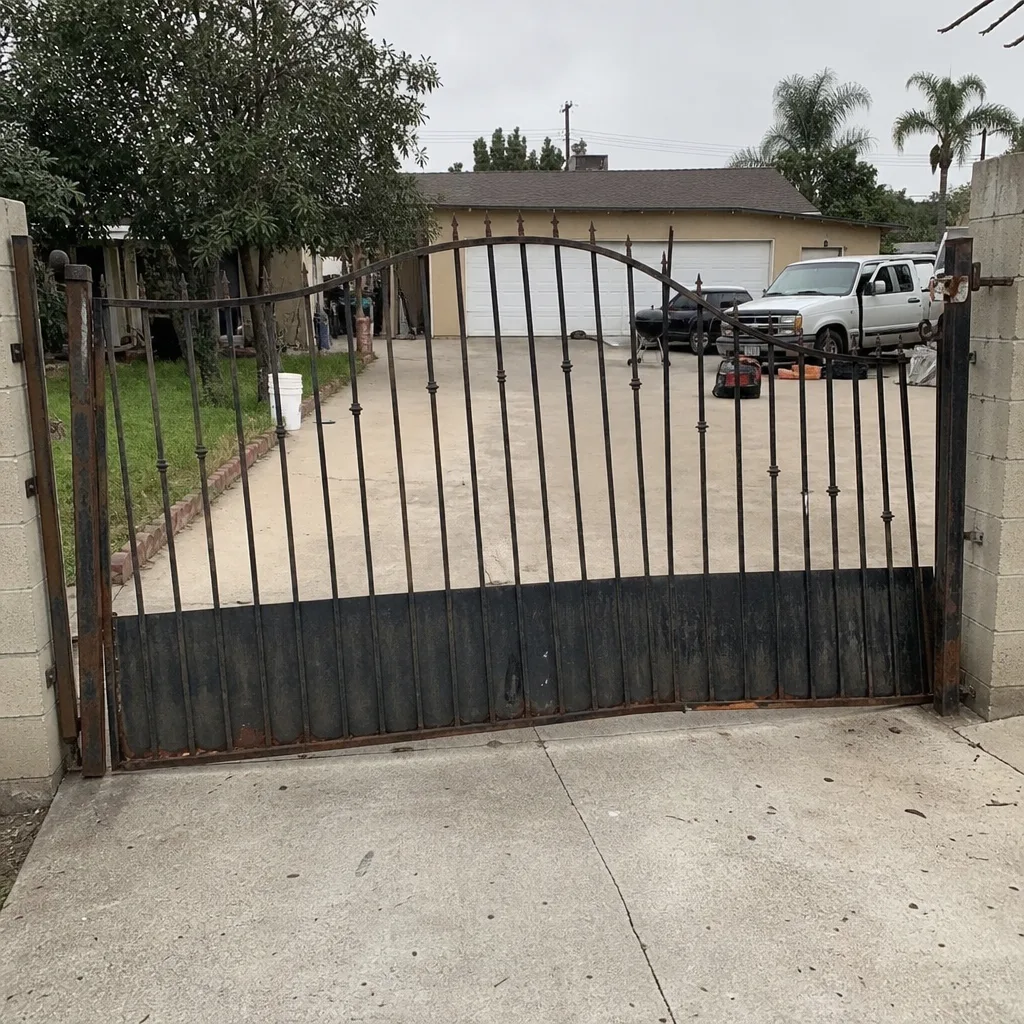 Before
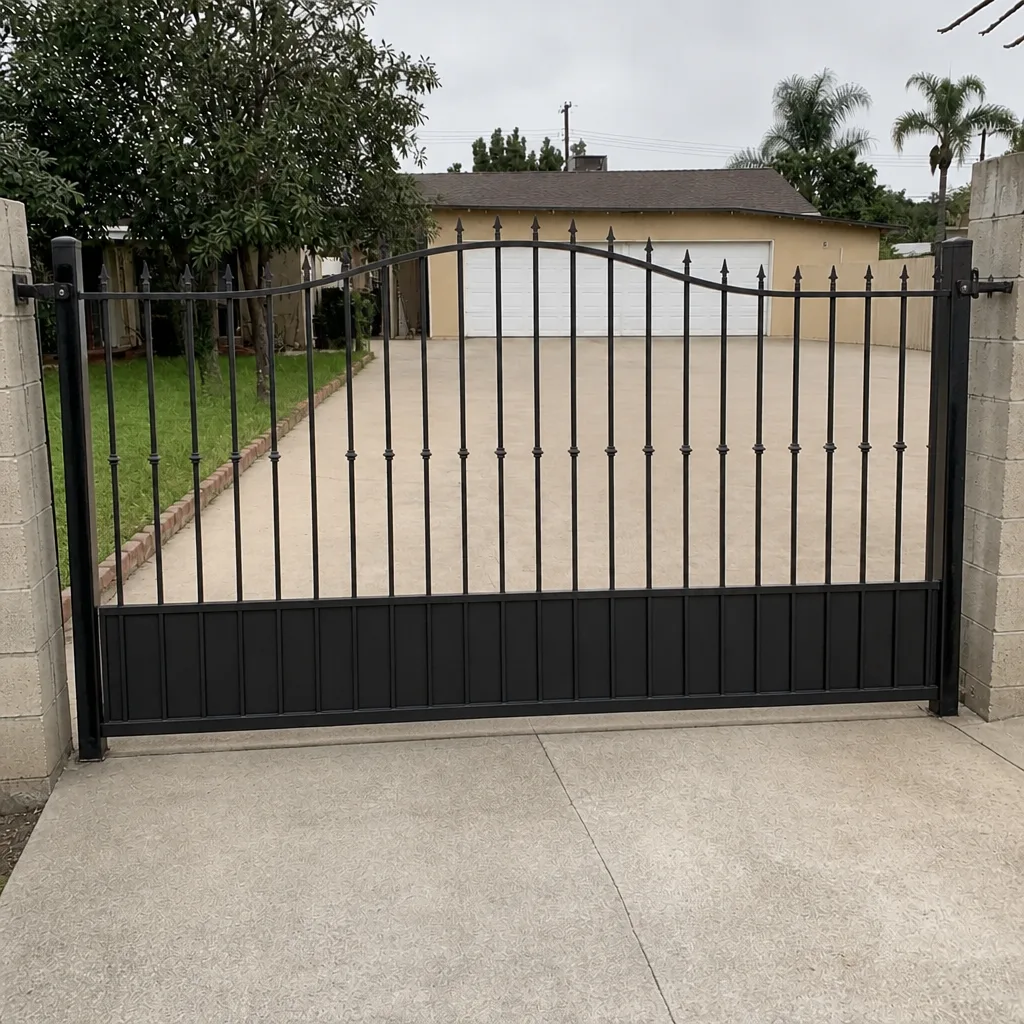 After
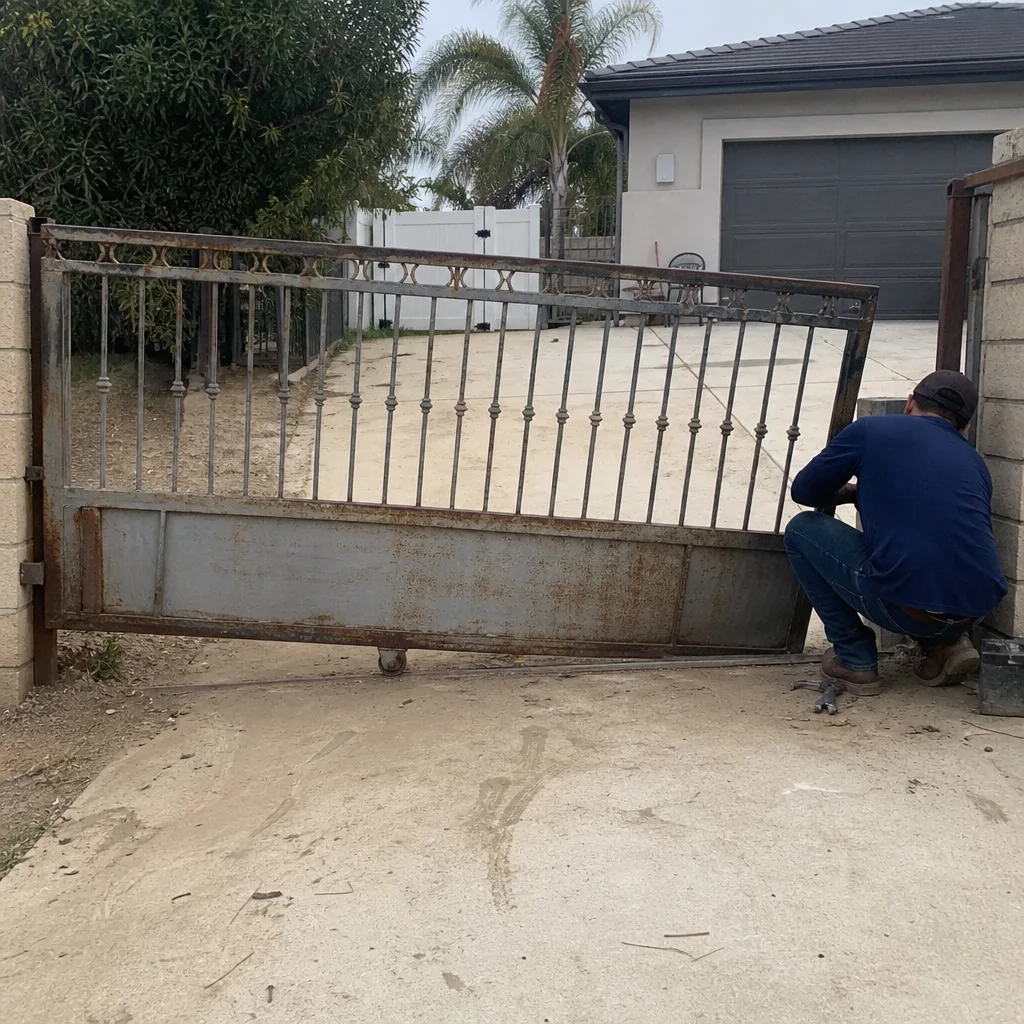 Before
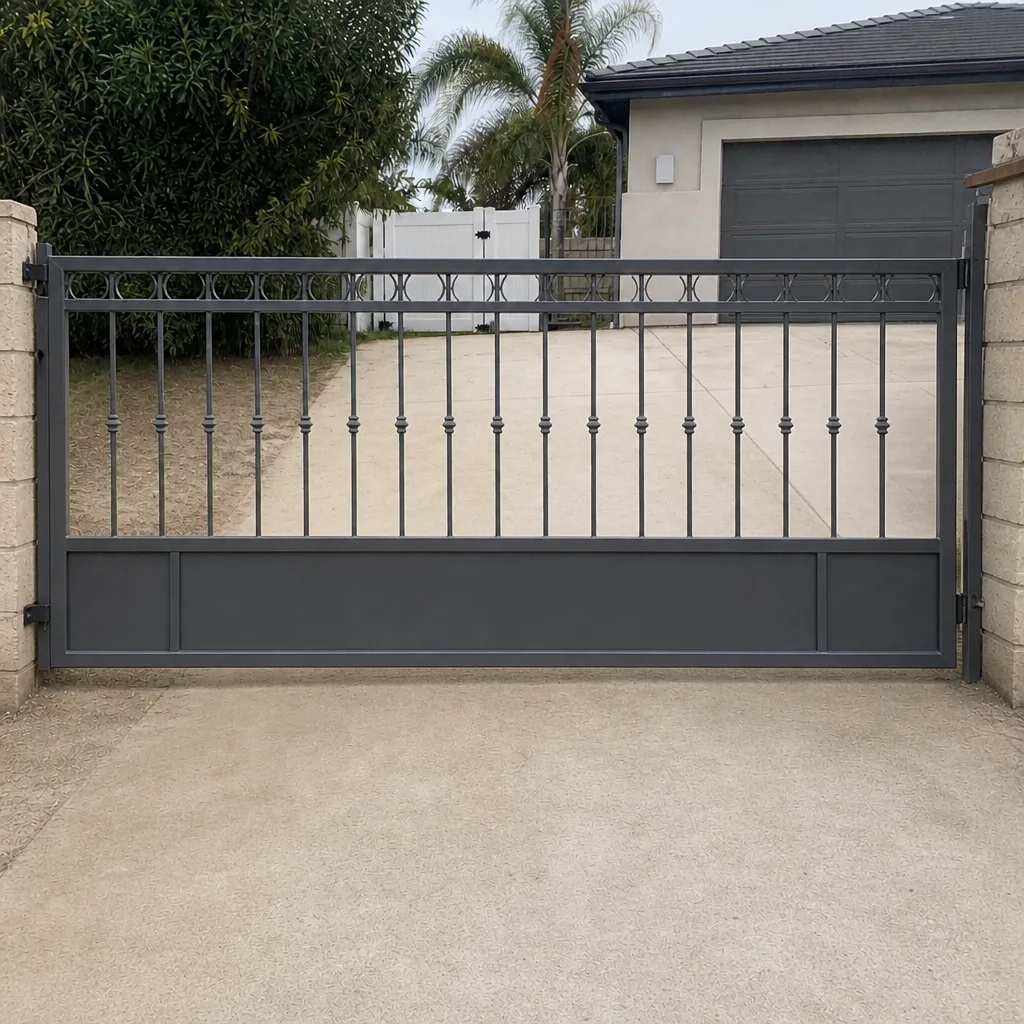 After
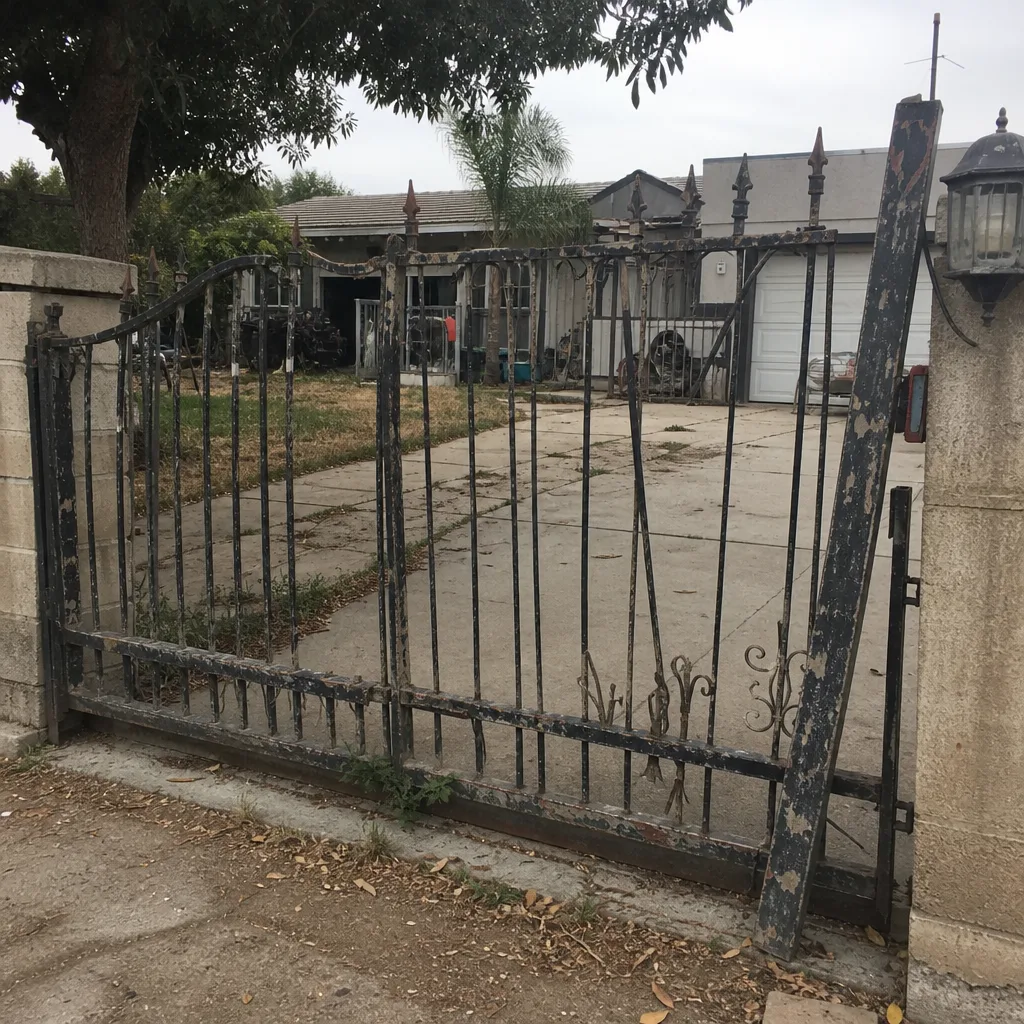 Before
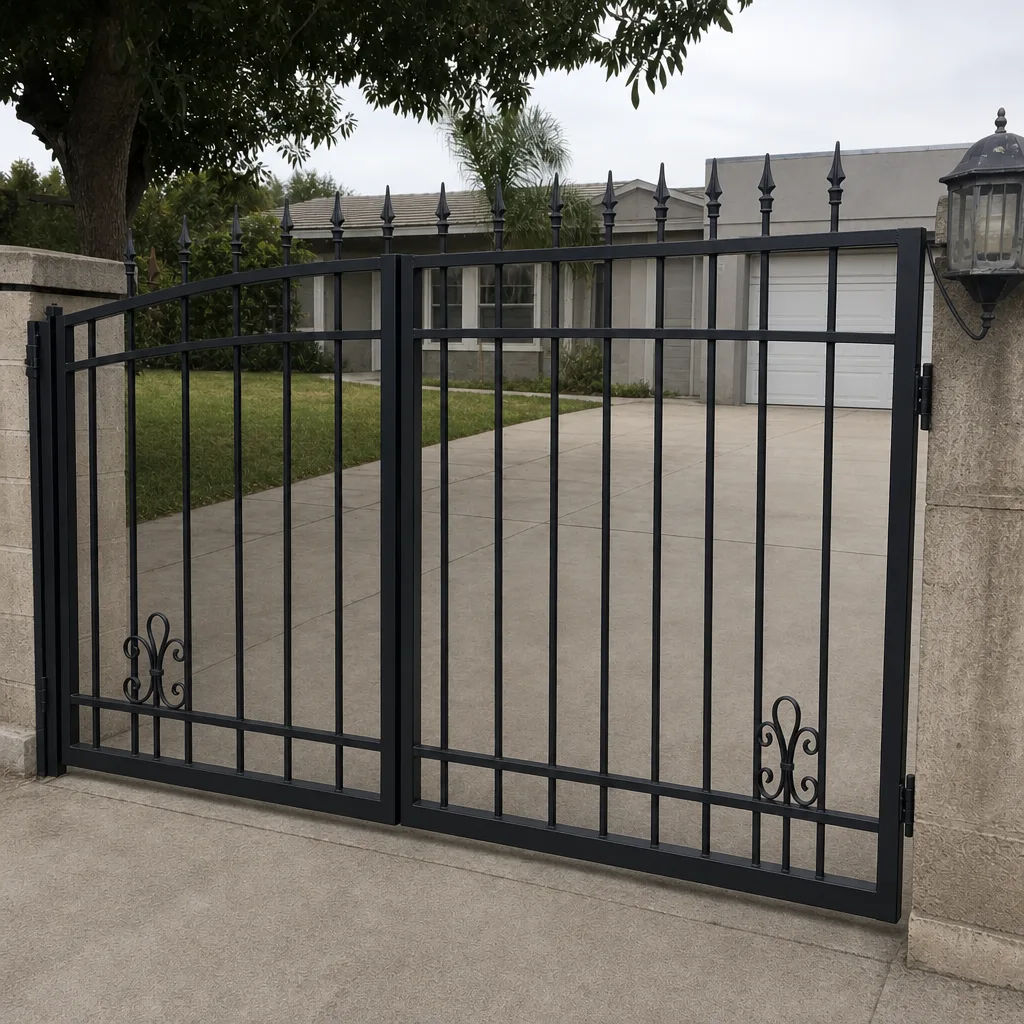 After
When to Call a Professional
Call a specialist when the gate has come off its track, when the operator makes a grinding noise, when the gate fails to stop or reverse on obstruction, or when you’ve repaired the same problem more than once in six months. These conditions are symptoms of deeper issues that a general handyman often lacks the equipment to diagnose.
Gate Repair Eastvale offers free estimates in Eastvale. We work on LiftMaster, FAAC, BFT, Linear, Viking, Ghost Controls, DoorKing, Elite, and Mighty Mule systems. From the motor to the hinge, we diagnose the whole gate. Call (855) 601-8166.
Frequently Asked Questions
A gate in Eastvale should be inspected at least twice a year: once in April or May before summer heat, and once in late September before Santa Ana wind season. Commercial gates with high cycle counts should be inspected quarterly, including a current-draw check on the operator.
January through March is the ideal window for motor replacements in Eastvale. Cool dry weather makes the work faster, scheduling is more flexible, and parts availability is better than during summer emergency season. Call (855) 601-8166 for a free estimate on your replacement.
Sustained 60+ mph gusts can damage gates by loading the panel, the hinges, and the operator bracket. Loose bolts, tired welds, and weak post footings are the components that fail first. Inspect before October rather than after the first wind event.
During summer heat, your gate may need slower speed settings, adjusted force sensitivity, and high-temperature lubrication to compensate for expanded metal and thinned hydraulic fluid. The specific adjustment depends on your operator brand. Call (855) 601-8166 for a free estimate on seasonal adjustment service.
No. WD-40 is a solvent, not a lubricant. It displaces grease and leaves the metal dry, which accelerates wear on hinges, wheels, and chains. Use a high-temperature bearing grease on hinge barrels and a dry-film lubricant on chains and slide tracks.
We work on LiftMaster, FAAC, BFT, Linear, Viking, Ghost Controls, DoorKing, Elite, and Mighty Mule systems. Residential or commercial, we’ve seen that system before. Call (855) 601-8166. We answer 24/7. Fast dispatch from 7am to 7pm, Sunday through Friday.
The Bottom Line
Eastvale gates fail on a seasonal schedule, and knowing that schedule is your best defense. Prepare in April and May with proper high-temperature lubrication and full mechanical inspection. Manage the June-to-September window by adjusting operator settings and monitoring for heat-related friction. Reinforce before Santa Ana season by checking posts, brackets, chains, and safety features. Use the mild January-to-March window for major repairs like motor replacements and post work. A gate that gets seasonal attention will outlast one that gets ignored until it fails. If you want a professional seasonal inspection on your Eastvale property, call (855) 601-8166 for a free estimate.
Written by the team at Gate Repair Eastvale, serving Eastvale since 2014.