
Last updated November 4, 2026
 Wrought iron
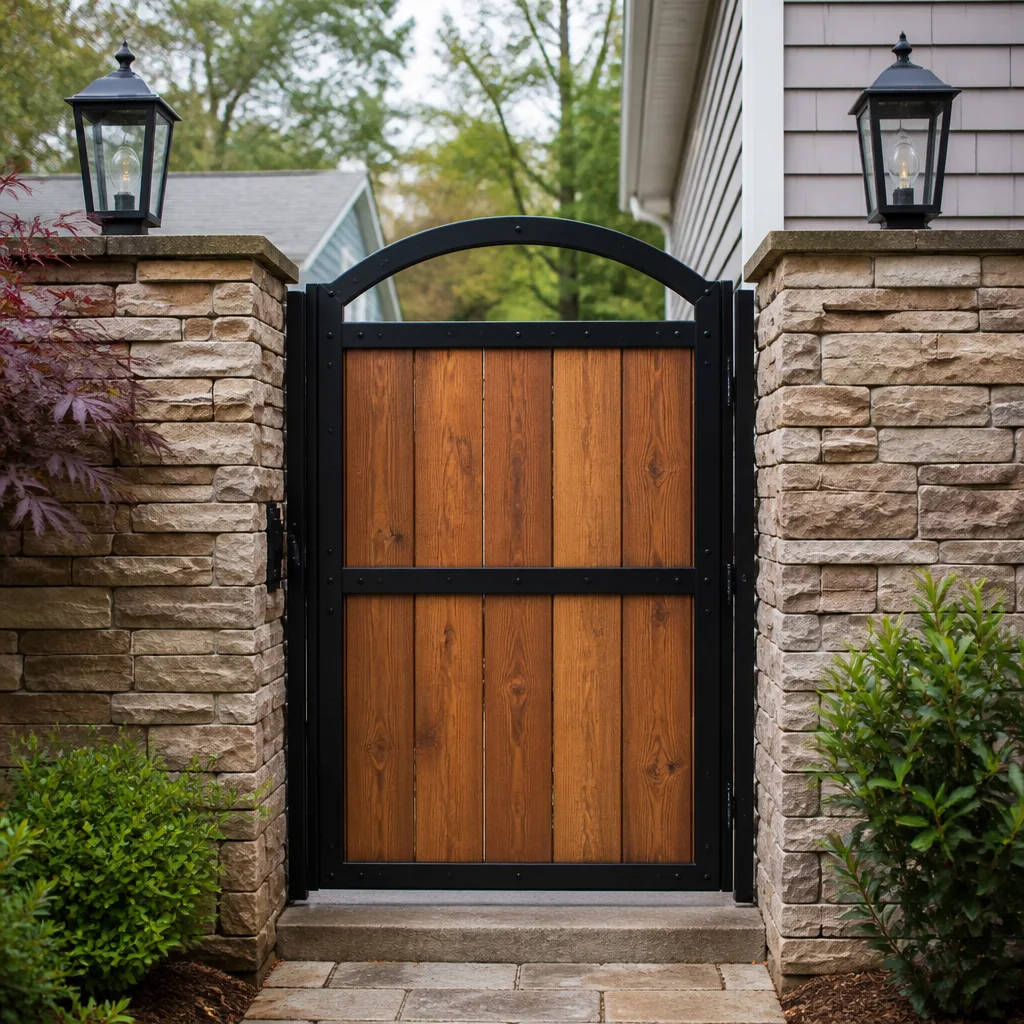 Wood & steel frame
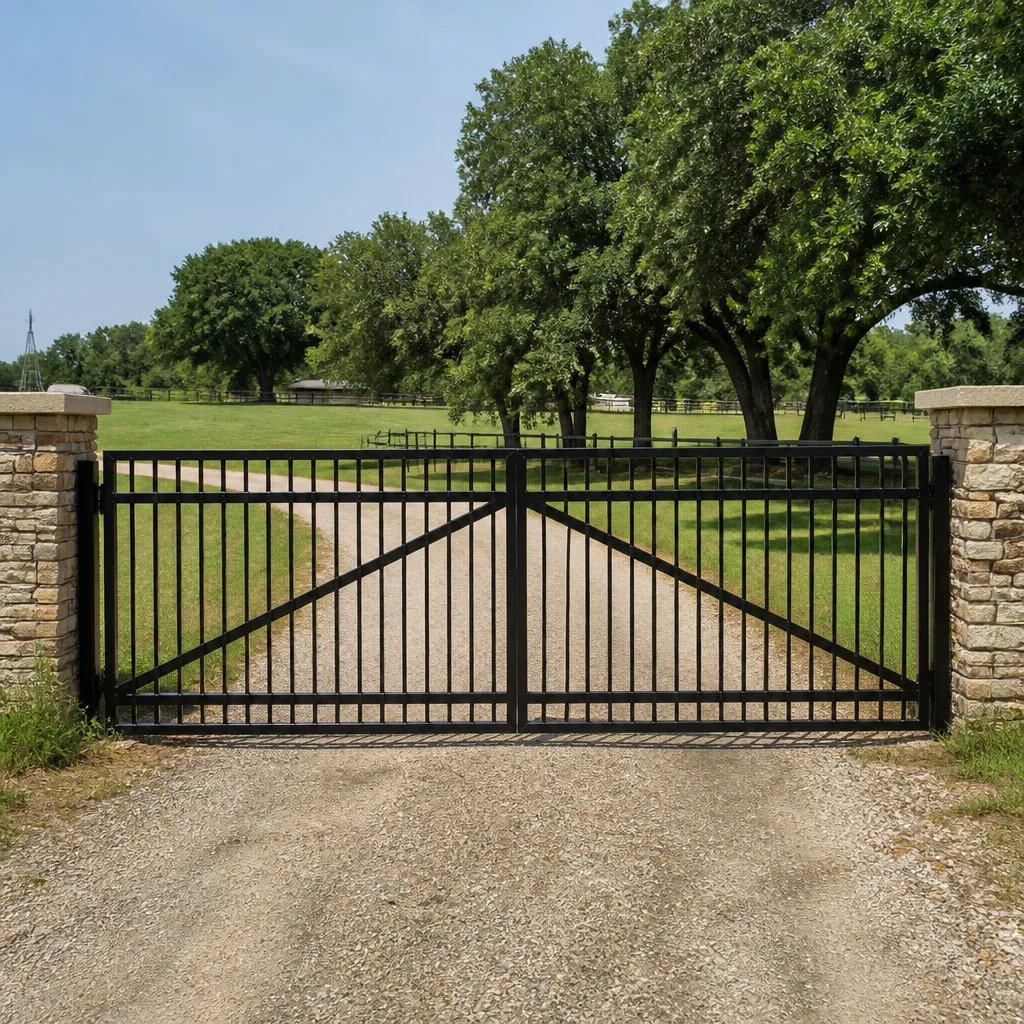 Farm & ranch
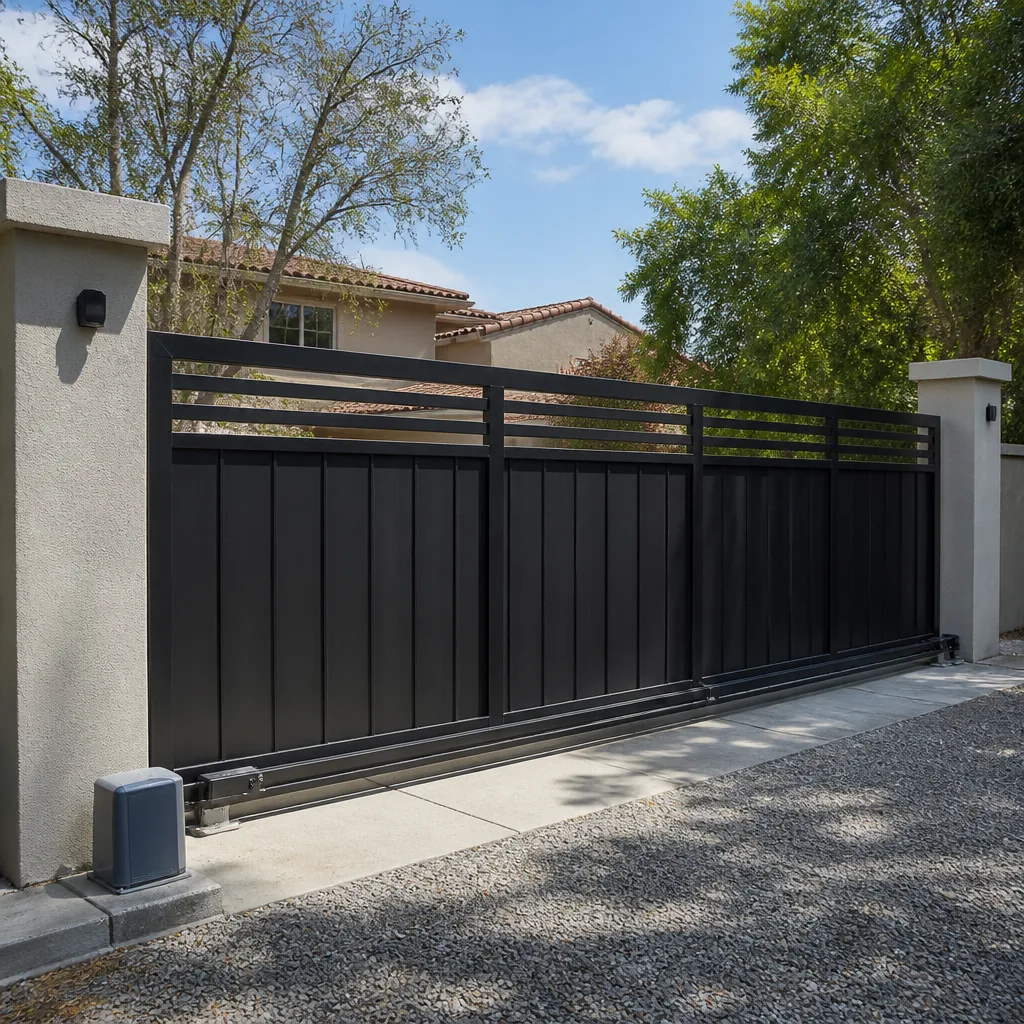 Sliding driveway gates
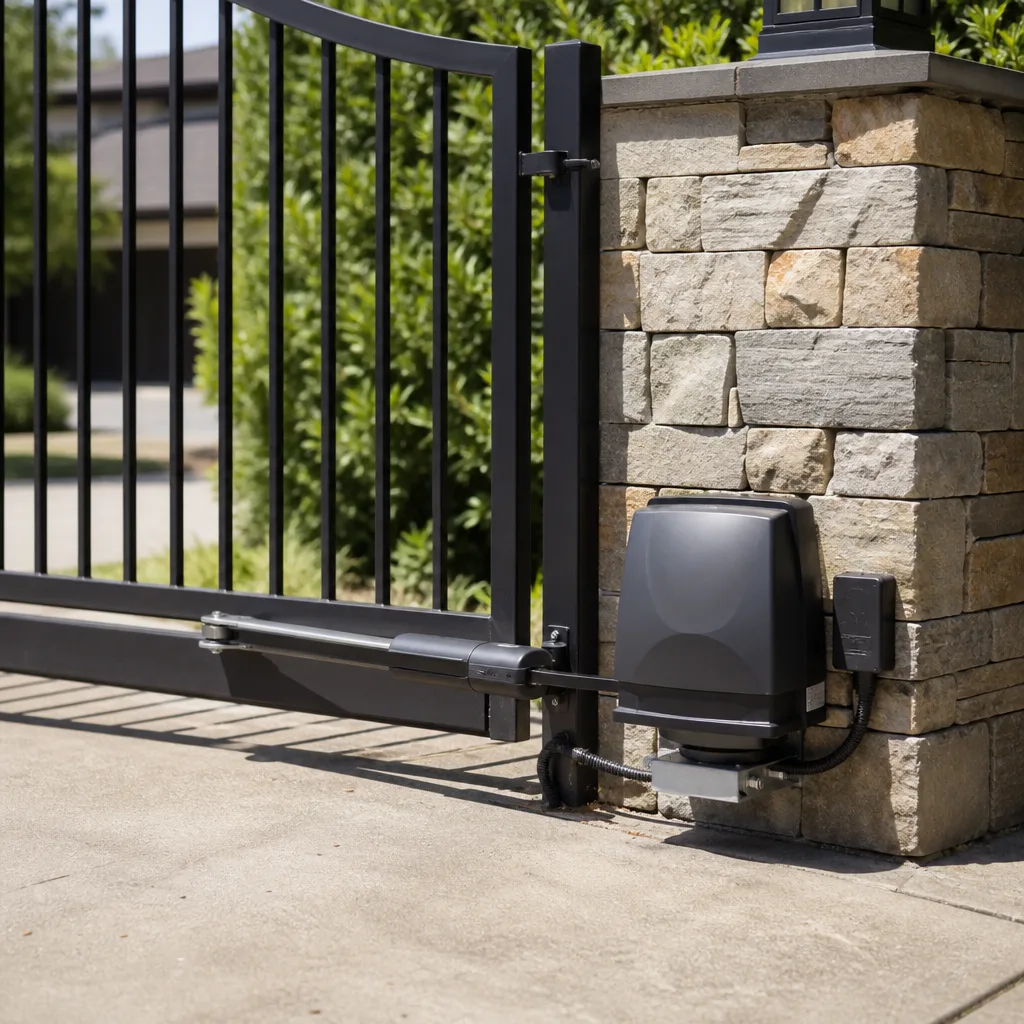 LiftMaster operators
Free on-site gate assessment - hinges, posts, and your LiftMaster or Nice gate operator checked before anything is quoted
The assessment is free and the quote is the invoice.
Get your free estimateDIY vs Professional Gate Repair: The Eastvale Homeowner’s Decision Guide
Here’s the thing most gate repair guides get wrong: the question isn’t whether you can figure out what’s broken. It’s whether the component you’re about to touch can hurt you or void your warranty. A surprising number of Eastvale homeowners discover this the hard way. Replacing a remote battery? That’s yours. Adjusting a force setting that controls how hard a 400-pound gate pushes before reversing? That dial, set wrong, has caused entrapment injuries the CPSC tracks every year. This guide walks through exactly which gate tasks belong in your hands, which belong in a technician’s, and why the DIY line sits where it does. We’ll cover the specific brands common across Eastvale, what warranty terms actually say, and what a mistake costs in real dollars.
Styles & brands we work with
- Wrought iron
- Wood & steel frame
- Farm & ranch
- Sliding driveway gates
- LiftMaster operators
Quick Answer
DIY gate repair in Eastvale is safe and sensible for remote reprogramming, photo eye cleaning, and lubrication. Professional repair is the right call for anything involving force or limit adjustments, control boards, loop detectors, or 120V wiring. The dividing line isn’t your skill level. It’s the injury risk and warranty language written into brands like LiftMaster, Elite, and Mighty Mule.
Table of Contents
- The DIY-Safe List: What You Can Handle Without Tools or Training
- The Professional-Only List: Where DIY Gets Dangerous or Expensive
- How Warranty Terms Define ‘Owner Interference’ in Eastvale Gate Systems
- The Hidden Cost of DIY Mistakes: A $600 Lesson in 30 Days
- The Tool and Knowledge Threshold Test
- How Eastvale’s Climate and Housing Stock Shape Gate Repair
- Common Mistakes to Avoid
- When to Call a Professional
- Frequently Asked Questions
- The Bottom Line
The DIY-Safe List: What You Can Handle Without Tools or Training
Let’s start with the honest answer: some gate tasks are genuinely yours. Not because we want you to risk anything, but because calling a technician for these would waste your money and our time. Here’s the definitive list of gate maintenance and minor repair tasks any Eastvale homeowner can do without tools, training, or a second thought about warranties.
Remote Control Reprogramming
If your gate opens fine from the keypad but not the remote, the remote lost its code. Most remotes for gate repair brands like Mighty Mule, LiftMaster, and Linear can be reprogrammed in under two minutes using the learn button on the operator. The instructions are in your manual, often printed on the inside of the operator cover. This is a no-tools task, and no manufacturer considers reprogramming a remote to be owner interference.
Photo Eye Cleaning
Eastvale’s inland valley climate means dust. Fine dust from the Santa Ana winds and routine landscaping coats photo eye lenses faster than most homeowners expect. If your gate starts and immediately reverses, or refuses to close at all, wipe the photo eye lenses with a dry microfiber cloth. That’s it. No adjustment, no disassembly. A dirty photo eye is the single most common reason for a gate that won’t close, and the fix takes thirty seconds.
Lubrication
Slide gate rollers, swing gate hinges, and the operator’s drive chain all benefit from periodic lubrication. Use a silicone-based lubricant, not WD-40. Apply it to the moving metal contact points, not the control board, not the motor housing, and never the photo eye lenses. A lubricated gate runs quieter and puts less strain on the motor. For Eastvale homeowners with Mighty Mule or Ghost Controls residential operators, this is the one maintenance task that genuinely extends motor life.
Visual Inspection
Walk your gate once a month. Look for wheels that wobble in the track, bolts that have backed out, sagging hinges. Catching these early means calling us before a small mechanical issue becomes a motor problem. This isn’t repair, but it’s the kind of attention that keeps repair bills small.
Everything above is homeowner territory. It requires no tools beyond a cloth and a can of lubricant, no knowledge of wiring, and no contact with force or limit settings. If your gate issue is anywhere outside this list, the next section is where you should be looking instead.
The Professional-Only List: Where DIY Gets Dangerous or Expensive
Some gate components are not serviceable by a homeowner. Not because the manufacturer is protecting service revenue, but because the component carries real injury risk or because wrong adjustments create a cascade of damage. Here’s the professional-only list, with the specific reasons each task stays off your plate.
Force and Limit Adjustments
Force settings control how much resistance the operator pushes through before it reverses. The limit setting controls how far the gate travels. Both live on the operator’s control board, often as small potentiometers or digital menu items. Set force too high and the gate won’t reverse when it hits a child, a pet, or a car. Set the limit wrong and the gate over-travels, slamming into the stop block or sliding off the track end. This is the single most dangerous adjustment on a residential gate. In our experience, most entrapment hazard calls in Eastvale trace back to a force dial that was turned up because the gate “seemed to need it” rather than fixing whatever was binding in the first place.
Control Board Replacement
Control boards fail from power surges, age, or insect intrusion. Replacing one requires matching the board to the operator model and revision, seating multiple wire harnesses correctly, and often transferring settings. A miswired board can short out the transformer or the motor. We’ve seen boards with the same part number carry different firmware revisions that don’t interoperate. If the board needs replacement, a technician should do it.
Loop Detector Tuning
Loop detectors are the wire loops buried in the driveway that tell the gate to open when a car approaches. Tuning one means adjusting the detector’s sensitivity to account for the loop size, depth, and nearby metal. Too sensitive and the gate opens for every passing car on the street. Not sensitive enough and it won’t open for your car. This requires a meter, patience, and knowledge of the detector’s dip switches. It’s a professional task.
Anything Involving 120V Wiring
Gate operators run on 120V or 240V AC, stepped down to low voltage for the controls. But the incoming side is lethal if you touch the wrong terminal. There is no safe way for a homeowner to work inside an operator’s electrical compartment without training. The low-voltage side is safer, but even that connects to a transformer that carries line voltage. This is a hard line: if the task requires opening the operator’s electrical housing, it’s a professional task.
Safety Edge and Photocell Replacement
Safety edges are the pressure-sensitive strips on the leading edge of a gate. Photocells are the photo eyes. Both are safety devices required by UL 325, the standard that governs gate operator safety. Wiring them incorrectly bypasses the safety function entirely, and the gate will still appear to work. A homeowner won’t know the safety function is dead until something goes wrong. Replacement and wiring of safety devices belongs with a technician.
How Warranty Terms Define ‘Owner Interference’ in Eastvale Gate Systems
Here’s where DIY gate repair gets quietly expensive. The warranty that came with your gate operator contains language about “owner interference” or “unauthorized modification.” If a technician opens your operator and finds evidence that someone opened the housing and adjusted things, the warranty claim can be denied. Let’s look at how that language works in the brands Eastvale homeowners most often call us about.
LiftMaster Warranty Language
LiftMaster warranties cover defects in materials and workmanship for a set period, but the warranty is void if the product has been “damaged due to misuse, abuse, improper installation, or unauthorized repair.” Opening the operator housing and adjusting force or limit settings counts as unauthorized repair. LiftMaster operators in Eastvale are common on newer homes with automatic driveway gates, and the residential models like the LA400 and LA500 series are particularly sensitive to owners adjusting the force dials. If a LiftMaster operator fails after a homeowner has been inside the housing, the repair is on the homeowner.
Viking and Ramset Warranty Language
Viking and Ramset operators are common on commercial properties in Eastvale, especially warehouses and industrial lots. Their warranty language is stricter. Both brands state that the warranty does not cover “damage resulting from operation or adjustment of the product by any party other than an authorized service representative.” That means the warranty is void not just if the owner adjusted something, but if a general handyman did. Eastvale property managers with Viking or Ramset operators on their gates need to be especially clear with any contractor they hire: if they’re not a gate specialist, the warranty is at risk.
Mighty Mule and Ghost Controls Warranty Language
Mighty Mule and Ghost Controls sell heavily to the DIY market, so their warranty language is more forgiving. Mighty Mule’s warranty covers defects for 12 months but excludes “damage caused by improper installation, modification, or misuse.” The key word is modification. Adding aftermarket parts, changing the control board, or rewiring the operator to work with a non-factory accessory voids coverage. Ghost Controls is similar. These brands are easier to self-install, but the warranty still doesn’t survive creative re-engineering.
What This Means for Eastvale Homeowners
Every time you open an operator housing, you’re betting that you won’t need the warranty. If the operator is new, or if it fails within the warranty period, that’s a bad bet. The warranty exists to protect you from a manufacturing defect, and the easiest way to lose it is to give the manufacturer proof that someone other than an authorized technician has been inside the unit. For Eastvale homeowners, the practical rule is simple: anything inside the housing is professional territory. Anything outside it, like remotes and photo eyes, is yours.
The Hidden Cost of DIY Mistakes: A $600 Lesson in 30 Days
A misadjusted limit switch takes about ten minutes to create and can destroy a gate motor in thirty days. Here’s how that happens, step by step, because it’s the most common DIY failure pattern we see in Eastvale.
How the Damage Cascade Works
- A homeowner adjusts the limit switch because the gate “wasn’t closing all the way.” The adjustment sets the gate to travel a few inches farther than it should.
- The gate now slams into the stop block or the end of the track every time it closes. The impact is small, but it repeats every single cycle.
- Over the next few weeks, the impact transfers through the gate frame into the operator’s drive mechanism. The chain or belt stretches, the drive gear wears, or the motor’s internal bearings take the hit.
- The motor, now working against both the gate’s weight and the repeated impact, draws more current. It runs hotter. Eventually, it fails.
That ten-minute adjustment becomes a motor replacement. A motor for a lift-type swing gate operator typically runs between $400 and $600 for the part alone, before labor. So the real cost of that ten-minute DIY fix isn’t the time you spent. It’s the motor you didn’t intend to buy.
The Photo Eye Lesson
Another pattern we see is the homeowner who misaligns a photo eye. A photo eye that’s aimed wrong doesn’t see the beam, so the gate thinks something is in the way and won’t close. The homeowner’s fix is often to bypass the photo eye entirely, wiring it out of the circuit. The gate closes fine now, but the safety function is dead. If the gate ever hits someone, the homeowner’s liability is severe. The correct fix is a photo eye alignment, which takes a technician about ten minutes and costs a fraction of a motor replacement or a lawsuit.
The Tool and Knowledge Threshold Test
Before you attempt any gate repair beyond basic maintenance, let’s be realistic about what the job actually requires. If you can’t answer yes to everything on this list, the task isn’t a good DIY candidate.
The Threshold Questions
- Do you know where the gate’s circuit breaker is, and will you turn it off before touching anything? If the answer is no, stop. Gate operators carry line voltage, and turning off the breaker is not optional.
- Do you own a multimeter, and do you know how to use it to test voltage and continuity? If the diagnosis requires testing a wire, a sensor, or a transformer, a multimeter is the minimum tool. Without it, you’re guessing.
- Do you know what UL 325 requires for gate safety devices? If you don’t know what a safety edge is, or how photo eyes and loop detectors interact with the operator, you’re not equipped to touch the safety circuit.
- Do you have the wiring diagram for your specific operator model? Not a YouTube video with a similar-looking gate. The actual diagram. Gate operators vary by model and revision, and guessing at wire colors is how control boards get fried.
- Can you physically handle the gate in manual mode? If the gate won’t move by hand in manual mode, the problem is mechanical. A motor won’t fix a gate that’s seized on its hinges or bound in its track.
If you answered no to any of these, the repair isn’t a weekend project. It’s a call to Gate Repair Eastvale.
How Eastvale’s Climate and Housing Stock Shape Gate Repair
Eastvale’s inland valley climate creates a specific set of gate repair patterns that differ from coastal cities or mountain towns. We don’t deal with salt air or freeze-thaw cycles here. What we do deal with is dust, heat, and a housing stock that leans newer.
Dust and Santa Ana Winds
The Santa Ana winds that sweep through Eastvale in the fall and winter carry fine dust from the surrounding valleys. That dust settles into everything: photo eye lenses, control board housings, chain lubricant. A gate that works perfectly in June might start reversing for no apparent reason in December, and the cause is almost always dust on the photo eyes. The fix is simple cleaning, but Eastvale homeowners deal with it more often than coastal homeowners because the dust load is higher here.
Summer Heat and Electronics
Eastvale summers regularly push into the 90s, and the sun beats directly on operator housings, especially for gates facing west. Control boards and transformers run hotter here than in coastal cities, and heat-related board failures are more common in Eastvale than in places with milder summer temperatures. A control board that lives in direct sun on a 95-degree day is operating at the edge of its temperature tolerance. This is a real consideration for Eastvale homeowners choosing an operator and an installation spot, and it’s one more reason control board work belongs with someone who knows the local conditions.
Newer Housing Stock
Eastvale grew fast in the 2000s and 2010s. Much of the city’s housing stock is newer, and with newer homes come newer gate operators. We see a lot of LiftMaster and Mighty Mule residential operators on Eastvale’s single-family gates, and a fair number of FAAC and BFT operators on multi-unit and HOA gates. The newer the operator, the more the warranty matters, so the owner-interference question matters more in Eastvale than it does in an older city where the gates are long out of warranty.
Common Mistakes to Avoid
- Adjusting force settings to fix a slow gate. A gate that slows down or struggles isn’t asking for more force. It’s telling you something is binding, low on lubrication, or the motor is worn. Turning up the force is the most dangerous way to “fix” a slow gate, and it’s the leading cause of entrapment injuries on residential gates in Eastvale.
- Bypassing photo eyes instead of cleaning or aligning them. A bypassed photo eye means the gate closes on anything in its path. The gate works, but the safety device doesn’t. This is a liability time bomb on a property with kids or pets.
- Using WD-40 as a gate lubricant. WD-40 is a water displacer, not a lubricant. It flushes out what little lubrication exists in the hinge or chain, then it evaporates, leaving the metal drier than before. Use a silicone-based lubricant instead.
- Opening the operator housing without turning off the breaker. The operator’s internal wiring carries 120V. The safest practice is to turn off the breaker and verify with a multimeter before touching anything inside the housing. Skipping this step is how people get hurt.
- Buying a replacement part by brand name alone, without matching the model and revision. A LiftMaster control board isn’t one part; it’s a family of parts with different revisions. Ordering the wrong one means a second trip to the supplier and more downtime for the gate.
- Ignoring a gate that’s gotten louder over time. Gates don’t just get noisy for no reason. The noise is usually a worn roller, a stretched chain, or a hinge that’s binding. Ignoring noise turns a $100 mechanical repair into a $600 motor replacement.
- Assuming a handyman can handle gate repair. General handymen are good at general tasks. But gate operators are specialized, and using a non-specialist on your gate may void the warranty and often creates the exact cascade described above. Gate work belongs with a gate-only specialist.
When to Call a Professional
Call a professional when the gate makes contact with anything it shouldn’t: a car, a fence post, or a person. Call when the operator hums but the gate doesn’t move. Call when the gate opens on its own, closes on its own, or stops midway for no reason. Call when you smell burning near the operator, or when the control board shows error codes you don’t recognize. Call when the gate is over a decade old and has never been serviced by a gate technician. And call when you want a straight answer about whether the operator is worth repairing at all. Gate Repair Eastvale offers free estimates in Eastvale, and we work on LiftMaster, FAAC, BFT, Linear, Viking, Ghost Controls, DoorKing, Elite, and Mighty Mule. Call (855) 601-8166. We answer 24/7. Fast dispatch from 7am to 7pm, Sunday through Friday.
Frequently Asked Questions
Gate repair costs in Eastvale vary by the component and the operator’s brand, but you should expect typical repair pricing to fall in these ranges: photo eye cleaning or realignment is the least expensive service call at the lower end of the scale, limit or force adjustment runs a little higher, and control board or motor replacement sits at the top end. Call (855) 601-8166 for an exact quote. Estimates are free, and the written estimate sets the final price before any work starts.
Yes, if the task is remote reprogramming, photo eye cleaning, or lubrication. No, if the task involves force settings, limit adjustments, control boards, loop detectors, or 120V wiring. The line is set by safety and warranty language, not by how handy you are. Call (855) 601-8166 if you’re not sure which side of the line your repair falls on.
We work on nine gate brands: LiftMaster, FAAC, BFT, Linear, Viking, Ghost Controls, DoorKing, Elite, and Mighty Mule. That spans DIY-grade residential systems like Mighty Mule and Ghost Controls up to commercial-grade automation from FAAC, BFT, and Viking. If your operator is one of these brands, we’ve seen that system before. Call (855) 601-8166 for a free estimate.
Not necessarily. Electric gate repair covers motors, control boards, sensors, and wiring, and the price depends on which component failed, not on the fact that it’s electric. Gate Repair Eastvale treats electric gate diagnostics as standard scope, not an add-on, so you get a clear diagnosis and a written price before any work starts. Call (855) 601-8166 for an exact quote.
You can install your own operator if the manufacturer sells it as a DIY product and you follow the installation manual. Mighty Mule and Ghost Controls are explicitly DIY-friendly, and installing them yourself doesn’t void the warranty as long as you follow instructions and don’t modify the unit. But if the installation involves 120V wiring, Eastvale permits may apply, so check with the city’s building department before you start. Call (855) 601-8166 for advice on whether your specific project is a good DIY candidate.
Most residential gate repairs are completed same day when the part is on the truck. Control board replacements and motor swaps depend on part availability for your specific brand, but we carry common boards and motors for the nine brands we service. Call (855) 601-8166 and we’ll tell you what to expect for your gate. We answer 24/7. Fast dispatch from 7am to 7pm, Sunday through Friday.
The Bottom Line
The DIY vs professional question for Eastvale gates isn’t about skill. It’s about risk and warranty. Remote batteries, photo eye cleaning, and lubrication are yours. Force adjustments, limit settings, control boards, loop detectors, and 120V wiring belong to a technician. The cost difference between a simple service call and a motor replacement is measured in hundreds of dollars, and the difference between a safe gate and a dangerous one is measured in one force dial turned too far. If you’re in Eastvale and the gate is acting up, start with the DIY-safe list, and when it’s beyond that, call (855) 601-8166. We answer 24/7. Fast dispatch from 7am to 7pm, Sunday through Friday.
Written by the team at Gate Repair Eastvale, serving Eastvale since 2014.
See the difference
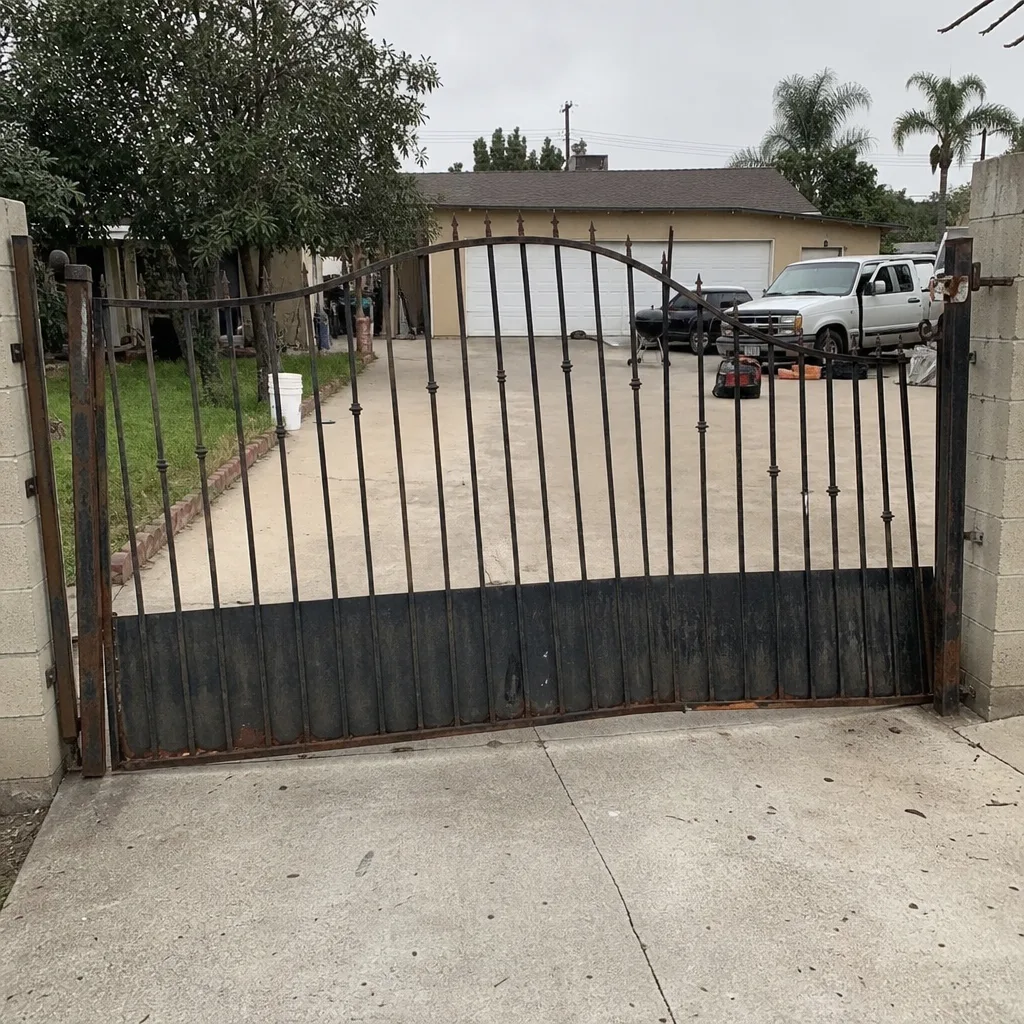 Before
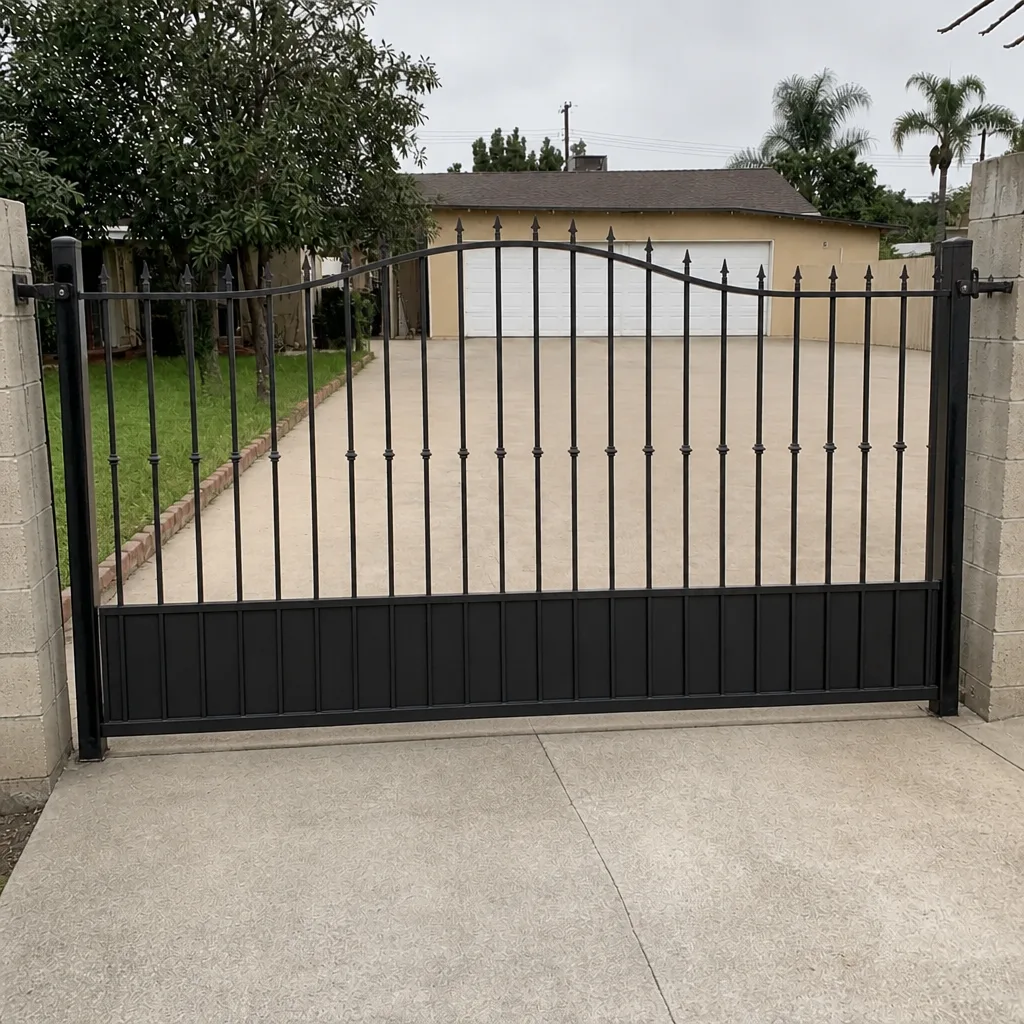 After
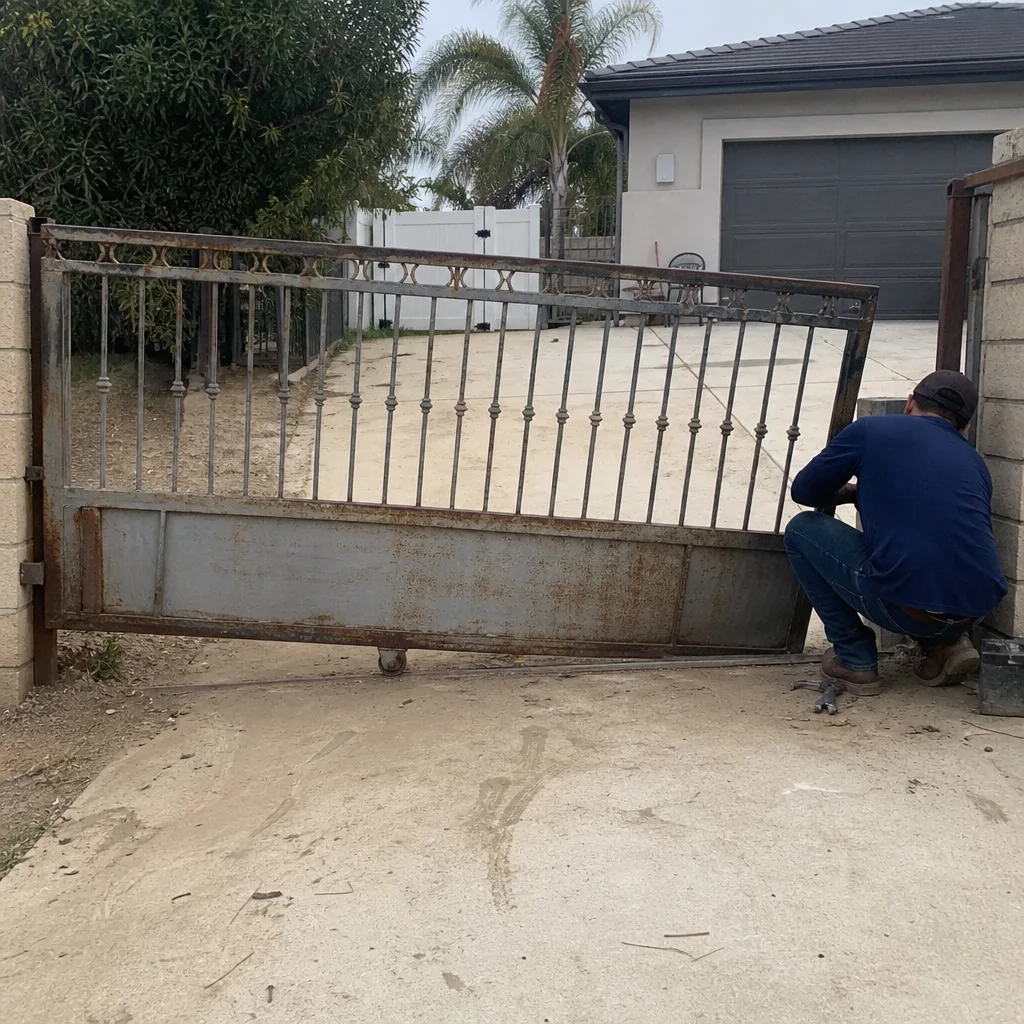 Before
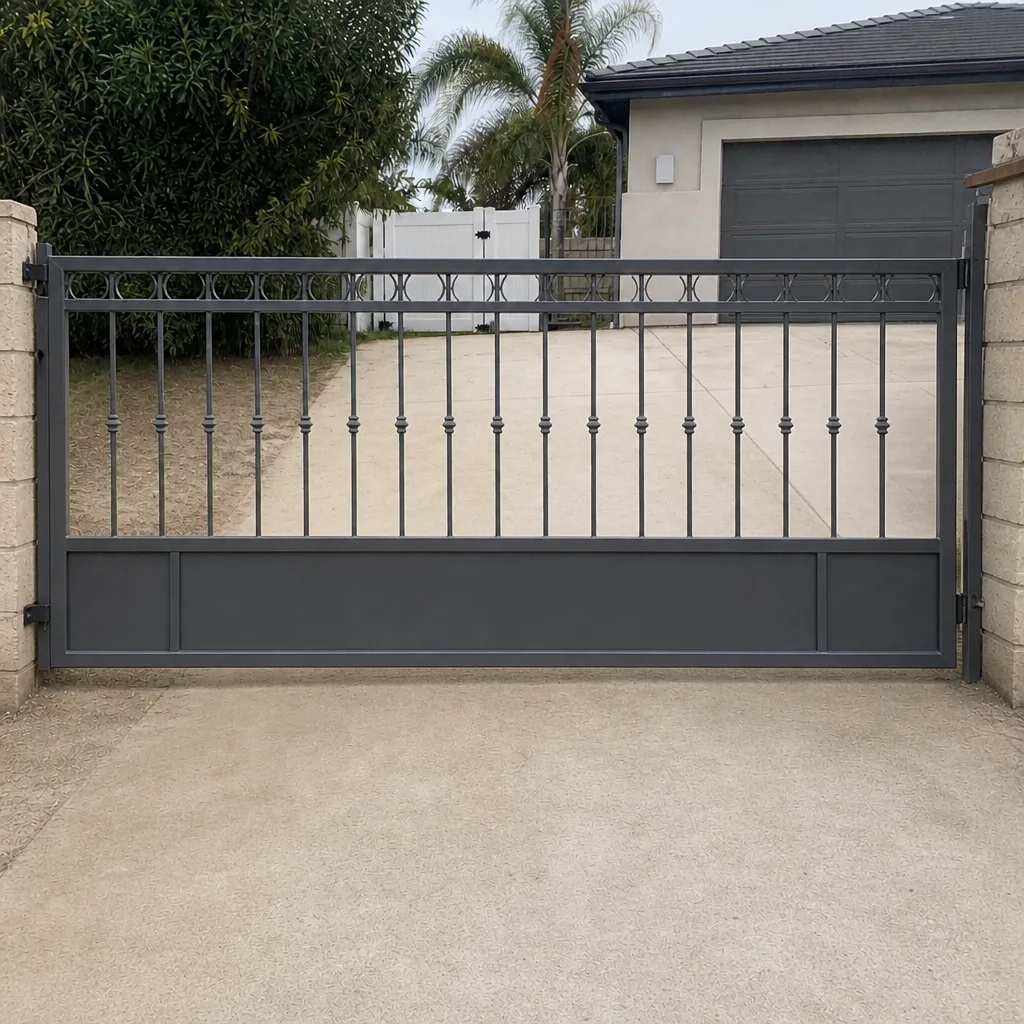 After
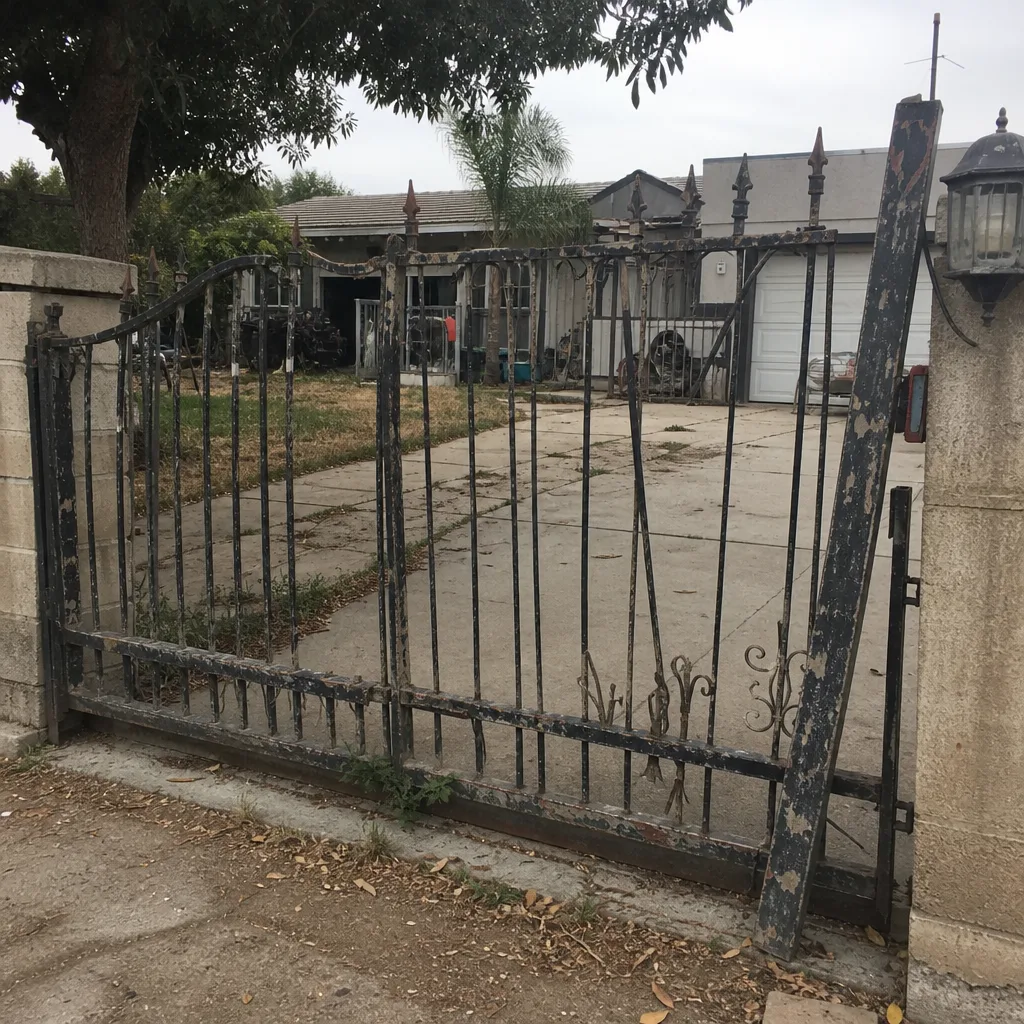 Before
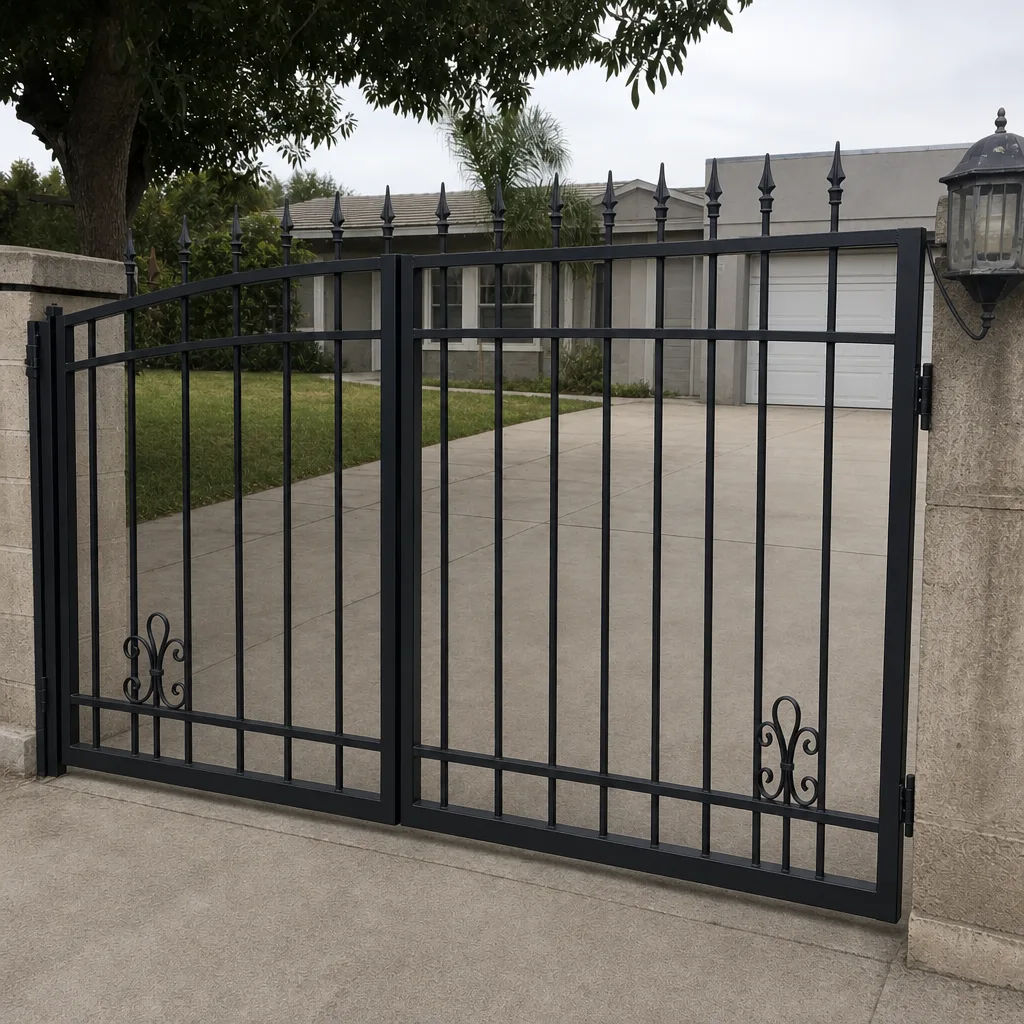 After