
Last updated November 4, 2026
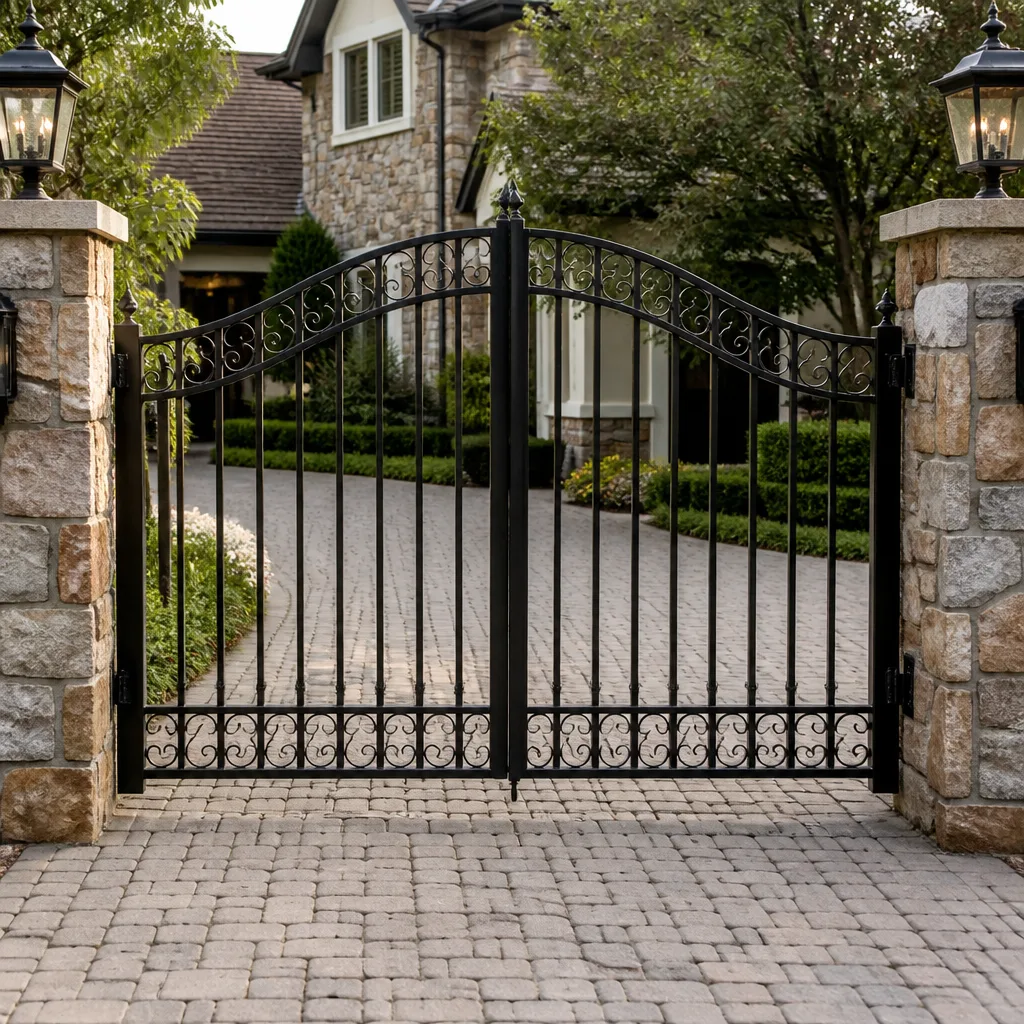 Wrought iron
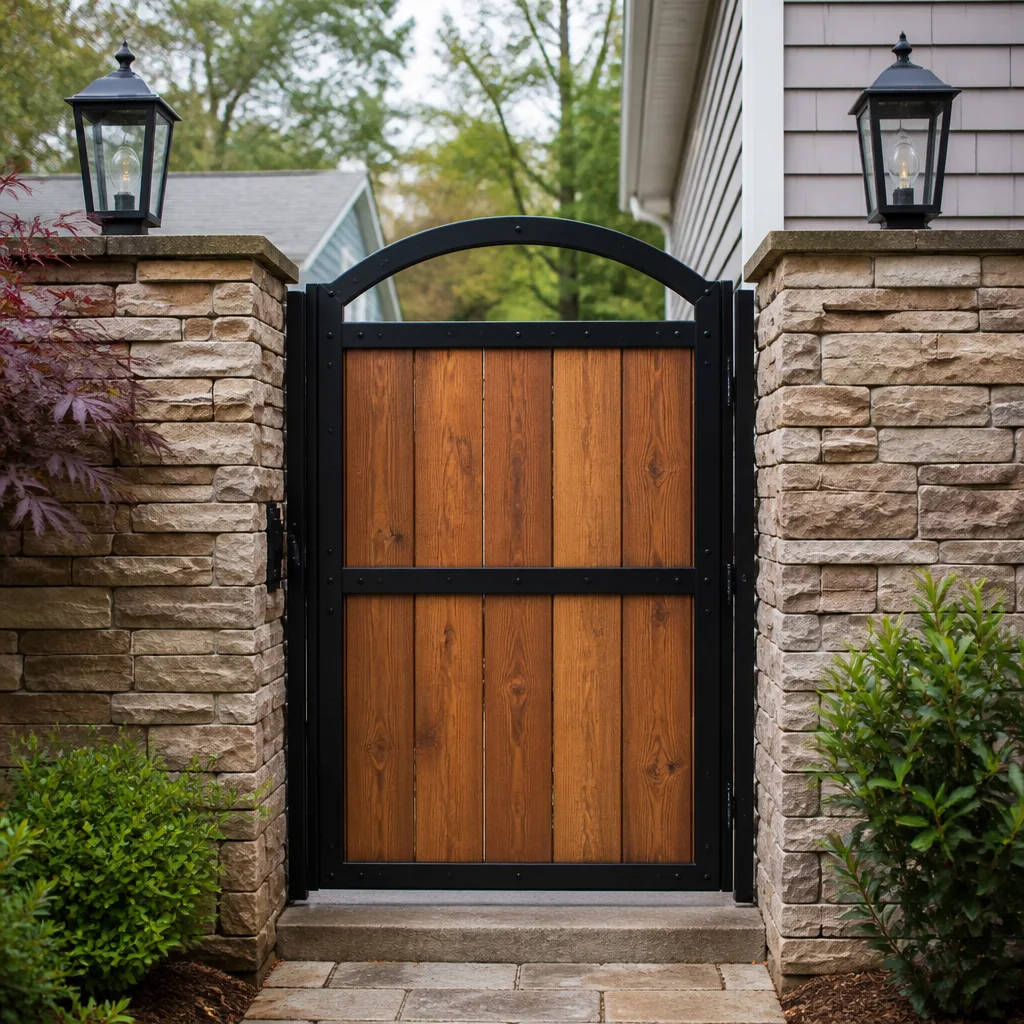 Wood & steel frame
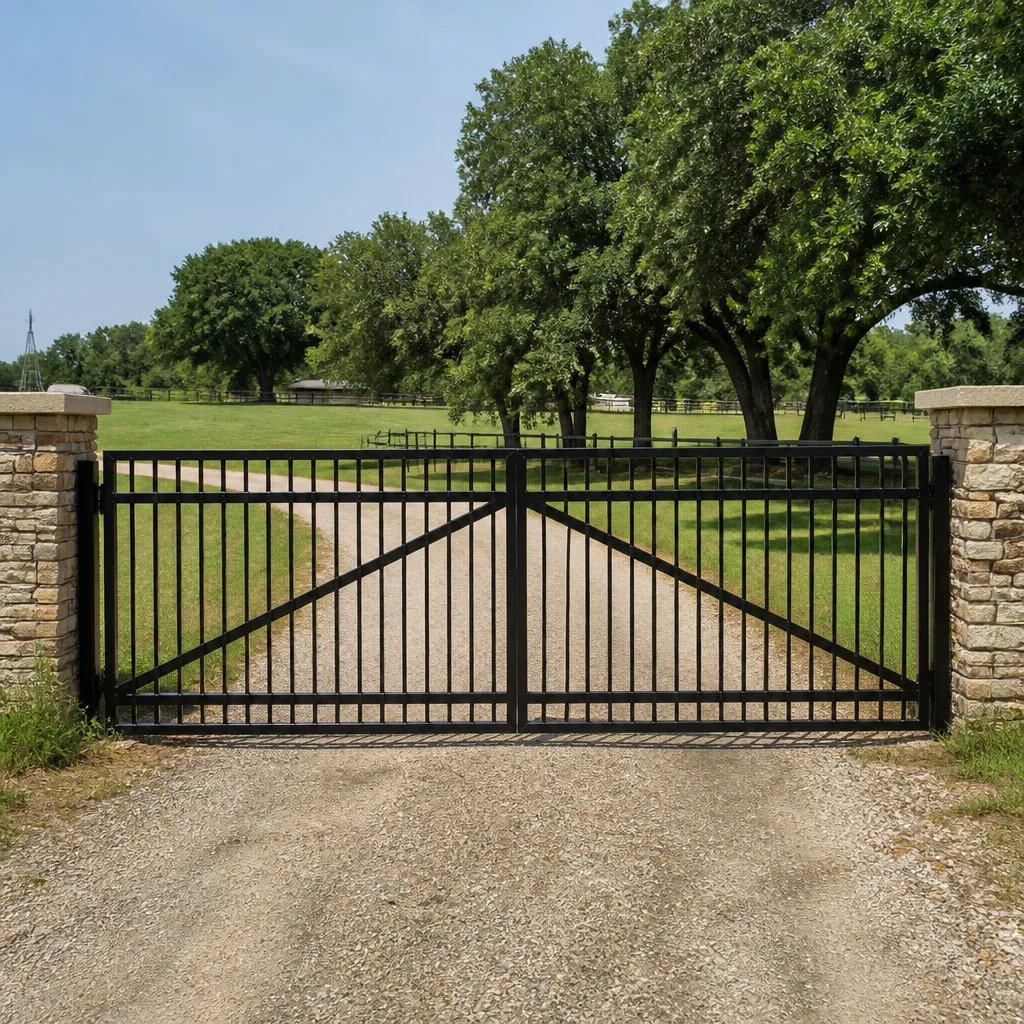 Farm & ranch
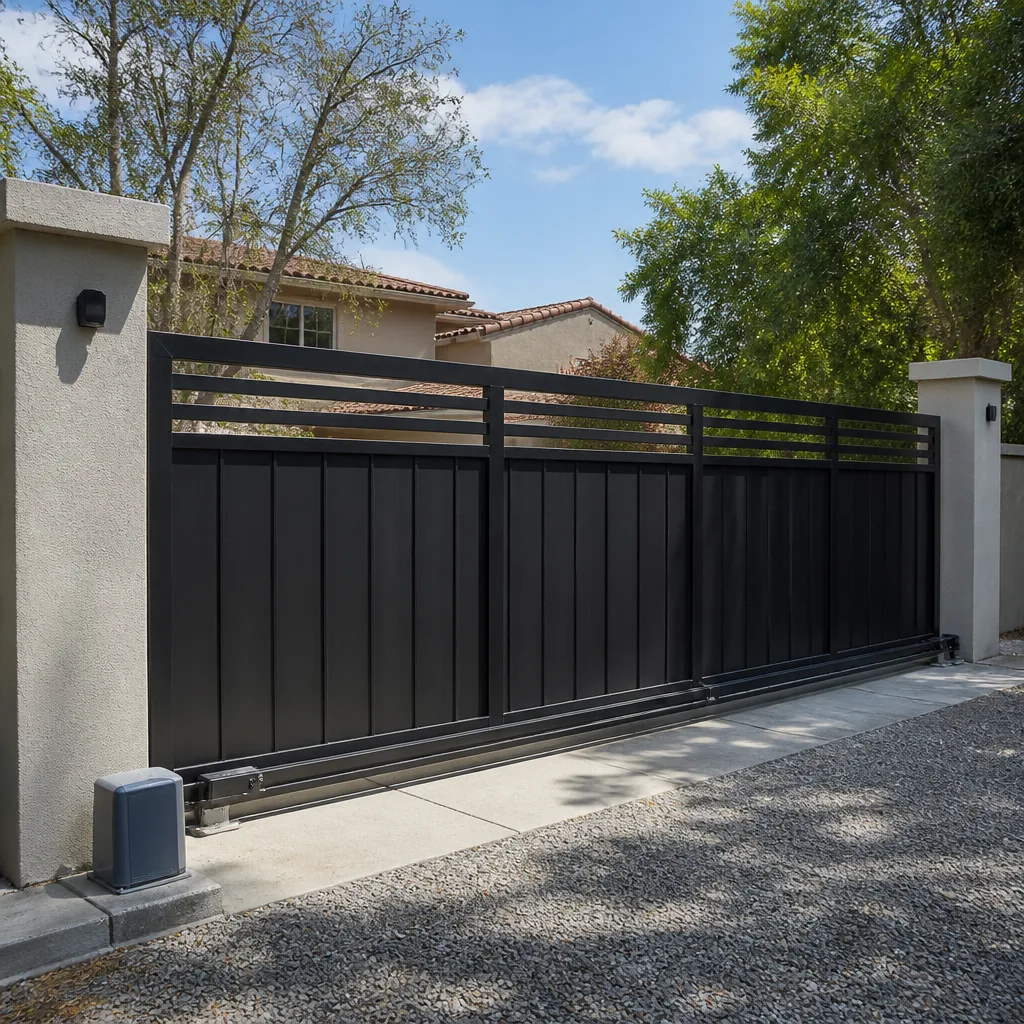 Sliding driveway gates
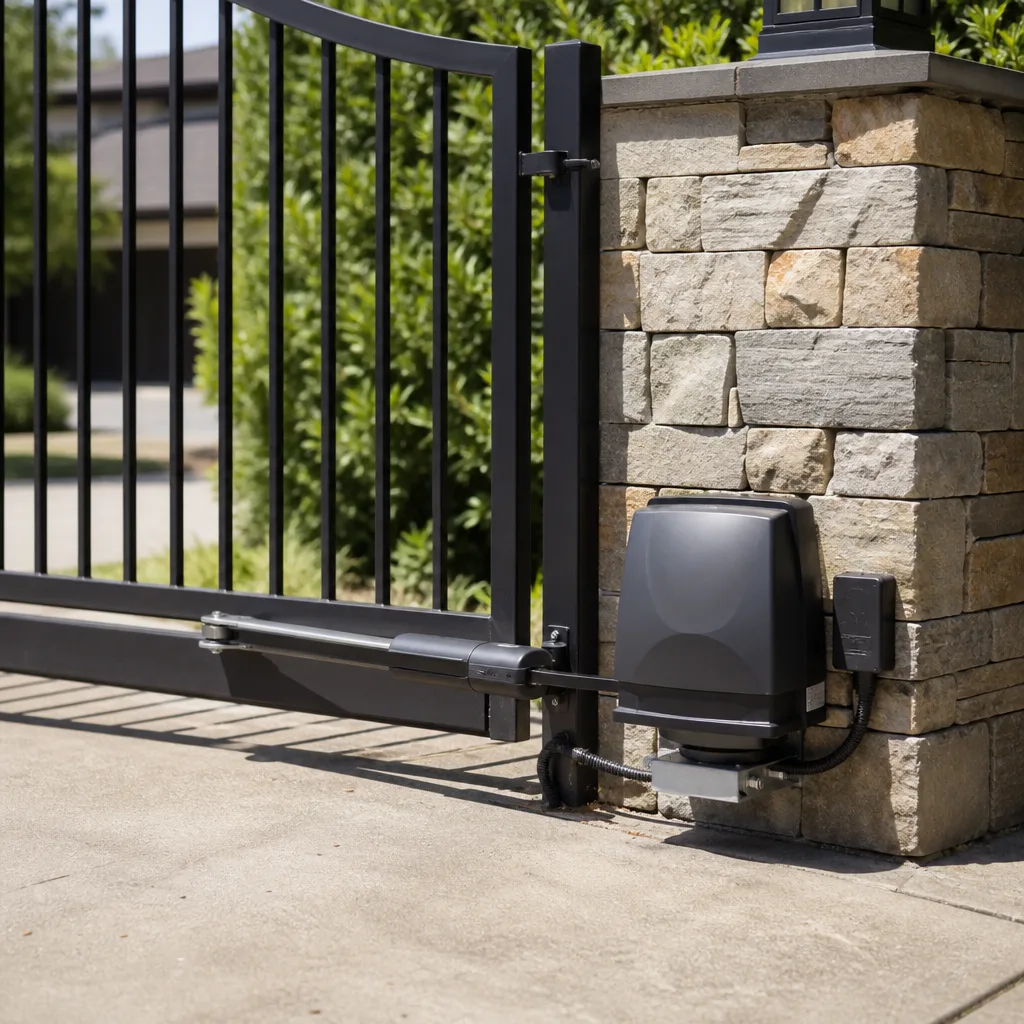 LiftMaster operators
Free on-site gate assessment - hinges, posts, and your LiftMaster or Nice gate operator checked before anything is quoted
The assessment is free and the quote is the invoice.
Get your free estimateGate Repair Cost Breakdown: The Eastvale Homeowner’s Reference for 2026
Two contractors can quote the same LiftMaster motor replacement at $450 and $1,100, and neither number is necessarily dishonest. The spread comes down to what each quote actually includes, and most Eastvale homeowners don’t know which questions separate a lean quote from a loaded one. This guide walks through the real anatomy of gate repair pricing in Riverside County: what parts cost, what labor should run, why identical jobs get priced differently, and the specific red flags that show up on invoices. By the end, you’ll know exactly what you’re paying for before you sign anything.
Quick Answer
Gate repair in Eastvale typically runs between $175 and $1,400, with most residential jobs landing in the $250 to $600 range. The three biggest price drivers are the part that failed, whether the gate is electric or manual, and whether the system is a recognized brand like LiftMaster or a no-name import that needs special-order components. A full motor replacement on an automated gate usually costs more than repairing the same system’s hinges or sensors, because the part itself is the bulk of the invoice.
Styles & brands we work with
- Wrought iron
- Wood & steel frame
- Farm & ranch
- Sliding driveway gates
- LiftMaster operators
Table of Contents
- Parts Cost by Repair Type: What 2026 Pricing Actually Looks Like
- The Parts-to-Labor Ratio Nobody Explains
- Why Eastvale Pricing Differs from LA and Orange County
- Brand-Name Systems vs. No-Name Imports: The Parts Availability Surcharge
- HOA and Shared Entry Gates: Why They Cost More
- Red Flags in a Gate Repair Invoice
- What to Ask Before You Approve a Quote
- How a Repair Call Goes, Step by Step
Parts Cost by Repair Type: What 2026 Pricing Actually Looks Like
Gate repair pricing in Eastvale is driven by the part, not the brand name on the truck. A photo eye sensor and a control board are both “electric gate repairs,” but one costs a fraction of the other. Understanding what each component costs before a technician arrives puts you in a position to evaluate the quote instead of just accepting it. These are the repair categories we see most often, with typical 2026 part costs and what each repair involves.
- Photo eyes and safety sensors: $45 to $120 per pair in parts. These prevent the gate from closing on a car or a person. Most repairs are straightforward replacements when the sensor fails or gets knocked out of alignment by an impact. Labor runs 30 to 60 minutes.
- Loop detectors: $150 to $300 installed. These sit under the driveway surface and tell the gate when a vehicle is present. The part is relatively inexpensive, but access requires cutting into asphalt or concrete, which drives labor higher than most homeowners expect.
- Control boards: $250 to $600 in parts for residential systems, and more for commercial units. The board is the brain of an automated gate, and it fails more often than motors do. If a motor is replaced without checking the board, the new motor can get damaged by the same electrical fault.
- Gate motors and operators: $400 to $1,100 in parts for residential swing and slide gates, depending on the brand and capacity. This is usually the single largest line item on any gate repair invoice, and it’s where quotes diverge the most.
- Hinges and hardware: $30 to $100 per hinge, plus labor for alignment and welding where needed. A sagging gate often needs new hinges rather than a new operator, which is a much smaller repair than it looks.
These numbers are parts-only estimates, and the final invoice always includes labor. In Eastvale, labor on gate work tends to run in the range of $85 to $140 per hour, though most companies quote by the job rather than by the hour. The written estimate you receive before any work starts should break these costs out, and if it doesn’t, that’s your cue to ask.
The Parts-to-Labor Ratio Nobody Explains
Most homeowners fixate on the part price and ignore the ratio between parts and labor, which is where invoices get quietly inflated. A $250 sensor repair with a $50 part and $200 in labor is normal for a one-hour job in Eastvale. A $250 sensor repair with a $175 part listed and $75 in labor might mean the contractor is padding the part price because it’s less transparent to question. Neither invoice is wrong on its face, but the second one should prompt a follow-up.
Here’s the realistic parts-to-labor ratio for common repairs on residential gates in Eastvale:
- Photo eye replacement: Parts are 25 to 40 percent of the total; labor dominates because the technician has to find the mounting position, re-aim the beam, and test the system through full open and close cycles.
- Hinge replacement: Parts are 20 to 30 percent of the total; the labor involves lifting or supporting the gate while old hardware comes off, which takes time and care.
- Control board replacement: Parts are 50 to 65 percent of the total; the board itself is expensive, and programming a new board to an existing remote system and loop detector setup is methodical work.
- Motor replacement: Parts are 60 to 70 percent of the total; the motor is the single most expensive part on most systems, and the labor is concentrated in removing the old unit, mounting the new one, and setting travel limits.
When a quote skews far from these ranges, ask why. A legitimate answer will reference something specific about your gate: a welded frame, a hard-to-access control box, an older system that needs compatibility parts. An evasive answer is a signal to get a second opinion. In our experience, Eastvale homeowners do best when they see the line items and can ask about the gap between what something costs and what it’s worth.
Why Eastvale Pricing Differs from LA and Orange County
Gate repair prices in Eastvale are generally lower than what homeowners pay in Los Angeles County or Orange County for the same work, mostly because the cost of doing business here is lower. Technicians aren’t fighting LA traffic density to reach a job, parking is accessible, and the drive times between calls are shorter. Those factors keep labor rates in Riverside County below what shops in Pasadena or Irvine charge for identical repairs.
But Eastvale’s inland location also means heat and dust affect gate systems in ways that coastal cities don’t deal with as much. Summer temperatures stress the electrical components in openers, and the fine dust that blows through the Inland Empire gets into hinges, tracks, and limit switches. A gate motor in Eastvale tends to work harder over its lifespan than the same motor in a coastal neighborhood. That’s not a reason to overpay, but it is a reason to expect repairs that happen here to occasionally involve more than just swapping one part.
For a homeowner in Eastvale, the practical takeaway is this: local pricing for gate repair should fall below what you’d see quoted in coastal markets, but not dramatically. A good rule of thumb is that Eastvale jobs run 10 to 20 percent under comparable LA County pricing. If a quote comes in at LA prices for a standard residential repair, ask to see the breakdown before you agree.
Brand-Name Systems vs. No-Name Imports: The Parts Availability Surcharge
The brand of your gate system has a direct impact on repair cost, and it’s not because name-brand parts are always better. It’s because they’re available. LiftMaster, DoorKing, and Linear all have established distributor networks, so a technician working on one of those systems in Eastvale can typically get a replacement motor or control board the same week. That keeps parts prices stable and predictable.
A no-name import system, often bought online or installed by a previous owner looking to save money, creates a different cost problem. The exact replacement part may need to be sourced from an unfamiliar supplier, cross-referenced for compatibility, or substituted with a universal component that then has to be adapted to fit. That labor and sourcing time becomes a legitimate surcharge that name-brand systems rarely trigger. The result is that repairing a cheap gate can cost more than repairing a recognized brand.
As Gate Repair Eastvale, we work regularly on LiftMaster, FAAC, BFT, and Linear systems, among others, and that brand familiarity is the biggest cost saver on a repair invoice. We can identify the failure point without a long diagnostic period. When a part has to be replaced, we know which distributor carries it and which universal alternatives actually work. That’s the difference between a two-hour repair and a two-day repair, and it shows up in the final number. Electric gate repair on a known brand is usually faster than troubleshooting an orphan system, and faster labor is cheaper labor.
HOA and Shared Entry Gates: Why They Cost More
Shared entry gates in Eastvale HOAs and apartment communities consistently cost more to repair than single-family gates, and the gap is not a markup scheme. It’s the result of liability, access, and system complexity stacking on top of the basic repair. A swing gate serving one home has one user pattern and one liability profile. A gate serving 120 homes has daily cycling that’s orders of magnitude higher, multiple remote and keypad configurations, and stricter safety requirements.
The liability difference is real. A single-family gate that fails usually means an inconvenience for the homeowner. A shared gate that fails can block emergency vehicle access or trap a resident between the gate and the street. Repairs on shared gates require more testing, more documentation, and often more expensive commercial-grade components. Those are legitimate costs the HOA or property manager should expect to see.
Access complexity also adds labor. Shared gate systems in Eastvale developments often have vehicle loop detectors, pedestrian gates with separate access controls, visitor call boxes, and multiple entry remotes integrated into the same board. Diagnosing a fault across that system takes longer than checking a single operator. The Eastvale HOA market generally understands this, but individual homeowners sometimes see an HOA gate repair bill and wonder why it’s three times what their neighbor paid for a residential gate. The answer is the system is doing three times as much work, and it carries the legal obligations that come with serving a community rather than a driveway.
Red Flags in a Gate Repair Invoice
An invoice is a document you should read carefully, because the red flags are usually visible if you know what to look for. The most common patterns we see in questionable gate repair billing are structural rather than individual line items. They show up as vague descriptions, disappearing fees, and warranty language that protects the contractor more than the customer.
Here are the specific red flags to check before paying:
- “Diagnostic fee” that disappears if you hire them: The estimate should be free and the diagnostic work should be included in the repair quote. If a company charges you to diagnose the problem and then deducts that fee if you hire them, the fee was never a real cost. It’s a pressure tactic.
- Vague line items like “gate service” or “system adjustment”: You have a right to know exactly what part was replaced and what work was done. An invoice that doesn’t name the part is an invoice you can’t verify. Ask for the part name and the part number.
- Warranty language that limits recourse to “labor only”: A legitimate parts warranty should cover the part, and a legitimate labor warranty should cover the installation for at least a defined period. If the warranty only covers one and not the other, the protection is thinner than it sounds.
- “Compatibility upgrades” that weren’t discussed in advance: Some jobs genuinely require adapting an old system to a new part. But if the first time you hear about an “upgrade” is on the final invoice, that’s a conversation that should have happened before the work started.
- Parts priced at retail-plus: Contractors mark up parts, and a reasonable markup is normal. But a part priced at double or triple its retail cost should be questioned. Ask for the brand and model number, then check what that part sells for.
The best protection is a written estimate agreed to before any work begins. The price should be quoted, you should approve it, and the invoice should match the estimate unless you approved a change in writing. That’s standard practice for any reputable gate company serving Eastvale.
What to Ask Before You Approve a Quote
The fastest way to avoid an inflated gate repair bill in Eastvale is to ask a few direct questions before you approve anything. These aren’t confrontational questions. They’re the same questions a property manager or HOA board would ask, and a good contractor will answer them without hesitation. If the person on the phone gets defensive, that’s information too.
Start with these six:
- “What’s the part, and what’s the brand?” You want the specific component name and the manufacturer. A tech working on a LiftMaster control board can tell you that in one sentence.
- “Is this part available locally, or does it need to be ordered?” Availability affects both the price and the timeline. Eastvale contractors with brand experience can usually answer this immediately.
- “What does the labor include?” Get specific: removal, mounting, programming, testing, cleanup. The more detail, the fewer surprises.
- “What’s the warranty on the part and on your work?” If the answer is vague, ask for it in writing. A clear warranty is a sign of confidence; a vague one is a sign you should keep looking.
- “Will the final price match this estimate?” The answer should be yes unless you approve a change. Get that in writing before the work starts.
- “Are you a gate specialist or a general contractor?” This question alone filters out most of the risk. General contractors who do gates as a side service often charge more for the same work because they’re less efficient at it.
The price you’re quoted should be the price you pay. Estimates are free, the written estimate sets the final price, and no work should start before you’ve seen the number. If a contractor won’t put a quote in writing, that’s the clearest red flag of all.
How a Repair Call Goes, Step by Step
Knowing what a proper gate repair visit looks like in Eastvale helps you spot when a contractor is cutting corners or building a bigger job than you need. The process should be transparent from the first phone call to the final test cycle. Here’s the sequence we follow, and what you should expect from any gate specialist you hire.
- You call and describe the symptom. The gate won’t open, the remote stopped working, it’s reversing before it closes, the motor runs but the gate doesn’t move. A good operator will ask follow-up questions and may be able to narrow the problem over the phone.
- The technician arrives and runs a diagnostic. For an electric or automated gate, this includes checking power at the source, testing the control board, verifying the sensors and loop detector, and inspecting the mechanical components: hinges, wheels, tracks, and the operator arm. We answer 24/7 and offer fast dispatch from 7am to 7pm, Sunday through Friday.
- You get a written estimate before work starts. The estimate names the part, the brand, the labor, and the total price. You approve it, or you don’t. Nothing gets replaced without your sign-off.
- The repair is completed and the system is tested. For an electric gate, that means full open and close cycles, sensor alignment checks, and verifying that remotes and keypads work. For a manual gate, it means the gate swings or slides smoothly and the hardware holds.
- You get an invoice that matches the estimate. If anything changed during the work, you approved it before the change happened. The invoice reflects exactly what was agreed.
This process works for residential and commercial gates alike. The difference with commercial systems is usually the paperwork: property managers and HOA boards often need more documentation, and the testing phase is more involved because the gate serves a broader population. But the basic sequence – diagnose, quote, approve, repair, test – doesn’t change.
Common Mistakes to Avoid
- Approving a quote without a parts breakdown. A one-line quote that says “gate repair – $850” tells you nothing. Ask for the part name and the labor amount. Eastvale homeowners who skip this step often pay more for the same job.
- Replacing a motor before checking the control board. A failed board can damage a new motor within weeks. Any technician who recommends a motor replacement should also test the board as part of the same visit.
- Refusing diagnosis because the gate “started working again.” Intermittent failures don’t fix themselves. They usually get worse, and a gate that works sometimes is a gate that will fail when you least want it to.
- Choosing a contractor by hourly rate alone. A lower hourly rate means nothing if the technician takes twice as long. Ask for a job quote, not an hourly number.
- Overlooking the safety sensors. Photo eyes and safety edges are the parts that prevent a gate from crushing a person or a car. Skipping a sensor replacement because “it works most of the time” creates a real safety risk.
- Accepting a quote without asking about the warranty. A repair with no warranty is a repair you’ll pay for again. Ask what’s covered, in writing, before the work starts.
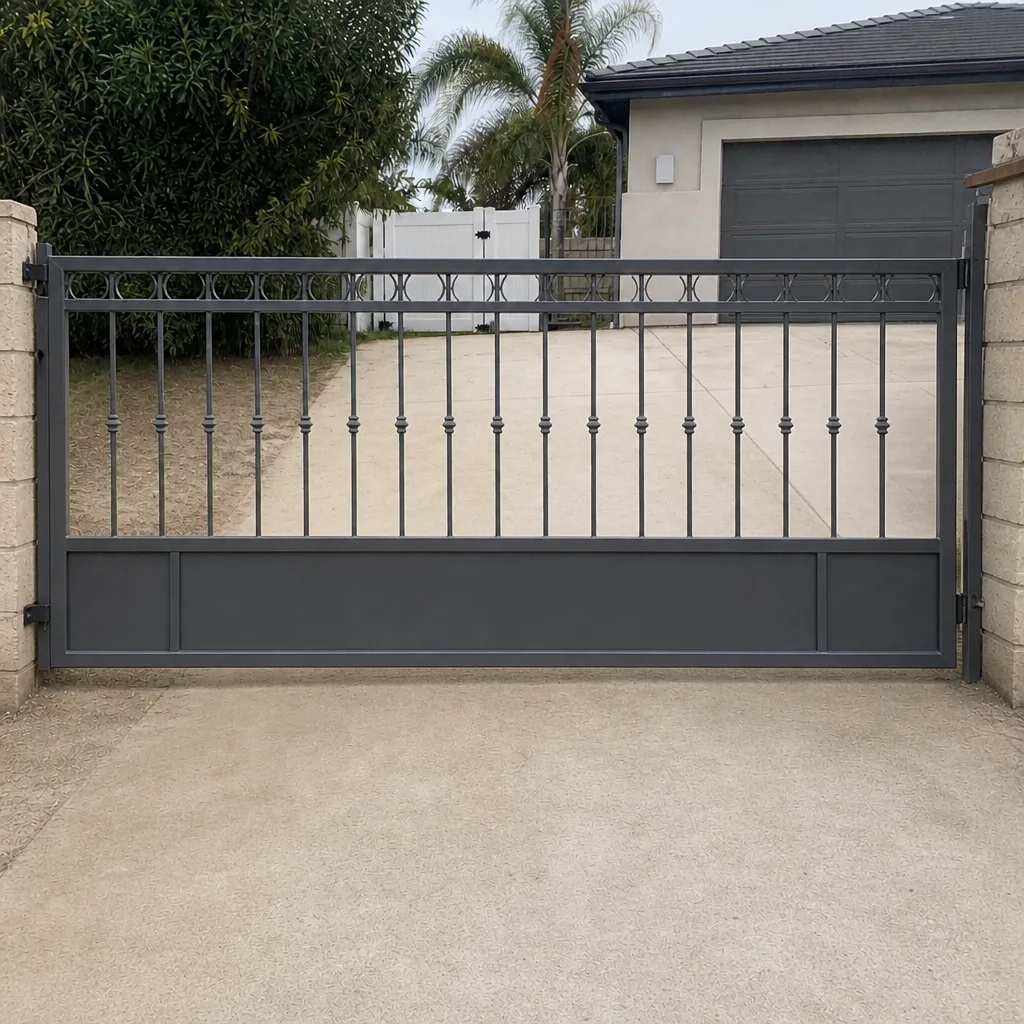
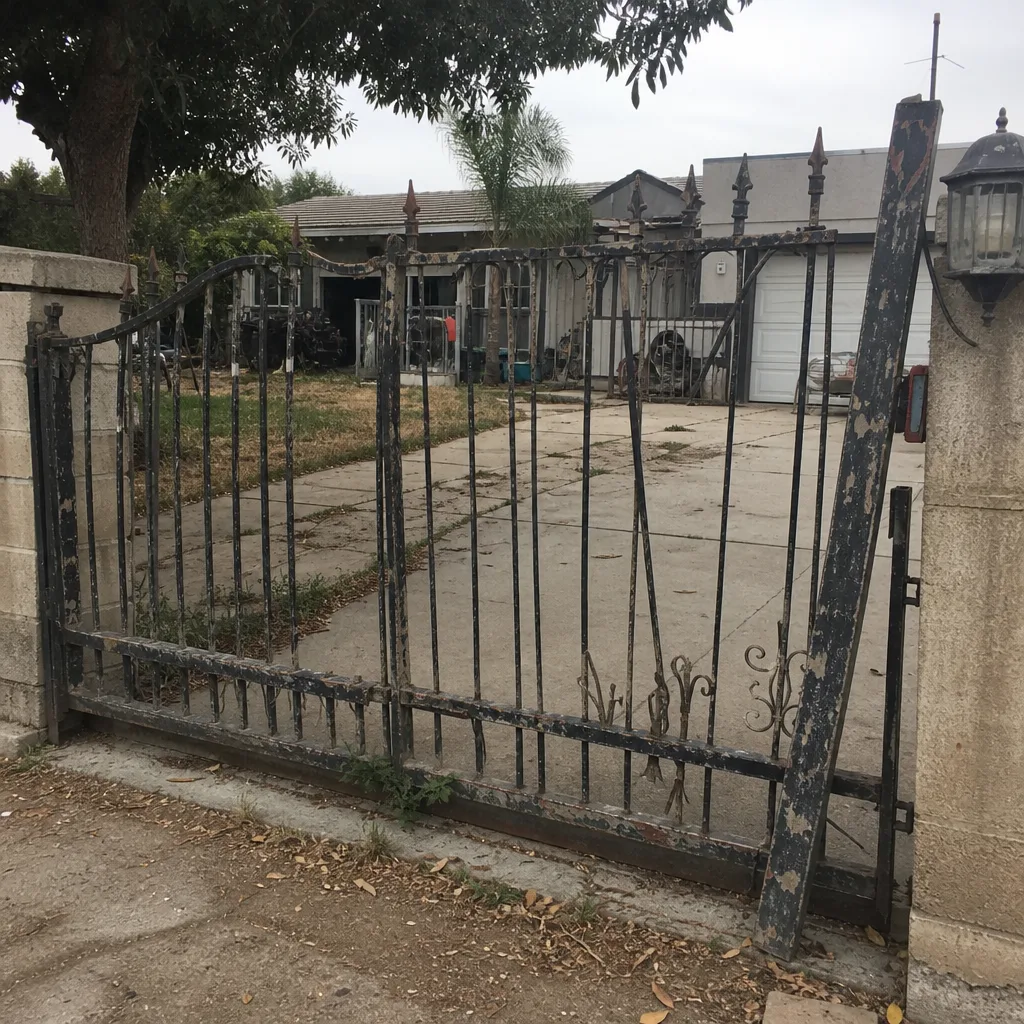
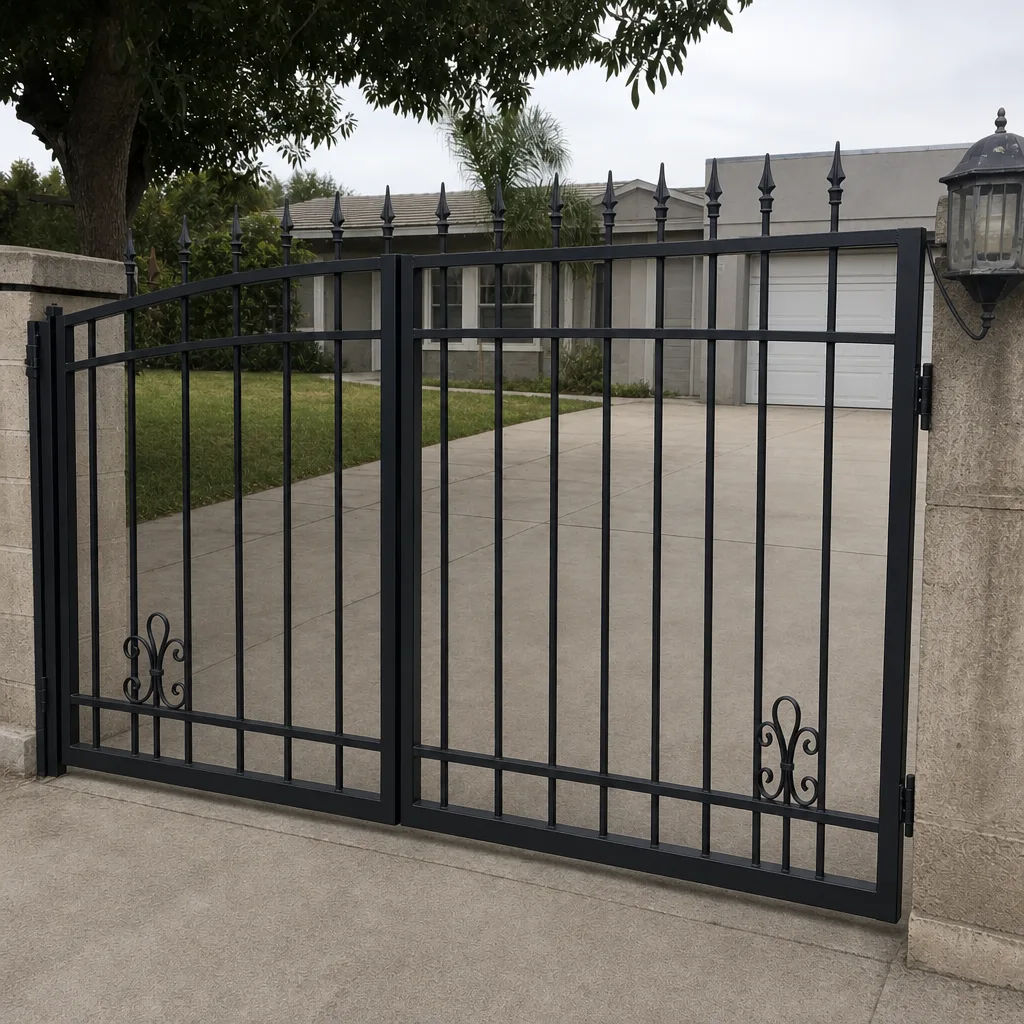
See the difference
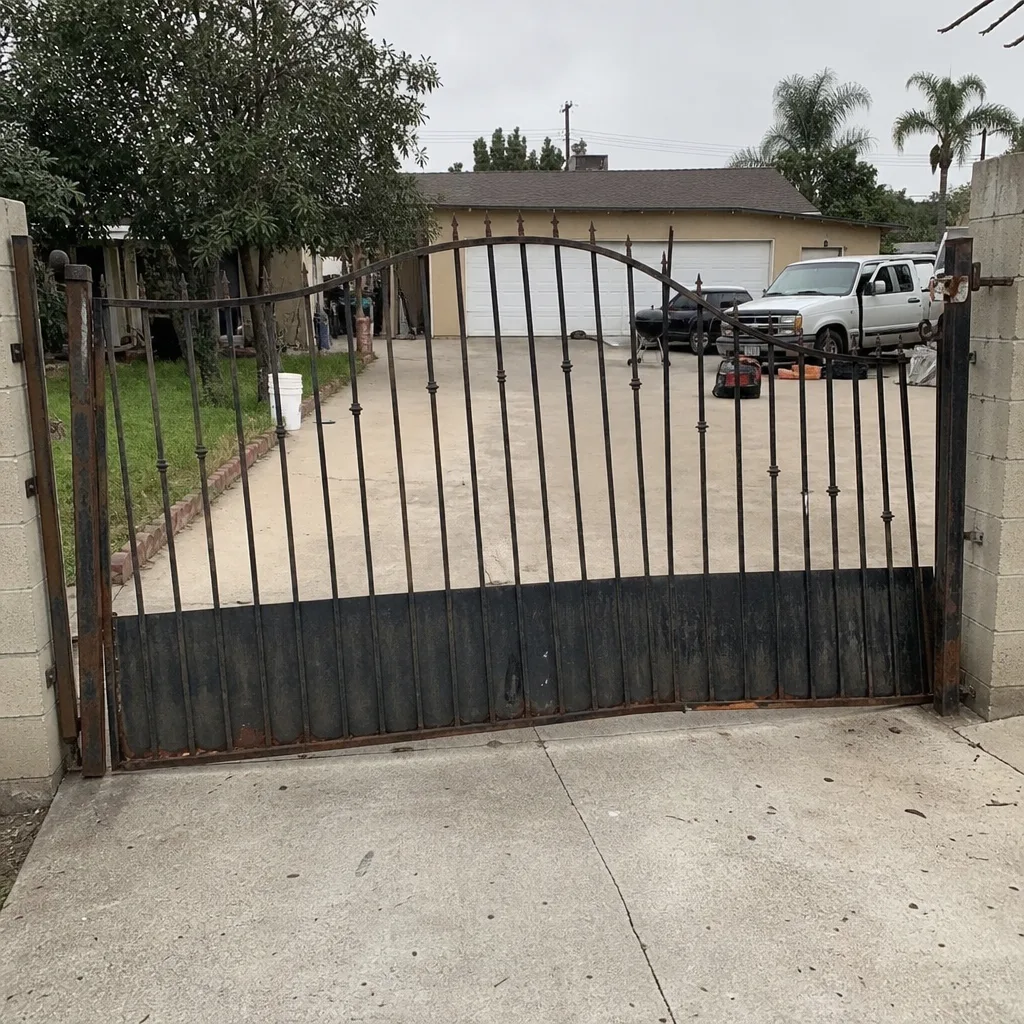 Before
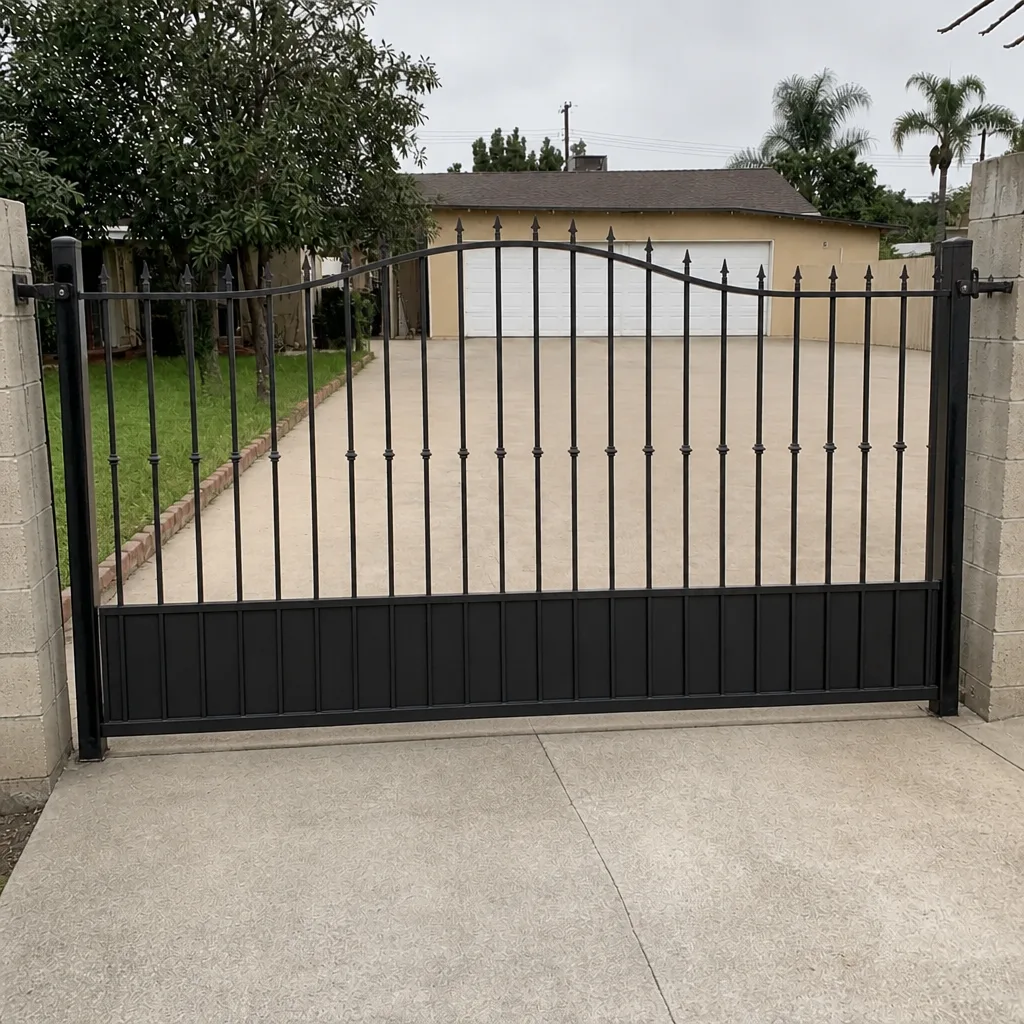 After
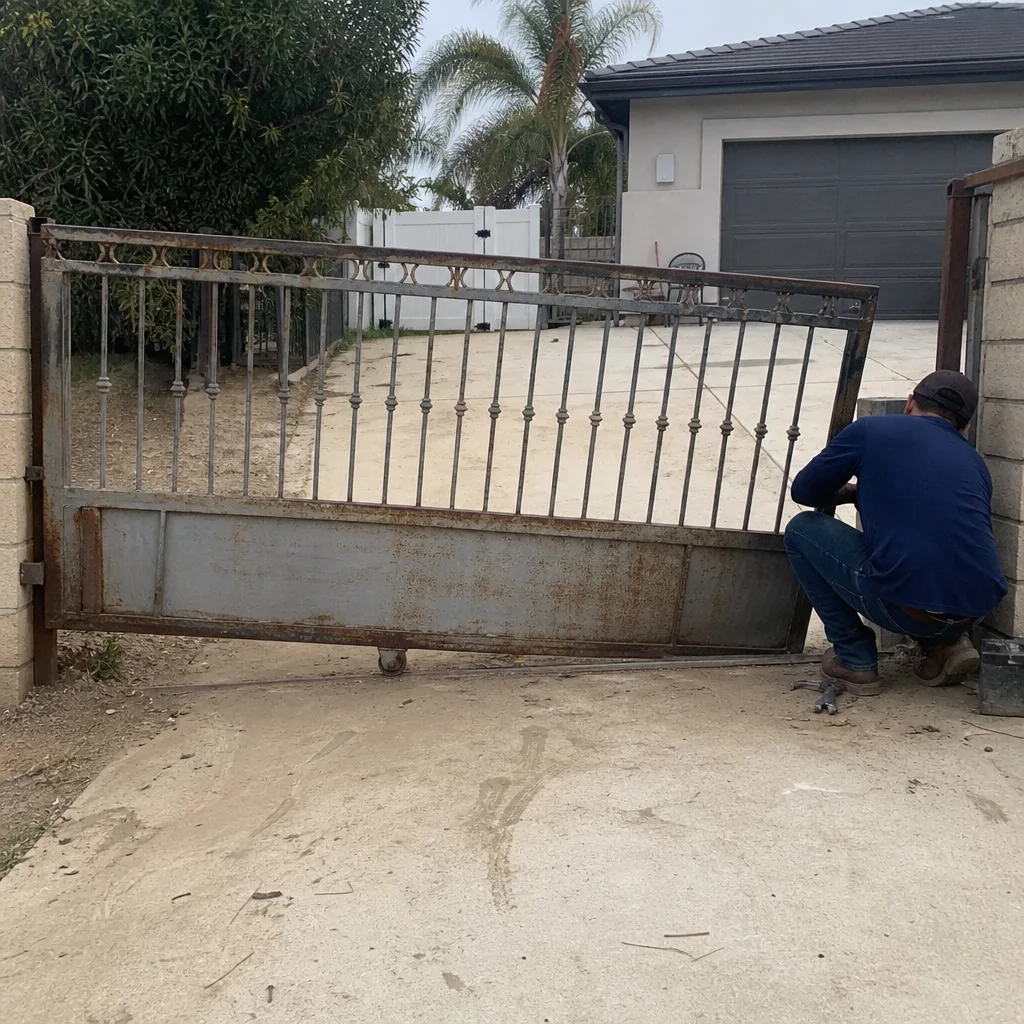 Before
 After
 Before
 After
When to Call a Professional
Some gate problems can be handled with a visual check, but most repairs on automated gates in Eastvale need a trained technician. Call a professional if your gate makes grinding or popping noises when it moves, if it reverses suddenly before closing, if the remote works sometimes but not consistently, or if the gate has come off its track or is sagging visibly. Electric gate work always deserves a trained hand: the wiring and control boards carry voltage, heavy gate panels can crush if they fall, and a slide gate that jumps its track is a serious hazard. Eastvale homeowners can reach Gate Repair Eastvale for a free estimate by calling (855) 601-8166.
Frequently Asked Questions
Most residential gate repairs in Eastvale run between $250 and $600 for the full job, including parts and labor. Simple repairs like photo eye replacement can run $175 to $300, while motor replacements on automated gate systems typically fall between $600 and $1,400 depending on the brand and gate size. The written estimate sets the final price. Call (855) 601-8166 for a free quote on your specific gate.
In most cases, yes. We answer 24/7 and offer fast dispatch from 7am to 7pm, Sunday through Friday, so an Eastvale electric gate that fails in the morning can usually be diagnosed and repaired that day. If a specific part has to be ordered, we’ll tell you that before any work starts. Call (855) 601-8166 and we’ll get a technician to your property as quickly as the schedule allows.
Shared entry gates in Eastvale HOAs cost more because they cycle more often, serve more users, and carry higher liability and safety requirements than a single-family driveway gate. The systems also tend to be more complex, with multiple keypads, visitor call boxes, loop detectors, and pedestrian gates all running through one control board. None of that is a reason to overpay, but it is a legitimate cost difference.
We work on LiftMaster, FAAC, BFT, Linear, Viking, Ghost Controls, DoorKing, Elite, and Mighty Mule systems, covering both residential and commercial applications. That brand familiarity means faster diagnosis and better parts sourcing. If your gate isn’t on that list, call us anyway: we’ll tell you honestly whether we can source the parts.
Yes. The estimate is free, and the price is set per job by the written estimate. There is no diagnostic fee, no trip charge, and no cost to hear what the repair will take. You’ll know the price before any work begins. Call (855) 601-8166 to schedule yours in Eastvale.
First, check whether the gate has power and whether the manual release is engaged. If the breaker is on and the gate still won’t move, don’t force it open: a powered gate that’s stuck can be under tension or have a damaged track. Call a professional. We answer 24/7, and a call outside dispatch hours is booked into the next opening, Sunday through Friday, 7am to 7pm.
The Bottom Line
Gate repair pricing in Eastvale isn’t a mystery once you understand the parts, the labor ratio, and the brand factors that move the number. Most quotes are honest, but the range between the lowest and highest quote for the same job can be fourfold, which means you need to know what you’re approving. Ask for a parts breakdown, get the warranty in writing, and work with a gate specialist who knows your brand. The right contractor saves you money not by charging less per hour, but by fixing the problem correctly the first time, with a price you agreed to before the work started.
Written by the team at Gate Repair Eastvale, serving Eastvale since 2014.