
Last updated November 4, 2026
 Wrought iron
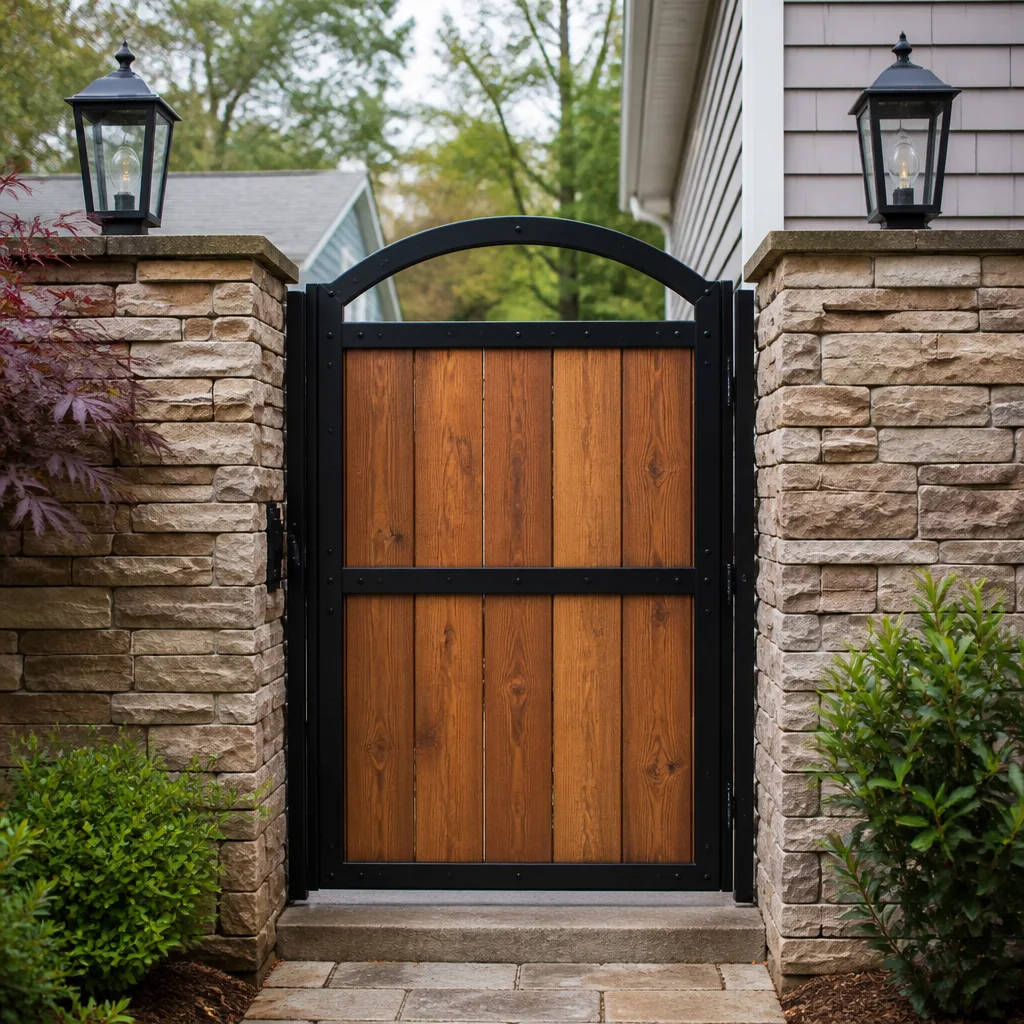 Wood & steel frame
 Farm & ranch
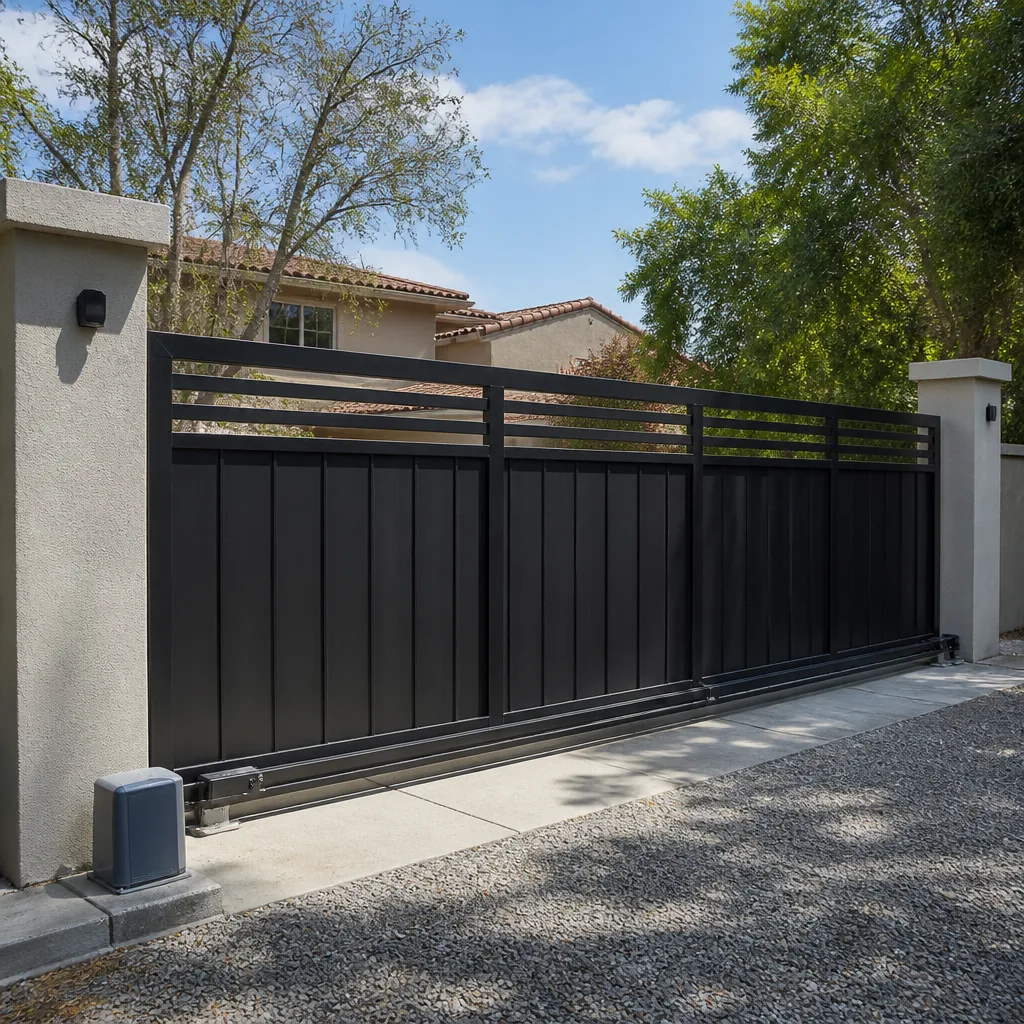 Sliding driveway gates
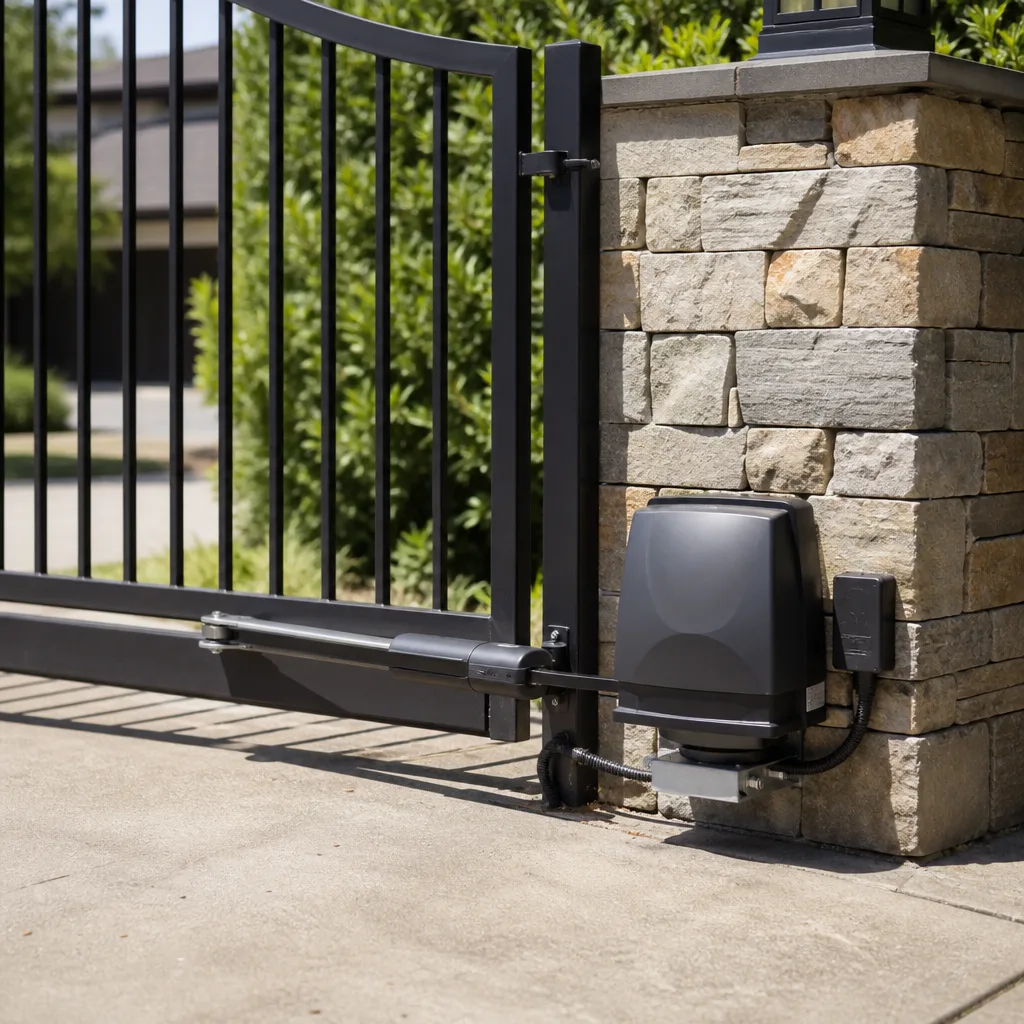 LiftMaster operators
Free on-site gate assessment - hinges, posts, and your LiftMaster or Nice gate operator checked before anything is quoted
The assessment is free and the quote is the invoice.
Get your free estimateGate Repair Maintenance Checklist for Eastvale Homeowners
Most gate maintenance advice reads like it was written for a generic suburban yard anywhere in America. But Eastvale is not generic. Our summers push past 100°F, Santa Ana winds arrive every autumn with enough force to strip loose hardware, and sprinkler systems running twice a week send a fine mist exactly where gate electronics sit. The most common reason Eastvale gates fail before their expected lifespan isn’t lack of maintenance. It’s maintenance done on the wrong schedule for this climate. This guide walks through a seasonal checklist built for Eastvale’s actual weather patterns, not a four-season template that assumes snow. You’ll learn which tasks matter most here, which ones can wait, and which maintenance mistakes quietly void manufacturer warranties.
Styles & brands we work with
- Wrought iron
- Wood & steel frame
- Farm & ranch
- Sliding driveway gates
- LiftMaster operators
Quick Answer
A practical gate repair maintenance checklist for Eastvale homeowners should focus on three local stressors: summer heat above 95°F, autumn Santa Ana winds, and year-round irrigation overspray. Check photo eye lenses, hinge welds, limit switch channels, and any component within reach of a sprinkler head every 60 to 90 days. Deep-clean the track, torque hinge bolts, and test the safety reverse monthly during summer and after every major wind event.
Table of Contents
- Why Eastvale’s Climate Demands a Different Checklist
- The Monthly Eastvale Gate Checklist
- Summer Heat Tasks: The 95°F Problem
- Santa Ana Wind Inspection: What Most Homeowners Skip
- Irrigation Overspray: The Silent Gate Killer
- Month-by-Month Maintenance Calendar for Eastvale
- Maintenance Mistakes That Void Warranties by Brand
- Common Mistakes to Avoid
- When to Call a Professional
- Frequently Asked Questions
- The Bottom Line
Why Eastvale’s Climate Demands a Different Checklist
Eastvale sits inland, in a valley that collects heat and holds it. Summer daytime temperatures routinely exceed 100°F, and the sun here is direct enough to degrade plastics and powder coatings faster than coastal communities experience. Then, starting around September and October, Santa Ana winds sweep through with gusts that push gates against their stops, flex welds, and drive dust into every moving part. On top of that, most Eastvale yards run irrigation systems year-round because the climate is dry. Sprinkler heads positioned near a gate line introduce moisture, mineral deposits, and corrosion that never appear on a checklist written for wetter or cooler regions.
A generic quarterly inspection will catch some of this. But it misses the timing. Checking weld stress in March, for example, is less useful than checking it in November, after the first real Santa Ana event. Checking photo eye degradation in January tells you nothing. Checking it in August, after six weeks of triple-digit heat and direct UV exposure, tells you a lot. This is the core of the Eastvale approach: same tasks, correct timing, specific sequence.
The Monthly Eastvale Gate Checklist
Monthly checks take about fifteen minutes and prevent most of the failures we see on Eastvale properties. You’re not fixing anything during these checks. You’re catching early signs before they become a repair call.
- Test the auto-reverse safety function. Place an empty cardboard box or a traffic cone in the gate’s path and close it. The gate should stop and reverse before applying serious pressure. Test this twice, once for the open cycle and once for the close cycle if your system supports both. This matters more in summer, when a misaligned sensor or stiff hinge can make a gate close harder than it should.
- Listen to the motor. Stand near the operator while the gate cycles. A smooth, consistent hum is normal. A grinding sound, a chattering sound, or a motor that starts loud and slows down suggests bearing wear or increased resistance at the hinges. In Eastvale’s dust, resistance builds faster than you’d expect.
- Look at the photo eyes. Locate the two sensor units on either side of the gate opening. They should be level with each other and pointed directly at one another. A lens that has turned cloudy, yellowed, or cracked from UV exposure will intermittently refuse to close the gate even when the path is clear. More on this in the heat section below.
- Clear debris from the track and limit switch channel. If you have a slide gate, run your hand along the V-track or the flat rail. Remove gravel, leaves, and caked dust. For cantilever slide gates, inspect the rollers and the space beneath the gate frame. Dried leaves here are common after any Eastvale wind shift.
- Tighten the obvious bolts. Use a socket wrench on the hinge bolts at the gate post and the gate leaf, plus the bolts on the operator arm bracket if your system has one. Do this gently. Over-tightening deforms the metal and makes the gate bind.
- Check for sprinkler contact. Walk the area around the gate line while the sprinklers run, if you can, or soon after. Any water that touches the motor housing, control box, receiver, or low-voltage wiring is a problem. We cover this in detail below.
Keep these checks on a phone reminder tied to the first weekend of each month. Consistency matters more than thoroughness here, because the fastest wear in Eastvale comes from heat and dust interacting with old grease and loose hardware.
Summer Heat Tasks: The 95°F Problem
Above 95°F, two specific problems appear on Eastvale gates that never show up in a comfortable spring inspection. The first is UV-degraded photo eye lenses. The plastic lens on most photo eye sensors is clear when new. After two or three summers of direct afternoon sun, it becomes milky, scratched, and slightly ambered. That scattering of the infrared beam causes random failure to close, and it usually happens in the hottest part of the day, when the plastic expands. If your gate struggles to close in the afternoon but works fine in the morning, the lenses are a likely cause. Wipe them with a dry cloth first, but replacement is the real fix when the plastic has already yellowed.
The second problem is swollen aluminum frames that only bind above a certain temperature. Aluminum expands at roughly twice the rate of steel. A gate leaf that swings freely at 80°F can bind against the post at 102°F if the installer left the clearance too tight. This shows up as a gate that slows down mid-cycle in summer, or a gate that refuses to fully close on the hot side of the property. A professional adjustment at the hinge works. Forcing the gate closed or sanding the edge is a structural mistake and creates a weak point.
Lastly, heat accelerates grease breakdown. High-temperature grease is rated for exactly this, but many gate installations use standard bearing grease that thins out and drips off the hinge pin by mid-July. If you see oil streaks running down from the hinges, it’s time to clean and re-lubricate with a product meant for heat exposure. On electric gate repair calls during August, we find more hinge resistance than motor failure, because the motor is working against a gate that no longer moves freely.
Santa Ana Wind Inspection: What Most Homeowners Skip
Santa Ana winds hit Eastvale from the northeast, dry and gusty, usually between September and December. A sliding or swinging gate with a solid panel acts like a sail. The forces involved are much higher than the operator is rated for, and repeated gust loading does two things most homeowners never spot until failure.
The first is stress cracks at hinge welds. On steel gates, the weld itself is usually the strongest part. The heat-affected zone just beside the weld is the weakest. Wind gusts flex the gate against the weld repeatedly, and hairline cracks form in that boundary. They often begin at the bottom hinge and progress upward. If you see rust streaks or a thin dark line running parallel to a hinge weld, get it assessed before the hinge tears off the post.
The second, lesser-known issue is debris in the limit switch channel. On many slide gate systems, the operator uses a magnetic or mechanical limit switch that sits under a removable cover on the track rail. Santa Ana winds drive fine dust, leaf fragments, and small gravel into that channel. When enough material accumulates, the gate stops short of fully open, or slams against the end stop because the limit switch never triggered. This is a common cause of noisy operation in October and November.
After any wind event with gusts you could feel while walking, do a five-minute inspection. Check the hinge weld zone, open the limit switch cover and blow it out with a leaf blower or canned air, and remove any tumbleweeds wedged against the gate or under the operator. We’ve seen residential gates in Eastvale survive years of normal use and then fail in a single Santa Ana season because a small crack was left unchecked in October.
Irrigation Overspray: The Silent Gate Killer
The single most preventable maintenance problem in Eastvale is sprinkler water landing on gate components. Eastvale’s water is hard. When sprinkler overspray dries on a gate track, hinge, or motor housing, it leaves behind mineral scale. That scale is abrasive. It acts like fine sandpaper on moving parts, and it builds up faster than you’d imagine.
The components that fail first from overspray are, in order of frequency: the low-voltage wiring connections at the control board, the receiver antenna on top of the operator, the keypad wiring harness, and the bottom hinge on swing gates. Water travels along conduit lines and gathers at the lowest connector. Corrosion there causes intermittent gate behavior, and it’s often misdiagnosed as a failing motor or control board by someone who doesn’t work on gates every day.
If a sprinkler head is within three feet of your gate line, adjust it now, even if it only “mists” the area. Water that lands on a hot motor housing in August evaporates quickly, but the dissolved minerals stay. Over a season, that white crust becomes a thermal insulator, which makes the motor run hotter. Over three seasons, that same crust works into the seal and lets moisture inside.
For a quick irrigation check, run each sprinkler zone manually and watch where the water lands. Mark any head that touches any part of the gate with a landscape flag. Then either adjust the spray pattern, cap the head, or relocate it. This single step does more to extend gate life in Eastvale than any amount of cleaning or lubrication.
Month-by-Month Maintenance Calendar for Eastvale
Eastvale does not have four distinct seasons in the way this kind of calendar usually assumes. We have a long dry summer, a windy autumn, a short mild winter, and a windy spring that often skips rain entirely. Here is the calendar we recommend for Eastvale homeowners.
January and February: Low-Speed Inspection
These are the mildest months. Do the full monthly checklist, plus a visual inspection of all exposed wiring. With rain rare, this is the best time to check conduit, wire nuts, and grounding connectors for corrosion. Order replacement parts now if anything looks marginal, before the summer heat and the spring winds arrive.
March and April: Spring Wind Prep
Spring winds are not as strong as Santa Ana events, but they still push loose gates around. Tighten all hinge and bracket bolts. Lubricate hinges, rollers, and the track with a dry or silicone-based lubricant that won’t attract dust. Test the manual release. Confirm the gate can be moved by hand if the power fails.
May: Pre-Summer Service Window
May is the month to schedule any professional work you’ve been putting off. A technician can service the gearbox, inspect the chain or belt, replace photo eye lenses, and address any clearance issues before the heat arrives. Once June hits, Eastvale heat becomes part of every repair equation.
June through August: Heat Mode
Run the monthly checklist every four weeks, not every six. Pay attention to afternoon behavior. A gate that works fine at 8 a.m. and misbehaves at 3 p.m. is telling you something about thermal expansion or UV-degraded sensors. Keep the track clear of dust. Check photo eye alignment more often, since hot air and expanding brackets shift things just enough to matter.
September and October: Santa Ana Wind Season
After each major wind event, do the hinge weld inspection and limit switch channel check described above. Also inspect the anti-sag rollers and the wheel-carrier bolts on slide gates. This is the season when small cracks become visible, and the difference between a quick weld repair and a full hinge replacement is two weeks.
November and December: Post-Wind Repair and Debris Control
By November, the worst Santa Ana events have usually passed. This is a good time to schedule any weld repairs or hardware replacements identified in October. It’s also the right time to deep-clean the entire gate. Power-wash the powder-coated surfaces gently, clean and re-lubricate moving parts, and clear all leaf litter from the track, under the gate, and around the operator.
This calendar assumes a normal Eastvale weather year. Adjust it forward or back by two or three weeks if a particular season starts early. The pattern to remember: inspect in mild weather, repair early, monitor in heat and wind, and do the heavy cleaning after the wind season settles.
Maintenance Mistakes That Void Warranties by Brand
Most gate equipment warranties are written to exclude failures caused by improper installation, unauthorized modification, or service by someone without the right training. What many Eastvale homeowners don’t realize is how easy it is to cross into that exclusion territory with a well-intentioned maintenance routine. Some tasks, done incorrectly, invalidate the warranty on the operator or the gate hardware.
On LiftMaster systems, the most common warranty-killing mistake is adding non-factory oil or grease to the motor or gearbox. LiftMaster gearboxes are sealed and lubricated for the life of the unit. Opening the housing to add grease, or using a spray lubricant through a vent, is explicitly disallowed in the owner’s manual. The same goes for changing gearbox oil on FAAC and BFT operators unless the specific service interval from the manufacturer’s manual calls for it and the document says it is user-serviceable.
On Viking and Linear commercial operators, warranty problems usually come from bypassing the safety circuit to diagnose a sensor issue. A homeowner or a well-meaning handyman ties the photo eye wires together, or jumps the loop detector input, and the board is now running unprotected. If a later fault damages the board, the manufacturer is within its rights to deny the claim. Never bypass a safety interlock, even for testing. The correct move on any brand is to isolate and test components individually, with the power off.
The other big warranty killer, across Ghost Controls, Mighty Mule, and Elite residential openers, is modifying the control board mounting or splicing extra wire into the harness to add an aftermarket accessory. A clean installation with the proper plug-in accessory port is fine. Cutting into the harness is not. If you’re unsure, ask a gate specialist before modifying anything. A wrong five-minute wiring change can void a three-hundred-dollar board.
Our approach is brand-agnostic. We work from the system in front of us, not a preferred parts supplier, so the maintenance advice you get respects what your specific operator’s warranty actually says. When we work on LiftMaster, FAAC, or BFT systems in Eastvale, we do it the way the manufacturer’s documentation requires.
Common Mistakes to Avoid
- Using WD-40 on gate hinges and rollers. WD-40 is a solvent and water displacer, not a long-term lubricant. In Eastvale’s dust, it creates a sticky film that attracts grit and turns into grinding paste. Use a dry silicone or a lithium-based lubricant meant for gate hardware instead.
- Tightening hinge bolts until they stop turning. Hinge bolts on swing gates need a specific torque. Over-tightening deforms the hinge leaf, binds the gate, and can crack the post weld. Snug is right. Cranked down is wrong.
- Ignoring a gate that works “kind of” in hot weather. Intermittent afternoon failures are not random. They are heat expansion or UV sensor degradation making themselves known. Waiting until the gate stops working entirely converts a simple adjustment into a full component replacement.
- Treating sprinkler mist as harmless. A fine mist that dries on a hot motor housing still deposits minerals. In Eastvale’s hard water, those minerals accumulate. Adjust the sprinkler even if it only looks like a light fog.
- Testing safety reverse with your hand. Never use your body to test the gate’s auto-reverse. Use a cardboard box or a traffic cone. If the pressure limit is misadjusted, you’ll learn it the hard way. This is a safety system, and it exists to prevent serious injury from a heavy moving panel.
- Lubricating the chain on a chain-driven slide gate without cleaning it first. Oil on a dirty chain creates an abrasive slurry that accelerates sprocket and chain wear. Remove the old grime first, then apply a small amount of chain lubricant, then wipe off the excess. Doing this in Eastvale’s dust means wiping the excess thoroughly.
- Adjusting the force limit to “fix” a gate that’s actually binding. Force adjustments are for fine-tuning safety, not for overpowering a mechanical problem. If the gate hesitates or reverses because the hinges are stiff, increasing the force setting puts extra load on the gearbox and motor. The mechanical problem still exists, and now the operator is working harder against it.
When to Call a Professional
A homeowner can do the visual checks, the controlled testing, and the gentle cleaning described here. But some situations call for a gate specialist, especially anything involving the operator’s internal wiring, the control board, the capacitor, or a hinge that carries the full weight of a heavy gate. If you see a crack at a hinge weld, call before the gate falls. If the motor hums but the gate doesn’t move, stop testing and call, because continuing to cycle a stalled motor damages the capacitor and the gearbox. If the gate trips a breaker, call, because the problem may be in the low-voltage circuit or the line voltage supply, and probing around those wires without training is genuinely dangerous. If you’re uncertain whether a maintenance task voids a warranty on a LiftMaster, FAAC, or BFT system, call first. Gate Repair Eastvale offers free estimates in Eastvale. Call (855) 601-8166. We answer 24/7. Fast dispatch from 7am to 7pm, Sunday through Friday.
Frequently Asked Questions
Monthly during summer and Santa Ana season, and every six to eight weeks during the milder months. A gate that gets daily use, or a gate positioned near sprinkler overspray, benefits from a tighter schedule. The Eastvale-specific pattern is to increase checks in June through October, when heat and wind are doing the most damage, and to do deeper cleaning in the calm months.
Adjusting sprinkler heads away from the gate line prevents more failures than any other single task. Overspray causes corrosion on wiring, mineral buildup on tracks, and motor overheating, all of which show up slowly and then fail suddenly. A close second is checking the photo eye lenses for UV clouding before August.
Yes, and you should, but use the right product and clean the surface first. A dry silicone or lithium-based lubricant works for most gate hardware. Avoid spray solvents like WD-40 as a long-term lubricant. On the operator itself, do not add any lubricant unless the manual for your specific brand says that the part is user-serviceable. On sealed gearboxes from LiftMaster, FAAC, and BFT, adding lubricant can void the warranty.
It can, but only if the maintenance is done correctly. Most operator warranties cover manufacturing defects, not failures caused by improper service. Incorrect lubrication, unapproved wiring changes, and bypassed safety circuits are all grounds for warranty denial. When a specific task involves anything beyond what the owner’s manual shows, we handle it the way the manufacturer requires. Call (855) 601-8166 for a free estimate if you’re not sure whether a task is safe for your warranty.
That pattern is characteristic of thermal expansion. Aluminum gate frames expand in the afternoon heat and bind against the post, while UV-degraded photo eye lenses scatter the beam more when the plastic is warm. Both issues are addressable, but neither will fix itself as the season cools. A professional hinge adjustment and new photo eye lenses usually settle the problem.
Yes. Same-day service is available for most gate repair calls in Eastvale. We answer 24/7. Fast dispatch from 7am to 7pm, Sunday through Friday. Call (855) 601-8166 and describe the problem, and we’ll book the next available opening.
The Bottom Line
Eastvale gates live in a harsh, specific environment. The summer heat above 95°F degrades plastics and expands aluminum frames. The Santa Ana winds flex welds and fill limit switch channels with debris. The sprinklers, running year-round in a dry climate, push hard water onto wiring and hardware. A gate maintenance for Eastvale homeowners isn’t a copy of a coastal or mountain town checklist. It’s a sequence of inspections timed to heat, wind, and irrigation, done consistently, with the right products, and with the manufacturer’s warranty in mind. Most of it you can do yourself in fifteen minutes a month. For anything that involves internal wiring, a cracked weld, or a component you’re not certain about, call a gate-only specialist before the problem becomes a replacement. Call Gate Repair Eastvale at (855) 601-8166 for a free estimate. We answer 24/7. Fast dispatch from 7am to 7pm, Sunday through Friday.
Written by the team at Gate Repair Eastvale, serving Eastvale since 2014.
See the difference
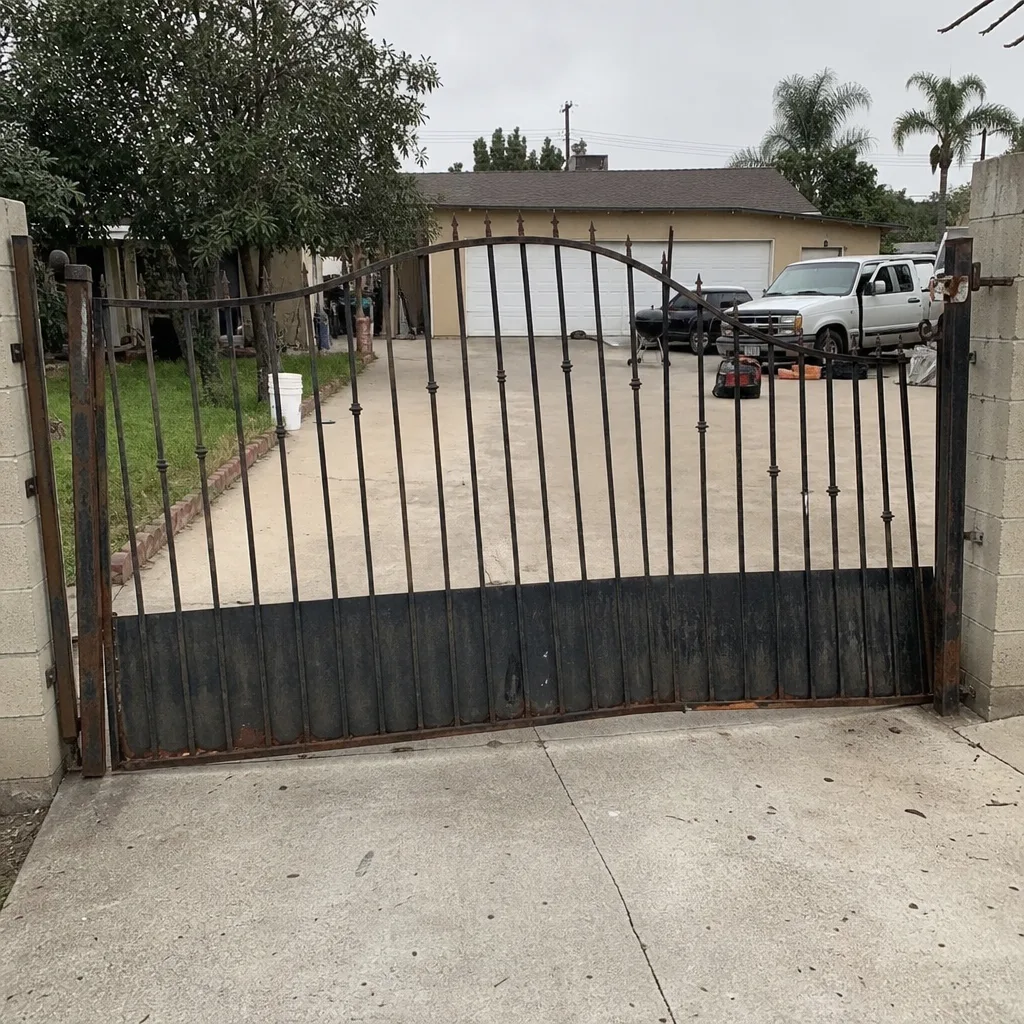 Before
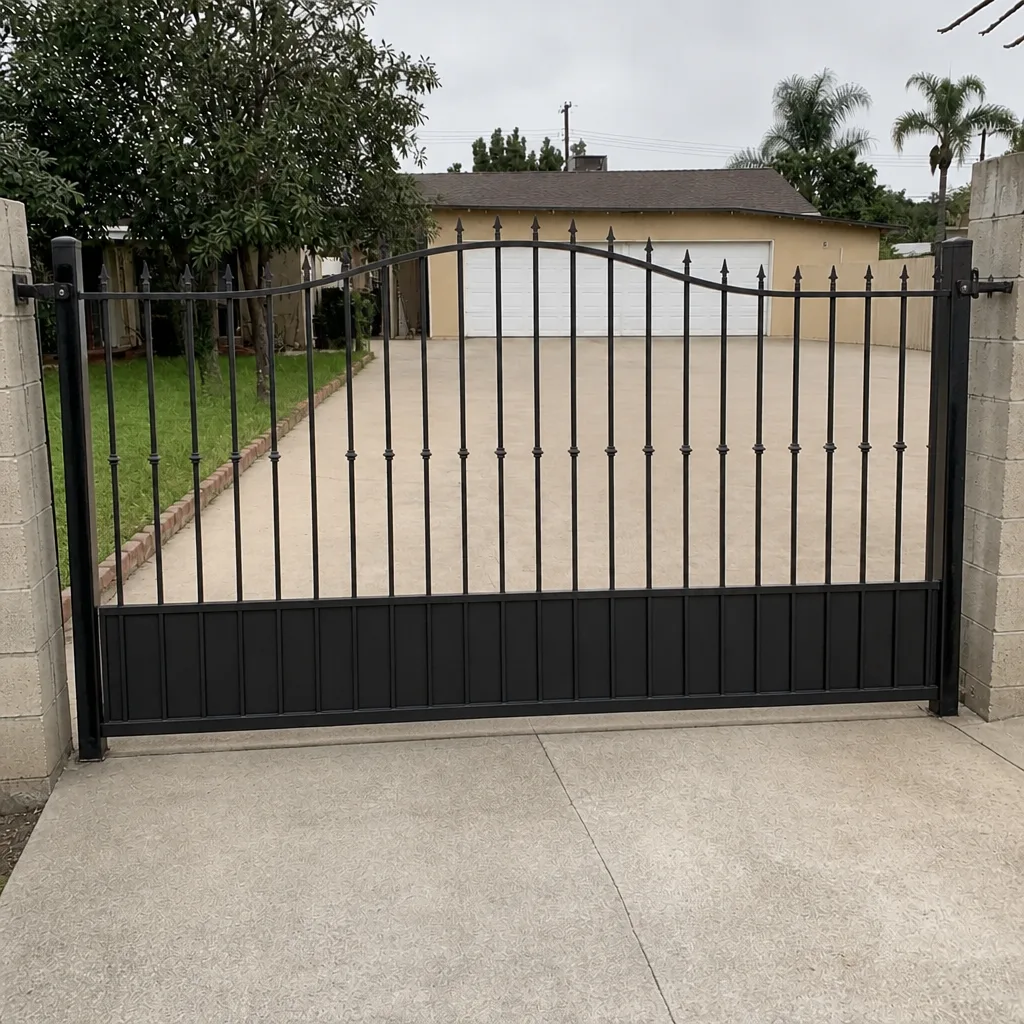 After
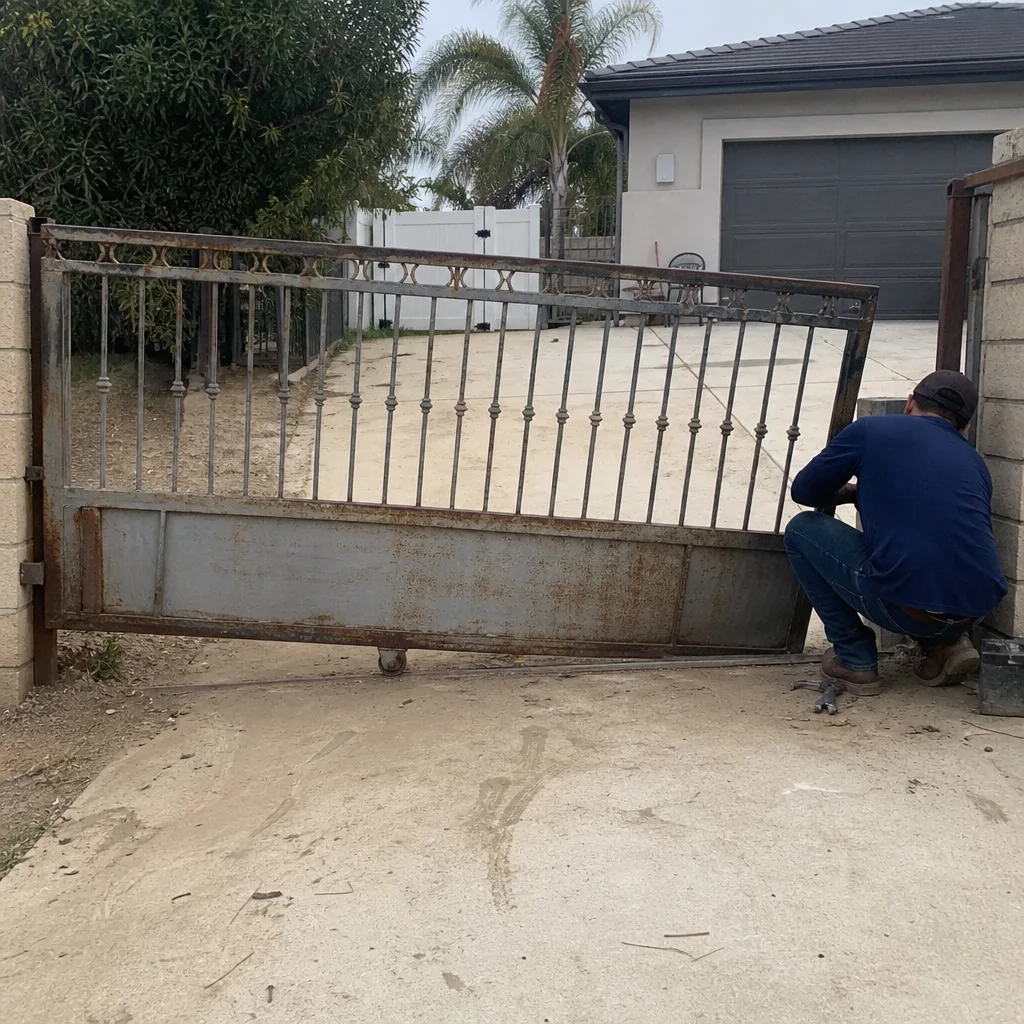 Before
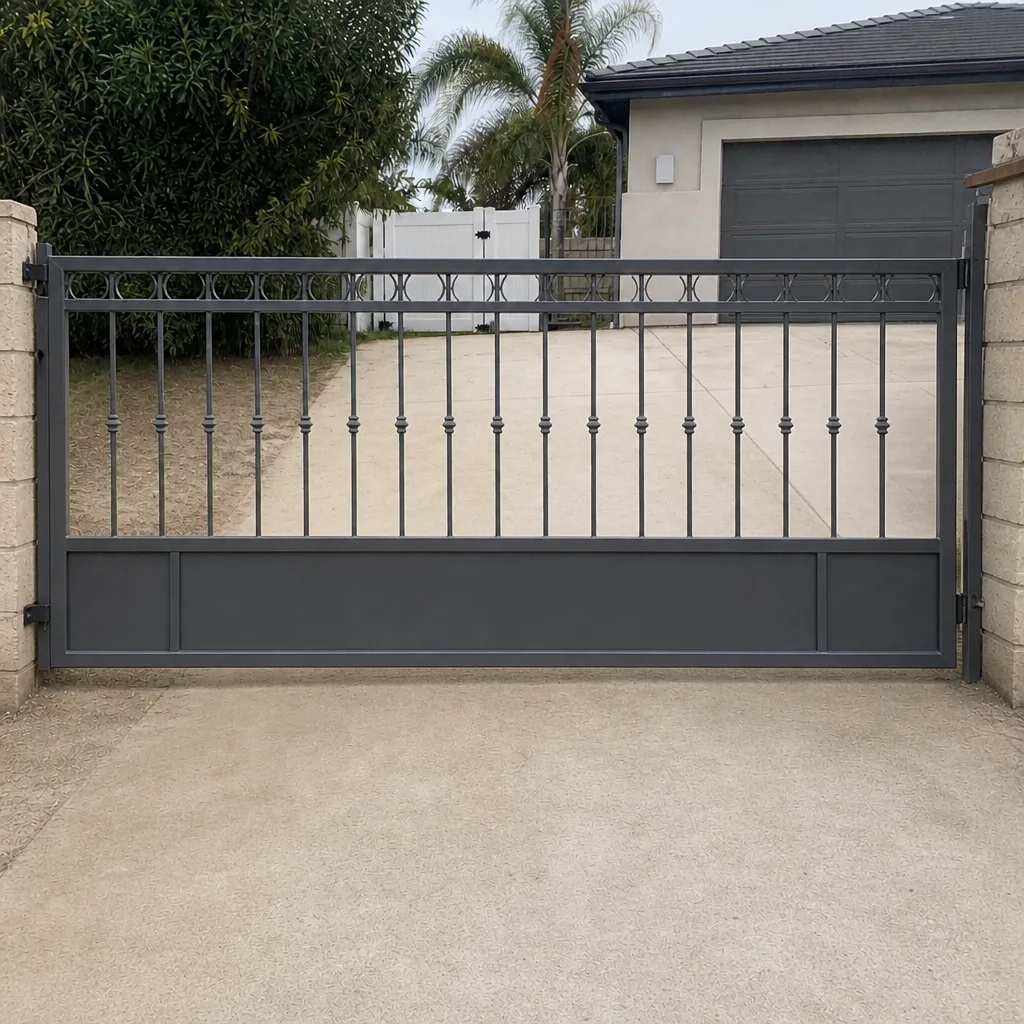 After
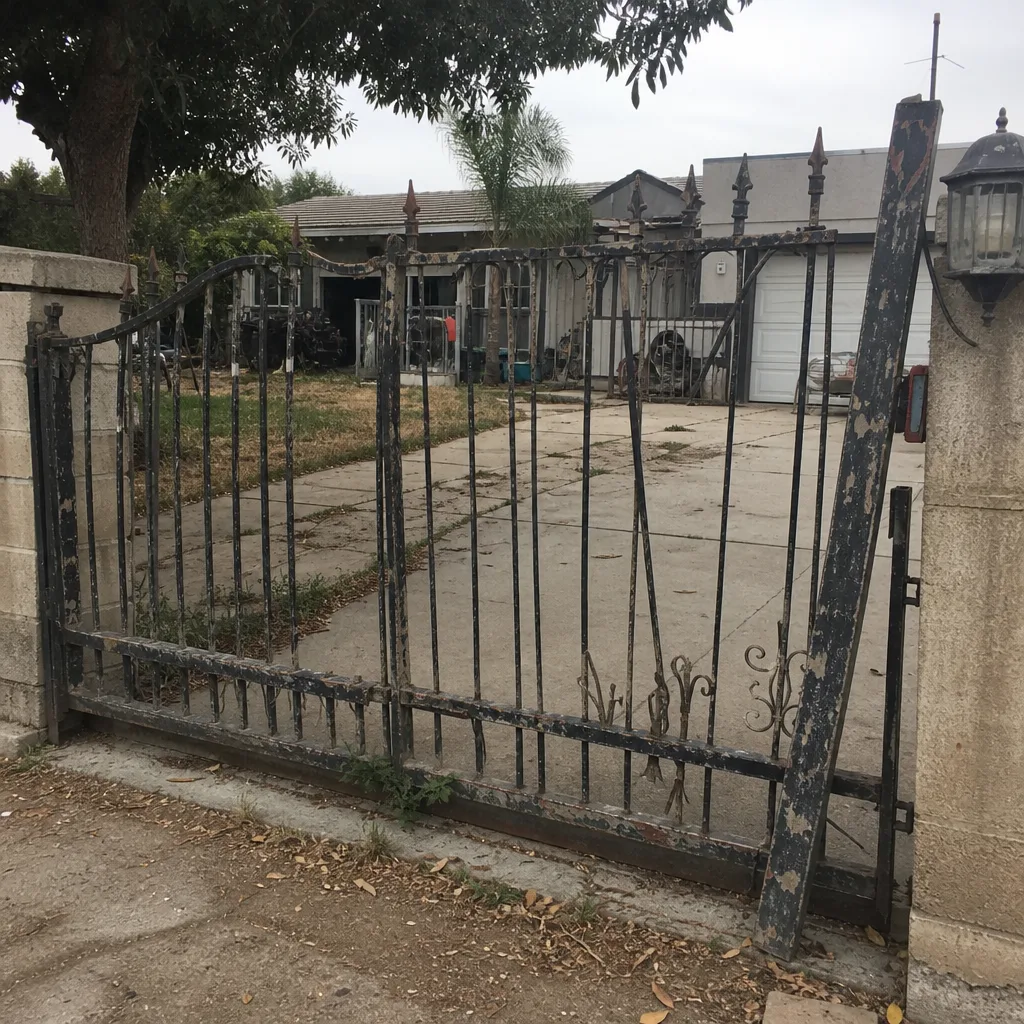 Before
 After