
Last updated November 4, 2026
 Wrought iron
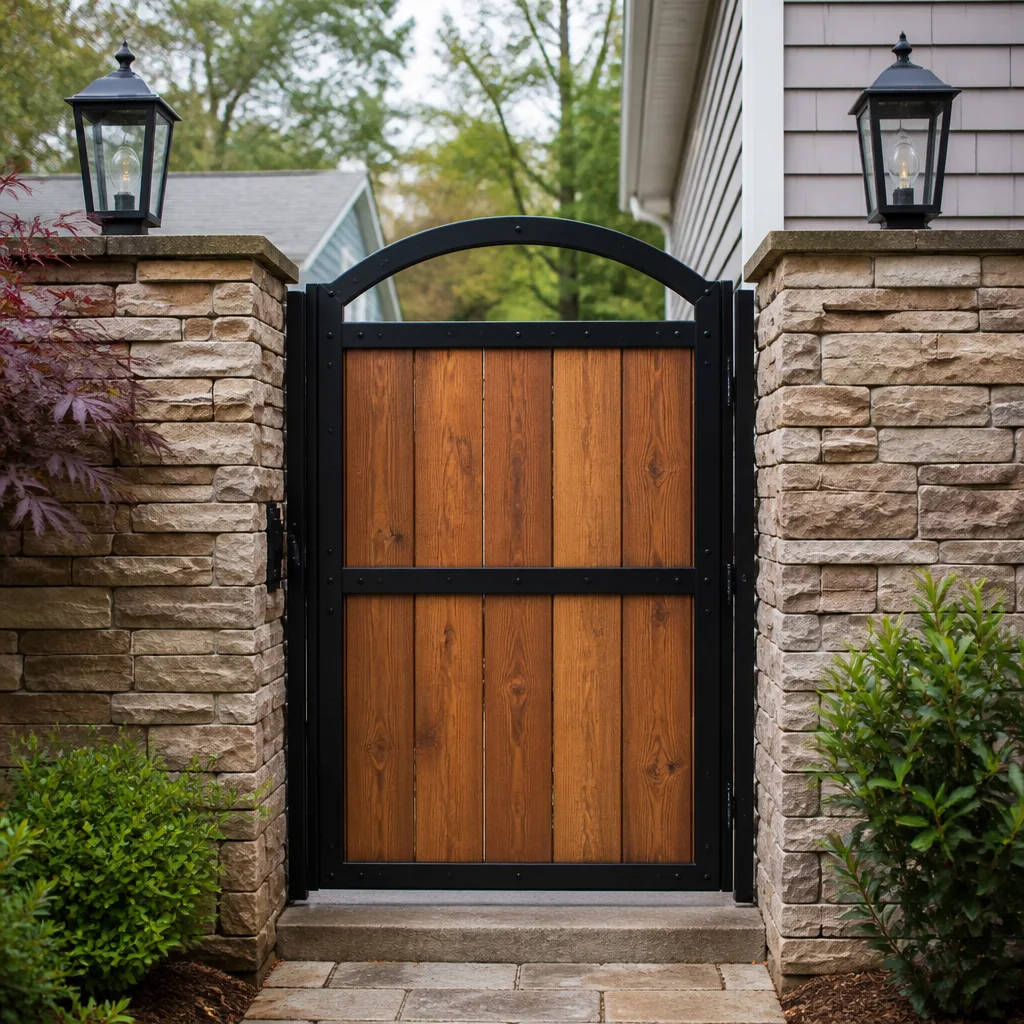 Wood & steel frame
 Farm & ranch
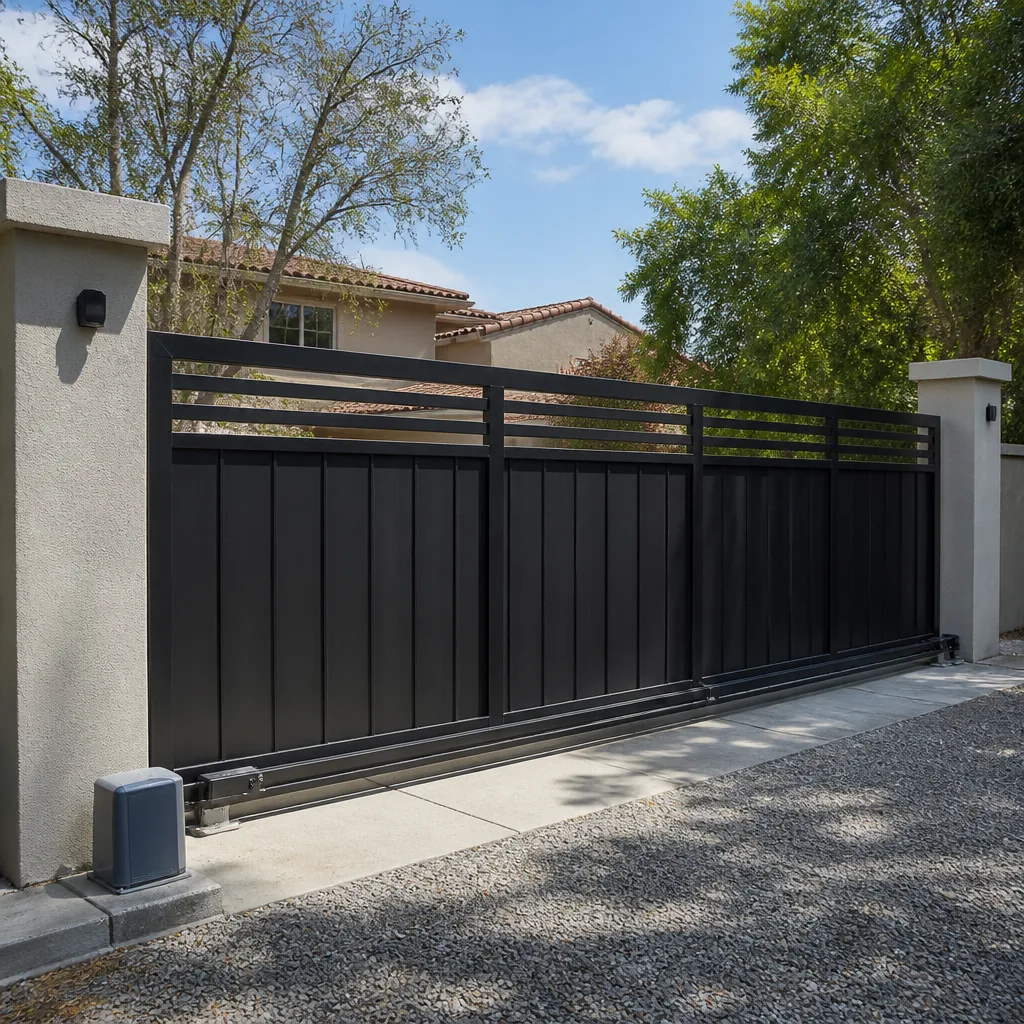 Sliding driveway gates
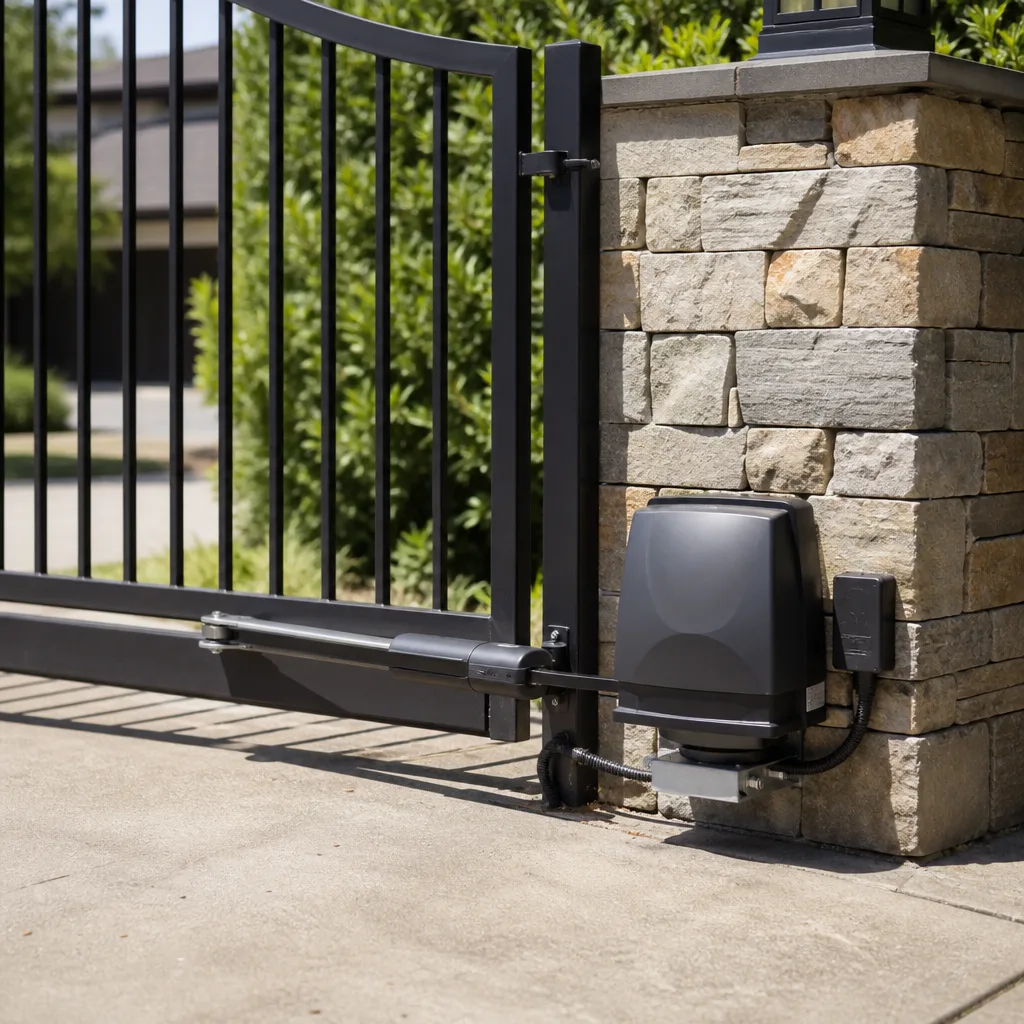 LiftMaster operators
Free on-site gate assessment - hinges, posts, and your LiftMaster or Nice gate operator checked before anything is quoted
The assessment is free and the quote is the invoice.
Get your free estimateGate Repair Permits, Codes & Inspections in Eastvale, CA: What You Need to Know
Most homeowners in Eastvale assume a gate repair is like changing a light fixture: if a technician can do it, it’s fine. That assumption has cost people real money at closing. The Riverside County recorder’s office doesn’t care who swapped a circuit board, but it does care when a new automatic gate operator was wired into a subpanel without an electrical permit, or when a 14-foot steel slide gate went onto new footings without a structural sign-off. This guide walks through what actually requires a permit in Eastvale, what inspectors look for, how HOA CC&Rs fit into the picture, and what to do when you discover unpermitted work from a previous owner. We’ll cover UL 325 safety compliance, the city-versus-county authority question, and how to fix a permit gap before escrow does.
Quick Answer
In Eastvale, gate repair permits are generally required for new automatic gate operator installations, structural changes to posts or footings, and new or extended electrical connections. Like-for-like part swaps such as replacing a worn hinge, a failed sensor, or an existing operator with the same spec typically fall under maintenance and don’t need a permit. When in doubt, call the City of Eastvale Building & Safety Division; for retroactive permitting of past work, expect a plan review and possibly a field inspection.
Styles & brands we work with
- Wrought iron
- Wood & steel frame
- Farm & ranch
- Sliding driveway gates
- LiftMaster operators
Table of Contents
- What Gate Work Needs a Permit in Eastvale
- Who Governs Gate Permits: City of Eastvale or Riverside County?
- UL 325 Compliance: What Inspectors Actually Check
- HOA CC&Rs: The Second Approval Layer in Eastvale
- Unpermitted Gate Work and Real Estate Disclosure
- How to Retroactively Permit an Existing Gate Installation
- What’s Clearly Exempt: Repairs That Don’t Need a Permit
- Common Mistakes to Avoid
- When to Call a Professional
- Frequently Asked Questions
What Gate Work Needs a Permit in Eastvale
Eastvale sits in the northwestern corner of Riverside County, and permit requirements follow the California Building Code (CBC) and the California Electrical Code (CEC) as adopted locally. The practical rule we tell homeowners is simple: if the work changes the structure, the power supply, or the safety system of the gate, assume a permit is on the table. If it restores an existing component to its original condition, it probably isn’t.
Here’s what that looks like in real terms for gate repair and installation work:
- New automatic gate operator installation: Requires an electrical permit for the power run and a building permit if the gate itself is new or structurally modified. This is the most commonly missed permit in Eastvale. A homeowner sees a Mighty Mule opener bolted to an existing gate and assumes it’s a plug-in appliance. It isn’t. Hardwired operators tap the panel, and that’s regulated work.
- New gate posts or footings: Structural. A 14-foot steel slide gate on new concrete pads needs a building permit. The inspector will check footing depth, dowel placement, and post-to-footing connections. Eastvale’s sandy loam and clay soils drain reasonably well, but a leaning gate three years later usually traces back to undersized footings, not the soil itself.
- New electrical branch circuit for the operator: Running a dedicated circuit from the main panel to the gate location is electrical work and needs a permit. This applies even when the operator itself is a like-for-like swap.
- Gate relocation or widening: Moving a driveway gate to a new location changes setbacks and possibly sight lines at the street. That is a plan check situation.
- Adding vehicle detection loops cut into the driveway: Cutting and sawing the concrete or asphalt to install loop detectors for a commercial slide gate is structural modification to the driveway surface and usually needs a permit.
For commercial properties in Eastvale, the bar is higher. Any work on a commercial vehicular gate system, particularly where employees or the public pass through, triggers the full plan review path. We work on BFT and Viking commercial operators across Eastvale, and on those jobs the permit folder is part of the scope from day one.
Who Governs Gate Permits: City of Eastvale or Riverside County?
Eastvale incorporated as a city in 2010, which means building permits are issued by the City of Eastvale, not Riverside County. But the relationship matters because Eastvale contracts with the county for some building and safety services. In practice, a gate permit application starts at the city level, and the plan reviewer will use the current California codes as adopted in city ordinance. We always tell clients to begin with the City of Eastvale Building & Safety Division and let them direct the process.
Why this matters for your project:
- Correct jurisdiction avoids wasted plan fees. Filing with Riverside County directly for a property within Eastvale city limits gets the application bounced or forwarded, which costs time. Start at the right desk.
- Record searches work differently. If you’re buying a home in Eastvale and want to verify whether a past gate installation was permitted, you need the city’s permit history, not the county’s. The county recorder holds deeds; the city holds the permit record.
- Inspectors know the local housing stock. Eastvale’s newer subdivisions dominate, with tract homes built in the 2000s and 2010s. City inspectors see these gates daily and know what was in the original approved plans.
For a homeowner off of Archibald Avenue or a property manager for an HOA community near Hamner and Limonite, the process is the same: city permit, city inspection, city final sign-off. Any licensed contractor working in Eastvale will know this. If a contractor you’re interviewing doesn’t know whether Eastvale handles its own permits since 2010, that’s a red flag about how much local work they actually do.
UL 325 Compliance: What Inspectors Actually Check
UL 325 is the safety standard for automatic gate operators. It’s not a city code, but Eastvale inspectors enforce it through the adopted California Building Code, which requires automatic gates to meet UL 325 and the current ASTM F2200 standard for gate construction. This is where many older and DIY installations fall apart at inspection.
The short version: an automatic gate has to be designed so it cannot crush, drag, or trap a person. That means the gate itself, the operator, and the safety devices all have to work as a system.
Inspectors will typically check:
- Entrapment protection devices. Photo eyes, contact edges, or both, depending on the gate type and travel speed. The inspector will test each sensor by blocking it mid-travel. If the gate doesn’t stop and reverse, the inspection fails.
- External entrapment sensors on slide gates. Slide gates in Eastvale’s gated communities, many of which run Linear or Viking operators, need proper presence detection at the leading edge and the trailing edge. The gaps matter: a 2 ½-inch gap between the gate and the post is enough to trap a child’s arm. Inspectors measure these gaps.
- Warning signs. UL 325 requires specific warning placards on both sides of an automatic gate. A surprising number of installations fail on signage alone. The signs have to say the gate is automatic and warn that it can injure people. Handwritten or generic “beware of dog” signs don’t count.
- Operator disconnect. There must be a manual release mechanism so the gate can be opened by hand during a power failure. The inspector will operate it.
- Control placement. Controls and keypads must be positioned so a user cannot reach through or over the gate to trigger it while standing in the path of travel. This is a common failure on retrofit jobs where a keypad gets mounted too close to the gate edge.
For FAAC and BFT hydraulic operators on larger estate gates, inspectors also verify the pressure relief settings and the gate’s coast-to-stop behavior. These systems can move a lot of mass, and if the operator was installed without the right hydraulic pressure settings, the gate won’t stop quickly enough to pass.
HOA CC&Rs: The Second Approval Layer in Eastvale
Eastvale has a high concentration of planned communities with HOAs, and here’s the part most guides miss: your HOA’s CC&Rs function as a parallel approval process that has nothing to do with city permits. You can have a fully permitted, city-approved gate installation that still violates your HOA’s architectural guidelines, and the HOA has its own enforcement path. Conversely, the city doesn’t care about your HOA’s paint color rules. Two separate systems.
What that means in practice for an Eastvale homeowner:
- Submit to both before work starts. The city reviews for safety and code. The HOA reviews for aesthetics, height limits, materials, and community standards. One doesn’t count as the other.
- The HOA may demand a different gate than the permit allows. Some Eastvale HOAs restrict driveway gate height or prohibit certain materials like chain link or raw steel. The city permit doesn’t override that. If you build a gate the HOA rejects, you can be ordered to modify or remove it even with a finaled permit in hand.
- Precedent matters. If three neighbors on your street already have an automatic wrought iron gate, the HOA is unlikely to reject a matching one. Architectural committees in Eastvale rely heavily on precedent, and consistency between neighboring properties is genuinely persuasive.
- Keep both approvals in the same folder. If you ever sell the house, a buyer’s title review may ask for both the city permit and the HOA sign-off. Missing either one creates friction during escrow.
We’ve worked with homeowners from the newer developments around Citrus Street and the more established pockets near Roosevelt High School. The HOAs vary widely. Some have a two-page form and a 30-day review. Others require elevation drawings and neighbor notification. Knowing your HOA’s timeline is just as important as knowing your city permit timeline, because the two don’t sync.
Unpermitted Gate Work and Real Estate Disclosure
California is a full-disclosure state. If you have unpermitted work on your property, you are required to disclose what you know when you sell. The standard seller disclosure form asks specifically about permits, modifications, and any work done without required governmental approval. A gate is not exempt from that question just because it’s in the driveway.
What we see go wrong in Eastvale transactions:
- The buyer’s lender flags unpermitted electrical. An automatic gate operator hardwired without a permit is unpermitted electrical work. Some lenders won’t close on a property with known unpermitted electrical, or they’ll require a retro permit before funding.
- The appraiser notes the gate as an improvement with no permit record. The county assessor’s file may show the structure, but the city permit record doesn’t. Discrepancies like that get questioned during due diligence.
- The buyer’s insurance underwriter asks about the automatic gate. Automatic gates operating without UL 325-compliant safety devices are a liability exposure. An underwriter who asks the question and gets a vague answer can delay or deny coverage.
The practical advice is blunt: if you know your gate work was unpermitted, fix it before you list the property. A retro permit is almost always cheaper than a credit at closing, and it clears the disclosure. Buyers in Eastvale have reasonable options in most price bands, and a seller with a clean disclosure closes faster than one with an asterisk.
For buyers, the lesson is to check the permit history before you commit. The City of Eastvale can run a permit search by address. If the house has an automatic gate and there’s no electrical or building permit on file, ask the seller to resolve it or price the risk accordingly.
How to Retroactively Permit an Existing Gate Installation
Retro permitting an unpermitted gate installation in Eastvale is doable. It’s also more expensive and slower than pulling the permit upfront, because the city now has to review completed work it never saw. Here’s the process we walk clients through:
- Gather what you have. Photos of the gate, the operator brand and model, the electrical connection at the panel, and the footings if you have construction photos. The more documentation, the less the inspector has to guess at.
- File an “as-built” permit application with the City of Eastvale Building & Safety Division. The application is the same as a regular permit, but you’re asking for approval after the fact. Include the operator’s UL 325 compliance documentation and the gate’s ASTM F2200 spec sheet if you have it.
- Prepare for a plan review. The reviewer will check the electrical connection against the CEC, the operator against UL 325, and the gate structure for safety compliance. If the original install was done right, this is paperwork. If it wasn’t, you’ll get a correction list.
- Field inspection. An Eastvale inspector comes out and checks the installation in person. They’ll test the entrapment sensors, the manual release, the signage, and the electrical connection. Expect this to take 30 to 60 minutes.
- Corrections and re-inspection. If the gate fails, you fix what’s listed and call for a re-inspection. Common failures on retro permits are missing warning signs, photo eyes installed at the wrong height, and a missing dedicated circuit.
- Final sign-off. The city issues a final inspection approval. Keep this document. It’s what you’ll show the buyer, the lender, and the insurance underwriter.
The cost of a retro permit in Eastvale is typically lower than the cost of a failed escrow or a buyer credit. If the unpermitted work involves an electric gate repair that was actually a new installation, the same process applies. We tell clients to budget for the permit fee, the plan review time, and possibly one re-inspection if the original work was done by a general handyman rather than a gate specialist.
What’s Clearly Exempt: Repairs That Don’t Need a Permit
Not everything requires a permit. The important distinction in Eastvale is between maintenance and modification. Here’s the work we do that doesn’t draw a permit:
- Replacing a worn hinge, roller, or bracket with the same part. Mechanical wear and tear. No permit.
- Swapping a failed circuit board, capacitor, or motor in an existing operator. This is component-level repair. The operator already exists, and you’re restoring it. No permit, as long as you’re not changing the operator’s rating or wiring configuration.
- Replacing a photo eye sensor or edge sensor. Safety device replacement on an existing system. No permit.
- Adjusting gate travel limits, closing force, or sensor alignment. Tuning, not new construction. No permit.
- Replacing a keypad, remote receiver, or access control device connected to an existing system. This mounts to existing wiring. No permit.
- New batteries in a solar or backup power unit. No permit.
The line gets crossed when you start changing the system. A new operator with different amperage on a different circuit? Permit. A new gate where a pedestrian gate used to be? Permit. Extending a single driveway gate to a double-wide? Permit. The rule is consistent: restoration is maintenance, modification is construction.
One nuance worth understanding in Eastvale: the age of the house doesn’t change the rules. Newer tract homes from the 2010s and early homes from the 2000s are all under the same current code when new work is done. The city doesn’t grandfather unsafe gate automation. If you’re replacing an operator on a 2005 gate, the new operator still has to meet current UL 325 and ASTM F2200 standards.
Common Mistakes to Avoid
- Assuming a “plug-in” automatic gate operator needs no permit. If the operator connects to the home’s electrical system beyond a standard appliance outlet, it’s electrical work. Hardwired is hardwired. Eastvale inspectors look at the connection, not the marketing language.
- Skipping HOA approval because the city permit is in hand. The city permit doesn’t mean the HOA approves. In Eastvale’s HOA-heavy neighborhoods, a city permit without HOA sign-off still creates a title problem.
- Installing a gate without ASTM F2200 verification. The standard covers gate construction for automated use. A decorative residential gate that wasn’t built to that spec can be rejected at inspection even if the operator is compliant.
- Using a handyman for the electrical connection and a gate company for the mechanical install. The inspector doesn’t care who did what. Both halves have to pass, and when two people work without coordination, the safety devices usually get wired wrong. We see it regularly.
- Buying a property without checking the city permit history for the gate. In Eastvale, a home with an automatic gate but no permit record is a known risk. Check before you close, not after.
- Ignoring UL 325 signage requirements. It seems trivial, and it’s the most common inspection failure we see. Two warning signs, both sides, permanent, with the required wording.
- Waiting to retro permit until the buyer’s inspector finds the issue. A retro permit filed before listing is a routine administrative task. One demanded during escrow is a fire drill with deadlines.
When to Call a Professional
If you’re installing a new automatic gate in Eastvale, adding an operator to an existing manual gate, or retro permitting an unpermitted installation, a gate specialist who knows the city’s permit process will save you the cost of a failed inspection and a re-file. The situations we’d recommend calling: you bought a home with an automatic gate and no permit record on file, your HOA has sent a non-compliance notice for a gate, an operator replacement will require a new electrical circuit, or the gate will be on a commercial property with public access. Gate Repair Eastvale offers free estimates in Eastvale. Call (855) 601-8166.
Frequently Asked Questions
Most repairs don’t need a permit. Replacing a hinge, sensor, circuit board, or operator with a like-for-like unit is maintenance. A permit is required when the repair involves structural changes, new electrical connections, or a new operator installation.
Permit fees in Eastvale are set by the city’s fee schedule and scale with the project’s valuation. An electrical permit for a single operator circuit runs less than a full building permit for a new gate structure. The written estimate from the city or your contractor will state the exact fee before work begins.
Yes. UL 325 requires automatic gates to have entrapment protection that stops and reverses the gate when blocked. An inspector in Eastvale will test the sensors during any gate-related inspection, and a gate that doesn’t reverse on contact fails.
Start the retro permit process with the City of Eastvale before you sell or before the city learns of it through another channel. The process is a plan review and field inspection, and it’s much cheaper to do voluntarily than to resolve during a real estate transaction.
No. UL 325 governs automatic gate operators. A purely manual gate has no operator and doesn’t fall under that standard. ASTM F2200 for gate construction applies once the gate is automated, regardless of when the manual gate was built.
No. The permit process in Eastvale is the same whether the operator is a residential Ghost Controls unit or a commercial Viking system. The installation’s electrical and structural scope determines the permit, not the brand. We’re fluent in all nine brands, and we handle the permit paperwork for every one of them. Call (855) 601-8166. We answer 24/7. Fast dispatch from 7am to 7pm, Sunday through Friday.
The Bottom Line
Gate permits in Eastvale come down to one question: are you restoring what exists, or creating something new? Restoration is maintenance and doesn’t need a permit. New automation, new electrical, new footings, or a relocated gate all trigger the process. HOA approval runs on a separate track and both have to be clean when you sell. If you’re unsure, check the city’s permit record, ask your HOA, and get a gate specialist to assess the installation before you commit to any work. Eastvale has specific, enforceable rules here, and the cost of getting it right upfront is always less than unwinding it later.
Written by the team at Gate Repair Eastvale, serving Eastvale since 2014.
See the difference
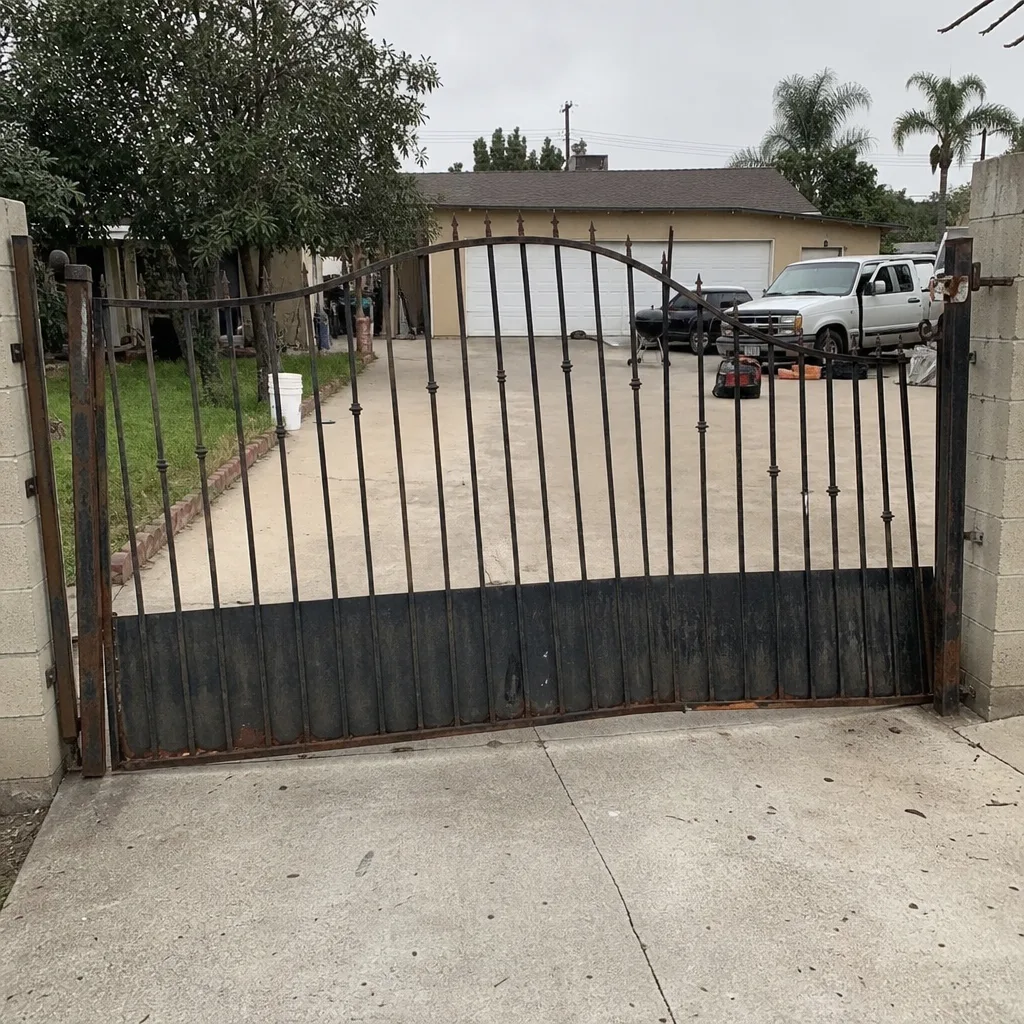 Before
 After
 Before
 After
 Before
 After