
Last updated November 4, 2026
 Wrought iron
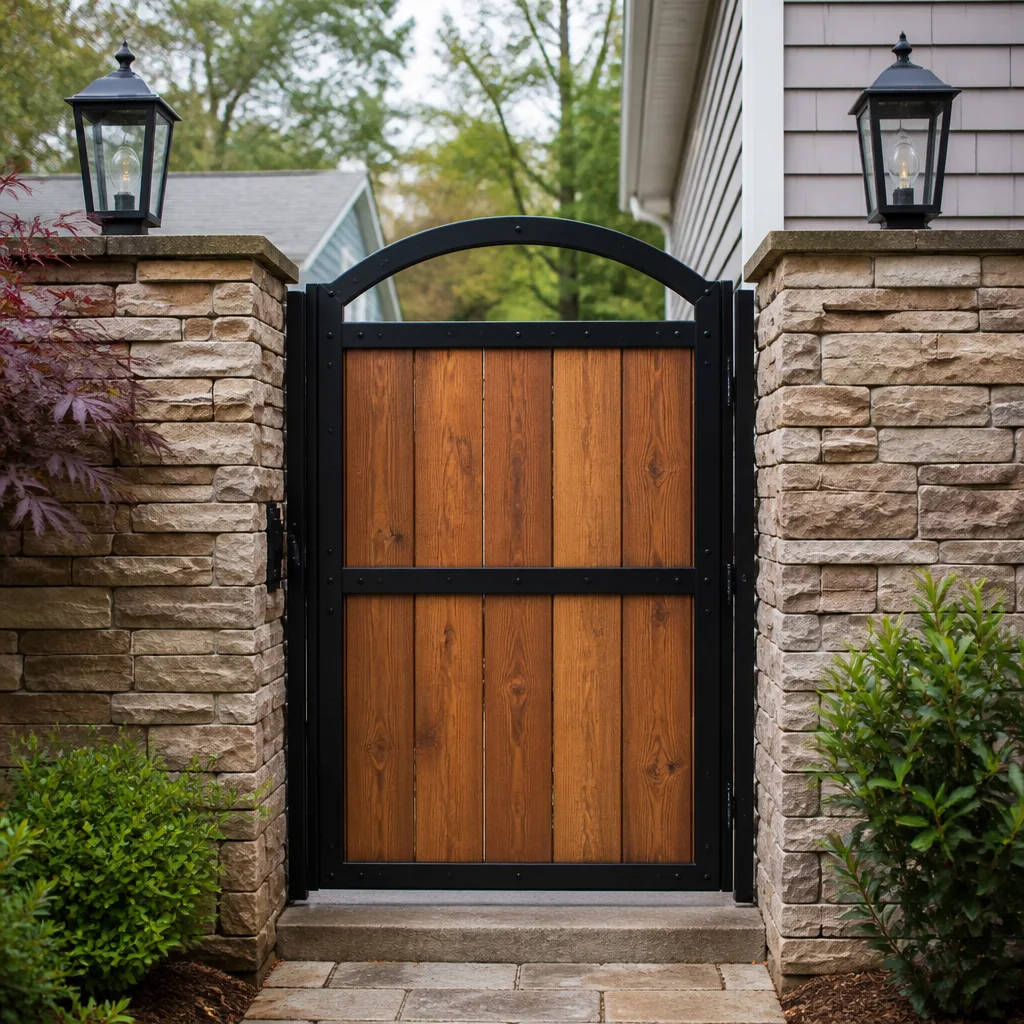 Wood & steel frame
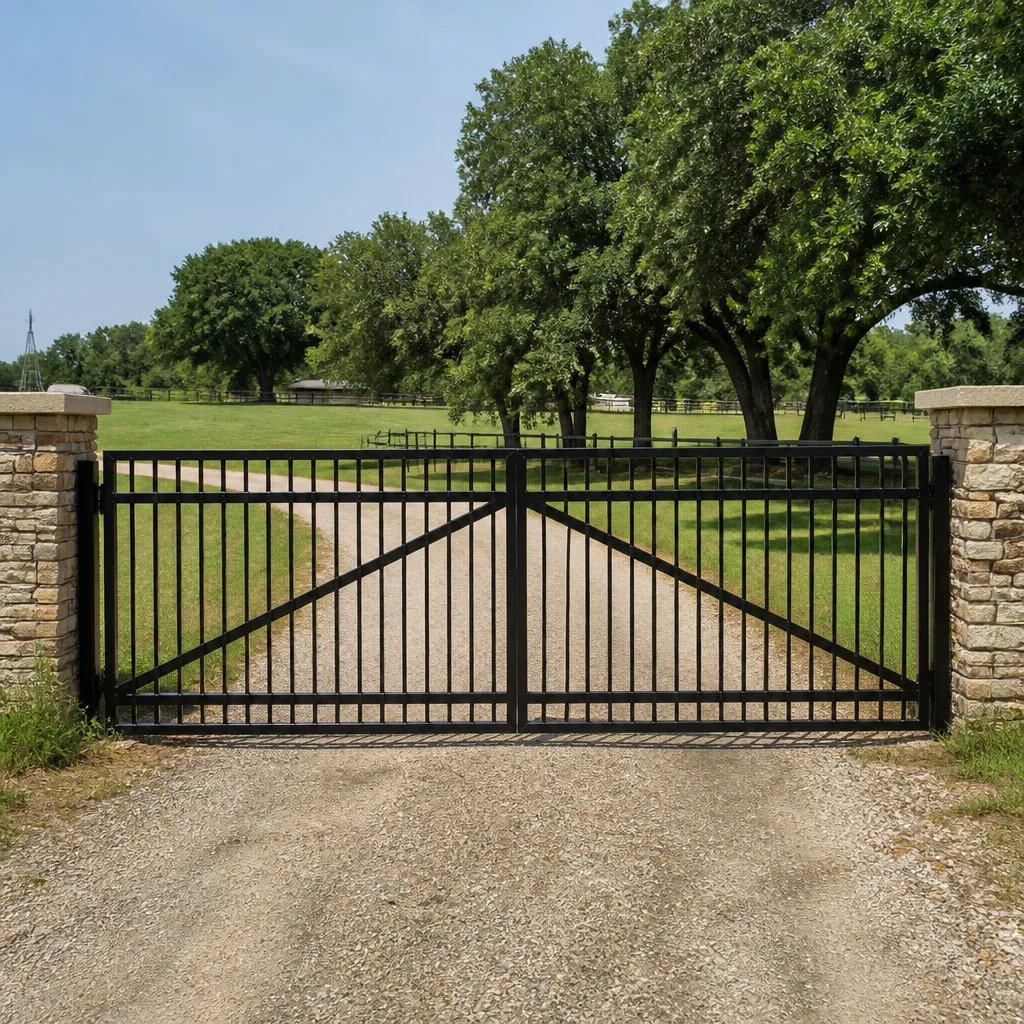 Farm & ranch
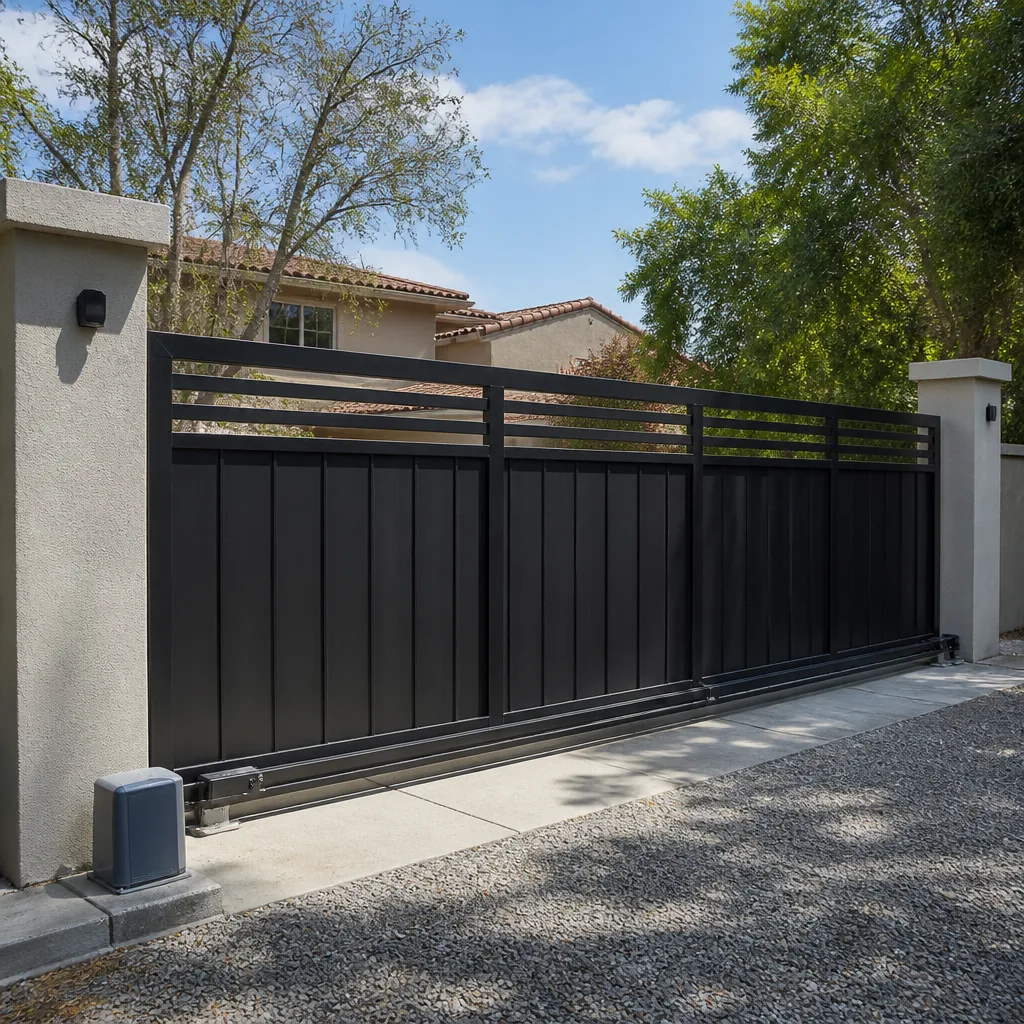 Sliding driveway gates
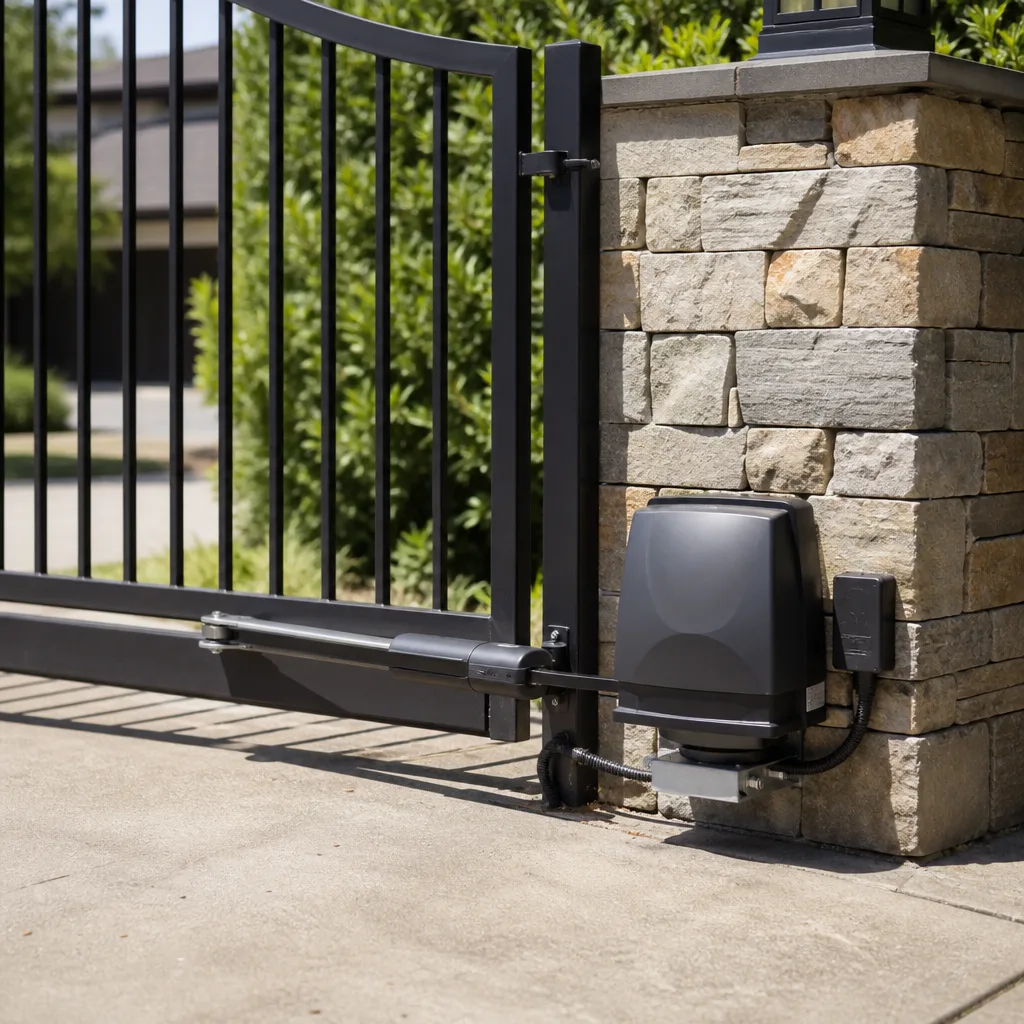 LiftMaster operators
Free on-site gate assessment - hinges, posts, and your LiftMaster or Nice gate operator checked before anything is quoted
The assessment is free and the quote is the invoice.
Get your free estimateGate Repair Troubleshooting in Eastvale: Common Problems and How to Fix Them
If your gate is beeping, blinking, or just sitting there dead, the error code it’s throwing right now is already telling you exactly what’s wrong. Most homeowners in Eastvale just don’t know how to read it. This guide strips away the guesswork. We’ll walk through the five failure patterns we see most often in this city, show you how to decode indicator lights on common opener brands, and tell you plainly which fixes you can do yourself and which ones need a specialist. By the time you finish, you’ll know whether you’re looking at a reset, a repair, or a replacement.
Quick Answer
Most gate problems in Eastvale fall into one of five repeatable patterns: no power, obstruction or limit errors, dead remote or keypad, slow or weak motor, and intermittent response. Start by checking power and line-of-sight obstructions, then read the error code or flashing pattern on your opener’s control board. If the problem involves the motor, wiring, or a slide gate off its track, call Gate Repair Eastvale at (855) 601-8166 for a free estimate rather than risking injury.
Styles & brands we work with
- Wrought iron
- Wood & steel frame
- Farm & ranch
- Sliding driveway gates
- LiftMaster operators
Table of Contents
- The Five Failure Patterns We See Most in Eastvale
- How to Read Error Codes and Indicator Lights
- The Power-Sensor-Motor-Loop Elimination Sequence
- Safe DIY Fixes vs. Fixes That Risk Injury or Warranty
- How Eastvale’s Climate Affects Your Gate
- Slow Travel Speed: The $400 Warning Sign
- Residential vs. Commercial Gate Failures in Eastvale
- Common Mistakes to Avoid
The Five Failure Patterns We See Most in Eastvale
After years of working exclusively on gates in Eastvale, the calls we get sort themselves into five repeating categories. Learn these patterns and you’ll diagnose most problems before you pick up the phone. Most importantly, you’ll know which ones are safe to touch and which ones aren’t.
- The Dead Gate. Nothing moves. No hum, no click, no indicator lights. This is almost always a power issue: a tripped GFCI outlet, a blown fuse on the control board, a damaged power cord, or a main breaker that’s been switched off. Wind storms and the occasional power surge knock these systems offline more often than people realize.
- The Obstruction Error. The gate starts, stops, reverses, or refuses to close. Safety sensors are misaligned, something’s in the gate’s path, or the force limits are set too low. This is the most common call we get for residential swing gates.
- The No-Response Opener. The gate has power. You can hear a faint click. But the remote, keypad, or intercom does nothing. That’s a receiver problem, a dead battery in the remote, a fried control board, or a loop detector that stopped reading your car.
- The Weak or Halting Motor. The gate moves, but slowly, or it shudders partway and stops. This is motor strain from worn gears, failing capacitors, lack of lubrication, or a hinge that’s binding. Left alone, it becomes a dead motor. This is the one people ignore the longest, and it’s the most expensive to ignore.
- The Phantom Gate. The gate opens or closes on its own, or behaves erratically. This is usually a shorted loop detector, a failing control board, water inside a sensor housing, or radio interference from a nearby transmitter. Phantom activation is a security problem as much as a mechanical one, especially for commercial properties in Eastvale.
We work on your brand, whether it’s a BFT commercial slide operator or a Ghost Controls residential kit. But the failure patterns don’t change much from brand to brand. The symptoms do the talking.
How to Read Error Codes and Indicator Lights
Your opener is already diagnosing itself. The blinking LED on the control board, the number of beeps, the sequence of flashes on your LiftMaster or Mighty Mule remote receiver: that’s the system telling you what it sees. Reading it saves you a service call, or at least gets you off the phone faster when you call in.
Here’s what to look for on the brands we see most in Eastvale:
LiftMaster Gate Openers
- Rapid blinking red LED on the control board: obstruction or force reversal. Check the path, then check the force adjustment dials.
- Slow, steady blink: the opener is in “vacation lock” mode or has lost its limits. A limit reset usually fixes it.
- Two beeps on every command: the safety edge or photo eyes are triggered or misaligned.
Mighty Mule Openers
- Three beeps, no movement: low battery or low power input. Charge or check the transformer.
- Continuous beeping: control board fault or a stuck relay. That’s a board replacement, not a reset.
- Blinking red light on the receiver: the receiver is in learn mode and will time out. But if it never times out, the learn button is stuck.
Ghost Controls Openers
- One beep every few seconds: the system is in Party Mode or has an obstruction. Clear the gate’s path and cycle power.
- Two beeps: low accessory battery. Ghost Controls systems run on a 12V battery that needs occasional replacement.
- Three beeps and the gate reverses: the force threshold was exceeded. Lubricate hinges and check for binding before you raise the force setting.
Linear and Viking boards use similar patterns, usually a diagnostic LED that blinks a number of times, pauses, then repeats. Count the blinks. The manual for your specific model has the decode table, and most are available online. If you don’t have the manual, take a video of the flashing pattern before you call. It saves our technicians a trip to the truck for the same code chart.
The Power-Sensor-Motor-Loop Elimination Sequence
This is the sequence we run on almost every service call in Eastvale. It takes five minutes and narrows the problem from “the gate doesn’t work” to one specific failed component. Do this before you call anyone, and you’ll be able to describe the exact symptom.
- Power first. Is there any light at all on the control board? If not, check the outlet it’s plugged into. Eastvale homes often have the gate opener on a GFCI circuit that also feeds outdoor lights. Press the GFCI reset. Check the breaker. If you have a multimeter, confirm voltage at the outlet. No power to the opener is half the “dead gate” calls we get.
- Disconnect the operator, then move the gate by hand. Turn off the power completely. Disengage the opener (most have a disengagement lever or key). Push the gate manually along its full travel. If it’s hard to move, the problem isn’t the motor. It’s a hinge, a wheel, a track, or a bent frame. That’s a mechanical repair, and a much smaller bill than a motor replacement.
- Rule out safety sensors. Re-engage the opener. Block the safety photo eyes with your hand and press the remote. If the gate doesn’t move at all and the board shows a sensor error, the sensors are aligned or wired wrong. If the gate moves only when you’re not blocking them, sensors are fine. Move to the next step.
- Test the remote and receiver. Fresh battery in the remote? Keypad works? If the intercom and keypad fail too, the receiver or control board is shot. If the keypad works but remotes don’t, you have a remote programming issue, not a gate issue.
- Check the loop detector. Loop detectors are the unsung heroes of Eastvale’s commercial gates. A failing loop detector behaves like a phantom: the gate opens when no car is there, or won’t open when a car is parked right on the loop. Look for a small black box near the control board with a red or green light that blinks when a vehicle crosses the loop. No blink? Dead loop. That’s a specialist fix.
This sequence covers about 85% of the calls we run. What’s left is genuinely tricky: bad capacitors, failing motors, shorted wiring. And those are exactly the jobs where our electric gate repair service earns its keep. Electric gate repair is core to what we do, not an add-on. Wiring, motors, control boards, sensors, and access hardware are standard scope on every call.
Safe DIY Fixes vs. Fixes That Risk Injury or Warranty
There’s a line between what a homeowner in Eastvale can safely fix on a weekend and what needs a trained technician. The line is bright, and it’s mostly about stored energy and live wiring.
Genuinely Safe DIY Fixes
- Clearing obstructions. Sticks, rocks, overgrown shrubs, a kid’s bike. Remove whatever’s blocking the gate’s path.
- Lubricating hinges and wheels. A white lithium grease or silicone spray on hinge pins and wheel bearings keeps a gate moving smoothly. Do this twice a year in Eastvale, more often on dirt roads.
- Resetting limits on a LiftMaster, Mighty Mule, or Ghost Controls opener. The manual walks you through it, and it’s a dial or button sequence, not a disassembly.
- Replacing remote batteries. If your remote worked yesterday and doesn’t today, the battery is the first suspect.
- Re-pairing a remote. Most openers have a learn button on the receiver. It takes 30 seconds.
Not Safe, No Matter What the Forum Says
- Slide gates off the track. A slide gate that’s jumped its track is under tension from its own weight. If it falls during your repair attempt, it can crush you. We don’t say that lightly. This is a get-away-from-the-gate and call-now situation.
- Electrical panel and control board wiring. These systems run on 110V AC even when the gate is “off” at the remote. The control board has live terminals. Don’t open the panel and start poking with a screwdriver.
- Replacing a motor or capacitor. Capacitors store voltage even after the power is disconnected. A charged capacitor can knock you across the yard. Motor replacement also involves re-aligning the drive mechanism, and a misaligned motor destroys gears in a week.
- Any repair on a gate that stays on for security. HOA and commercial gate systems in Eastvale are integrated with access control hardware. Disconnecting the opener to “see what happens” can lock out residents or leave the property unsecured overnight.
If it’s a hinge, a wheel, an obstruction, or a dead battery, go for it. If it’s the motor, the wiring, the board, or a gate off its track, call a specialist. Your warranty likely agrees: most manufacturers void coverage when unlicensed hands open the control box.
How Eastvale’s Climate Affects Your Gate
Eastvale gets hot. Really hot. August afternoons on an unshaded street can push 105°F, and that heat does specific things to a gate system. We see the same damage patterns year after year, and they’re more local than you’d think.
Heat expansion warps aluminum frames. A dark-painted aluminum gate in full sun expands. Swing gates that closed perfectly at 7am bind by 3pm. The frame swells, the latch doesn’t line up, and the opener’s force limit trips every afternoon but works fine at night. If your gate only fails on hot days, that’s thermal expansion, not a dying motor. The fix is usually adjusting the latch or hinge alignment, not replacing the opener.
Dust kills control boards. The Santa Ana winds and the dry inland air push fine dust into everything. Control board housings in Eastvale collect a tan film of silt that conducts moisture and shorts traces on the board. We blow out more control boards with compressed air than we replace. If your gate fails after a windy stretch, dust is a prime suspect.
Irrigation overspray corrodes weld points. This one surprises people. Eastvale yards are irrigated, and sprinklers that overspray onto the gate posts soak the base of the gate twice a week. Over a few years, that water creeps into the weld seams and rusts them from the inside. The gate still looks fine from the road, but the post weld is failing. If you see rust staining at the base of your gate post, have it checked before it lets go. The fix is often a simple weld repair now versus a full post replacement later.
None of these are catastrophic if caught early. That’s the point of this section. Your specific neighborhood in Eastvale, whether it’s off Hamner Avenue or up near the 15, has its own micro-pattern of sun and dust exposure. A gate that’s failing in July has probably been telling you since March.
Slow Travel Speed: The $400 Warning Sign
A gate that’s moving slower than it used to isn’t just annoying. It’s a diagnostic message. In our experience, slow travel on a swing or slide gate in Eastvale is the earliest reliable sign of a motor working too hard, and ignoring it almost always ends in a full motor replacement.
Here’s what slow travel means, and what it costs to ignore.
- Worn drive gears. On a slide gate opener, the rack and pinion teeth wear thin. The motor spins but the gate crawls. By the time the gate stops moving entirely, the gear is stripped and the fix is a new gear kit and possibly a new motor. That’s a $400 – $600 job in most cases. Catching the wear early means replacing a $50 gear instead.
- Failing capacitor. A swing gate opener with a weak capacitor starts slower and runs slower. The capacitor is a $15 part. The motor it burns out is $300 – $500 plus labor.
- Binding hinges or track. A gate that’s binding fights the motor every inch of travel. The motor draws more current, runs hotter, and dies years early. Lubricating hinges and realigning a track is a $150 maintenance visit. A new motor is triple that.
- Low battery on a Ghost Controls system. Ghost Controls and similar residential openers run on a 12V battery. A low battery produces exactly this symptom: everything works, but slowly. Check the battery voltage before anything else.
If your gate used to swing open in 12 seconds and now takes 18, don’t wait. The difference between a maintenance adjustment and a motor replacement is usually a few weeks. If the gate is moving slowly, call (855) 601-8166 and describe exactly how long it takes to cycle. That one detail tells us a lot.
Residential vs. Commercial Gate Failures in Eastvale
Eastvale is unusual. You have single-family neighborhoods, brand-new apartment complexes, warehouses along the western edge, and HOA communities all within a few square miles. That means our technicians see two very different gate ecosystems in the same day, often on the same street.
Residential gates are mostly swing gates with a single opener: Ghost Controls, Mighty Mule, Elite, sometimes a LiftMaster. The failure points are simple: dead battery, obstruction, lost limits, a hinge that’s sagging. Most residential repairs are quick, and many homeowners catch them early with the sequence above.
Commercial gates are a different animal. Slide gates, cantilever gates, and barrier arms. They run on BFT, FAAC, DoorKing, Viking. They cycle hundreds of times a day in a warehouse environment where a gate that’s down means trucks can’t load. Commercial failures in Eastvale trend toward loop detectors, worn slide gate rollers, damaged photo eyes from forklift traffic, and control boards that fail from heat or dust. These systems almost always have access control layered on top: card readers, keypads, telephone entry. A “gate problem” at a commercial site often turns out to be an access control fault, and diagnosing it requires tools that most general repair crews don’t carry.
Residential or commercial, we’ve seen that system before. We work on gate repair for both, and our brand fluency spans both ends: from budget residential openers like Mighty Mule to premium European automation like BFT that most local shops won’t touch. From the motor to the hinge, it’s one system, and we approach it that way.
Common Mistakes to Avoid
- Raising the force limit to “fix” a binding gate. This is the most expensive mistake we see in Eastvale. The opener pushes harder, the gate still binds, and the motor burns out. If the gate needs more force to close, the hinge or track needs attention. Don’t mask the symptom.
- Ignoring a slow gate because “it still opens.” Covered above. A slow gate is a dying motor. The repair cost goes up the longer you wait.
- Lubricating the wrong way. WD-40 is a solvent, not a gate lubricant. It strips grease and makes hinges wear faster. Use white lithium grease on hinges and a dry silicone spray on tracks. And don’t grease the gate opener’s chain or belt on most models.
- Power-cycling the system to clear an obstruction error without finding the obstruction. A stick in the gate’s path gets cleared. A misaligned photo eye gets worse when you ignore it. Reset the code, but fix the cause.
- Calling a general handyman for an access control problem. We hear this a lot: “The handyman came out, ran a wire, and now the keypad doesn’t work.” Access control is its own discipline. A gate specialist who works on Linear, Viking, and DoorKing boards sees the same failures the handyman is seeing for the first time.
- Replacing a remote before checking the battery. Seems obvious. But remotes get thrown out in Eastvale every week over a dead CR2032. Battery first.
See the difference
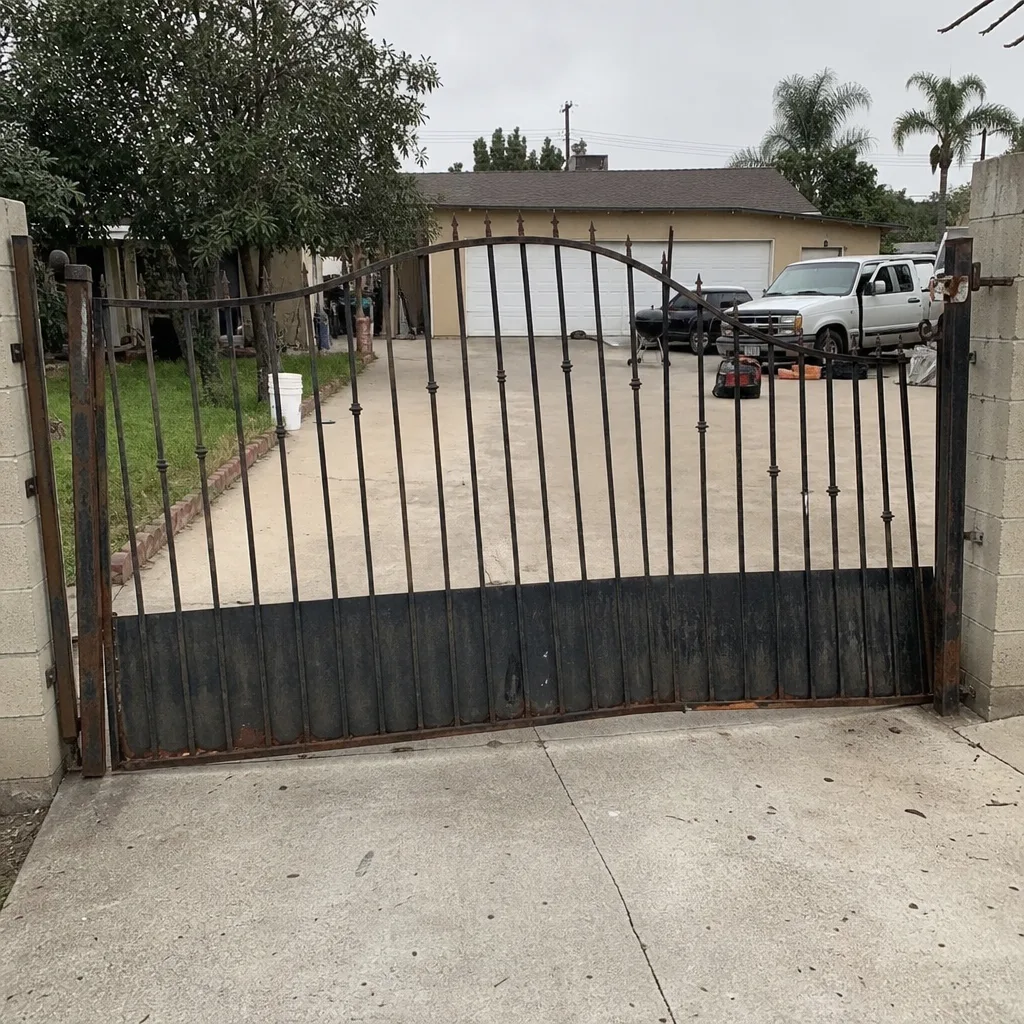 Before
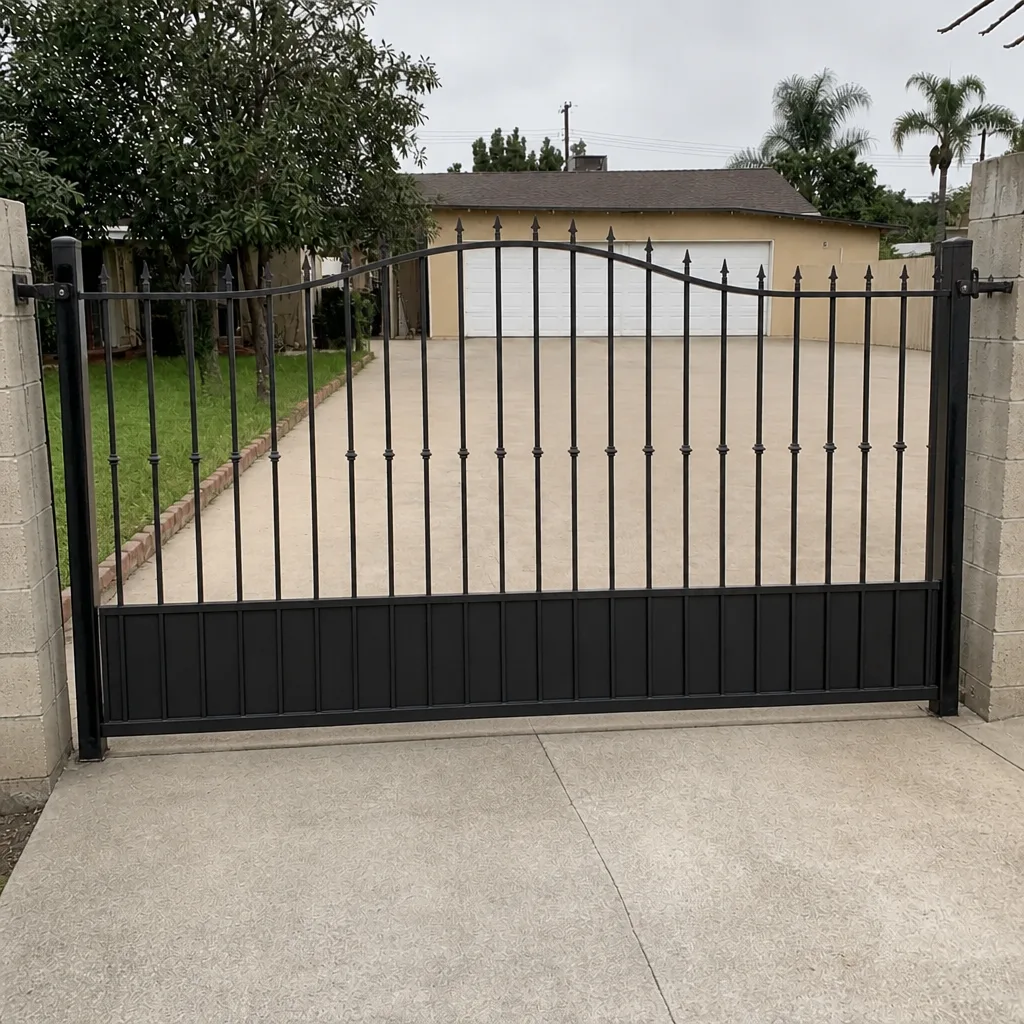 After
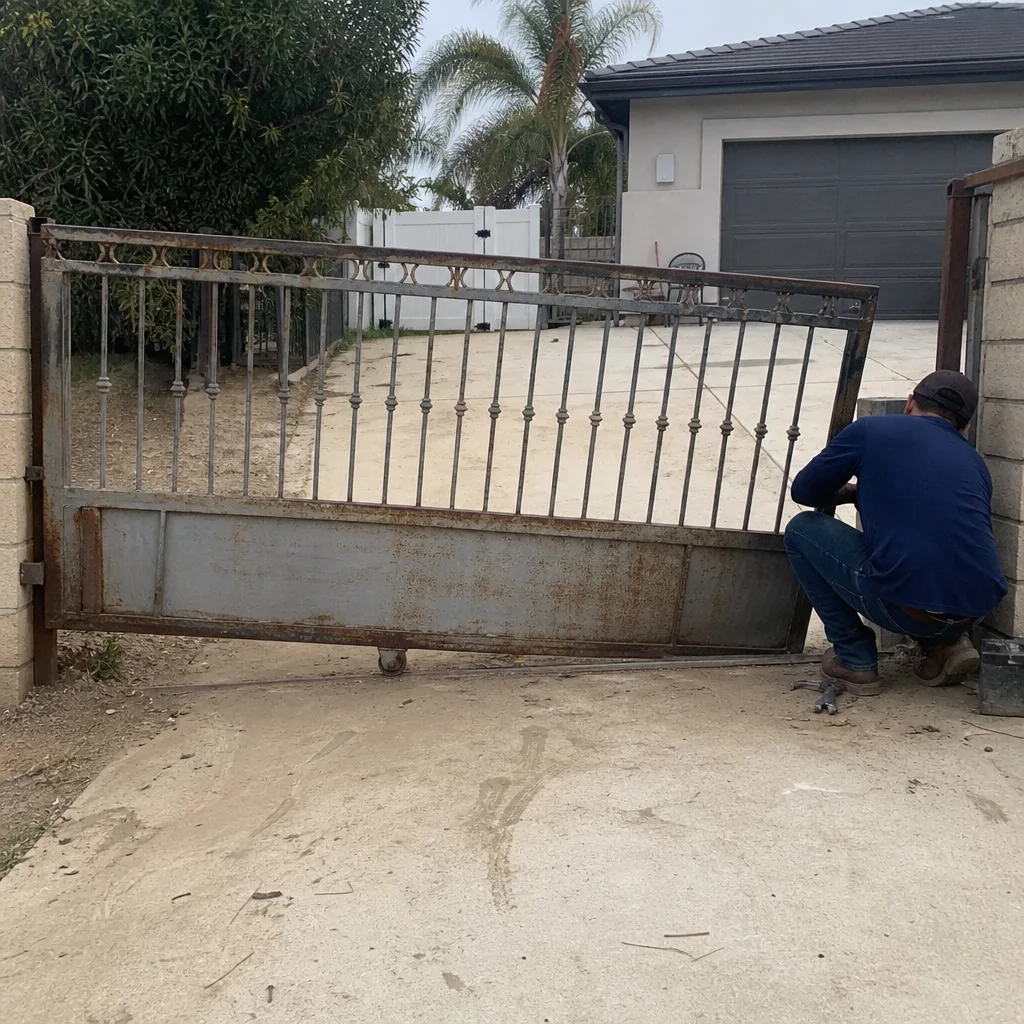 Before
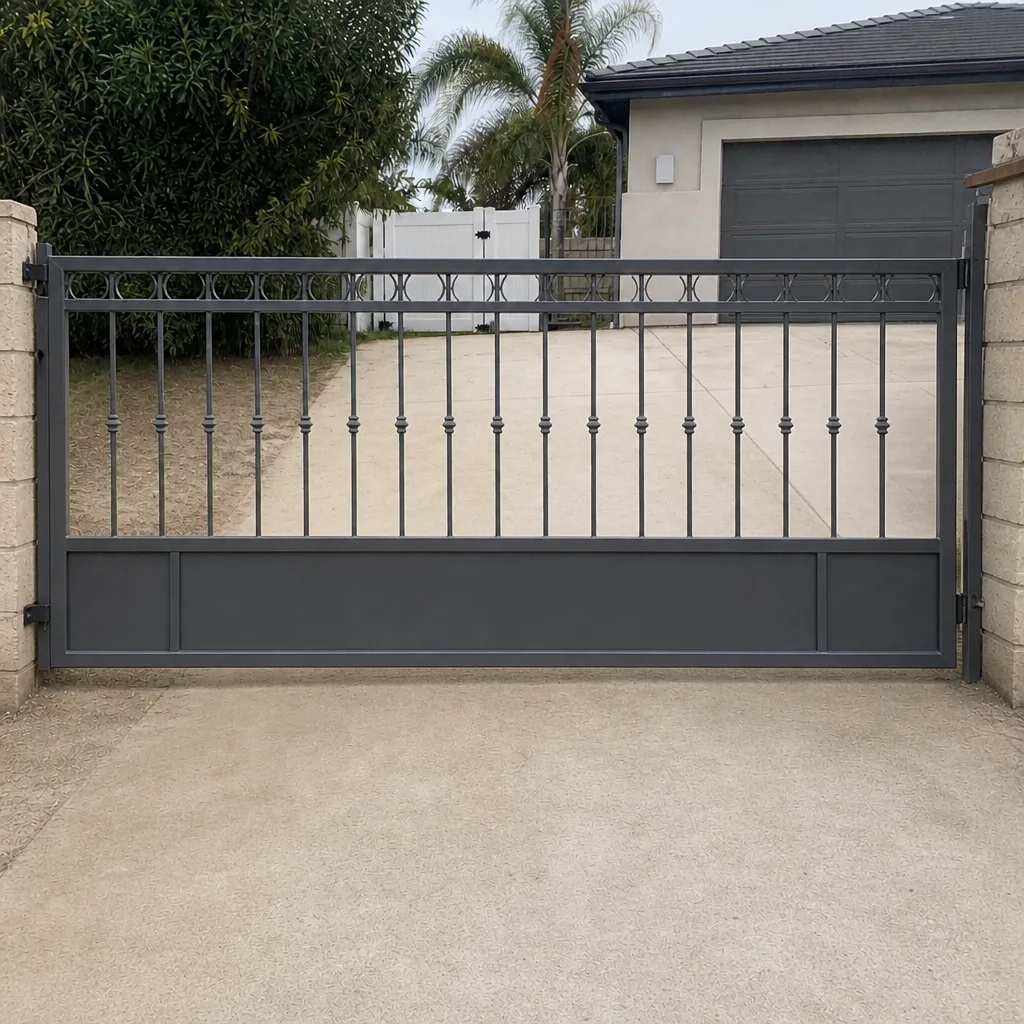 After
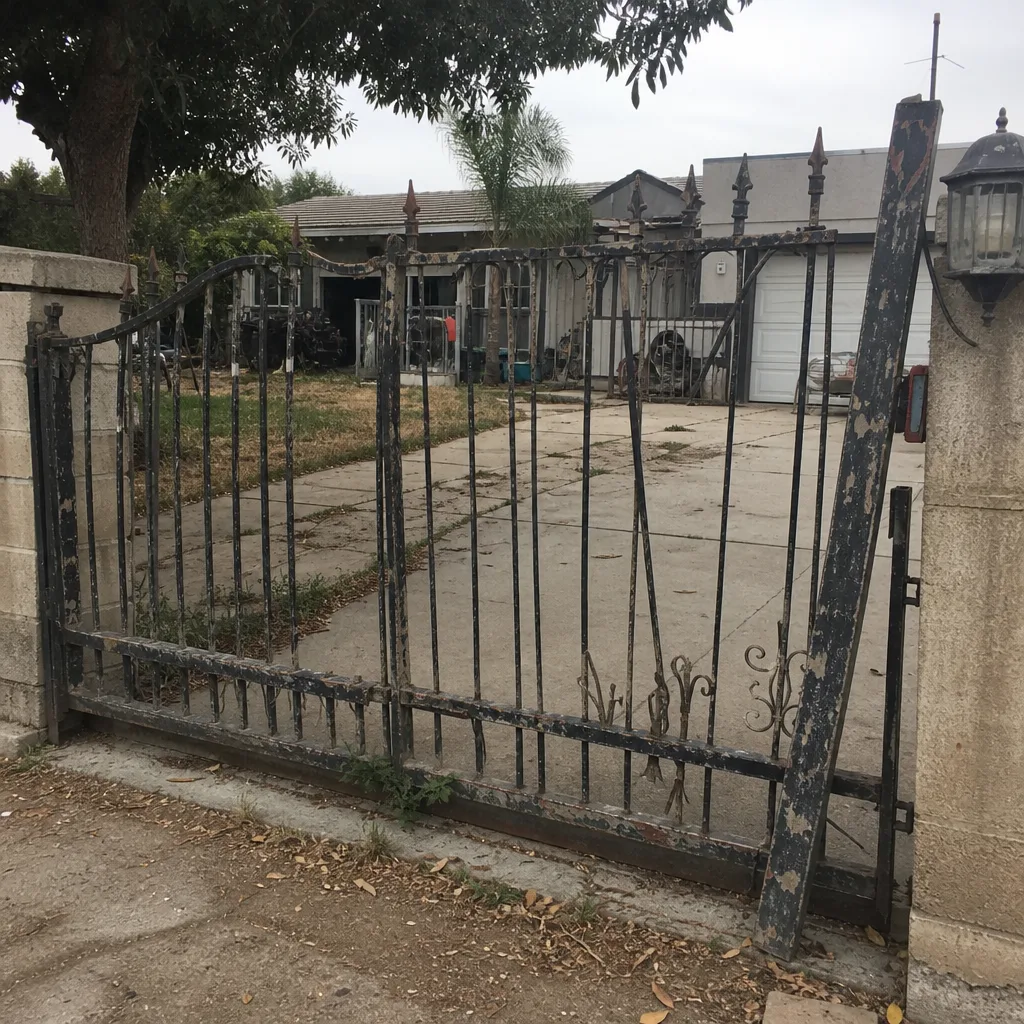 Before
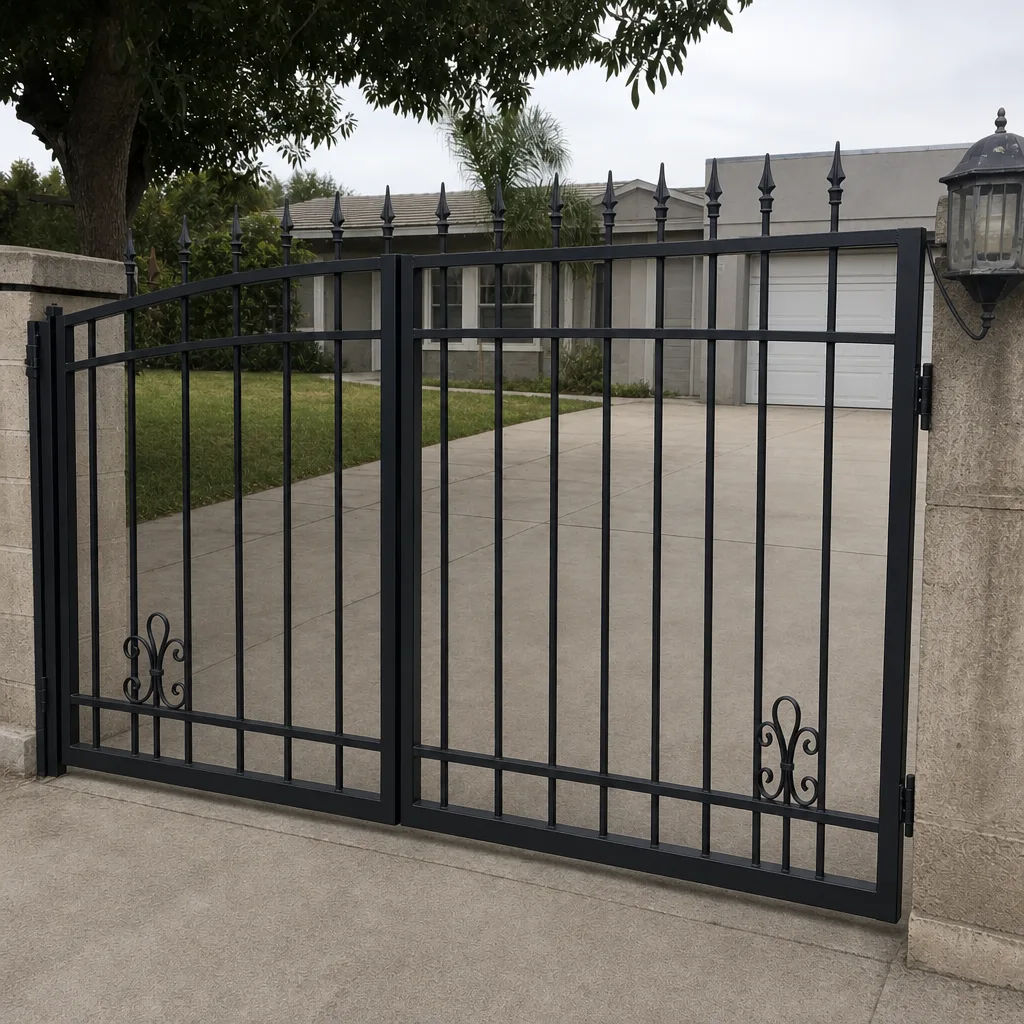 After
When to Call a Professional
Call a professional when the gate doesn’t move under manual push after you’ve disengaged the opener, because that means the problem is structural. Call when the control board shows burn marks, when the gate has come off its track, when the motor hums but doesn’t turn, or when the gate opens on its own in the middle of the night. Those are not DIY projects. Not because you can’t learn to handle them, but because the cost of getting them wrong is measured in hospital visits and open security gates. Gate Repair Eastvale offers free estimates in Eastvale. Call (855) 601-8166 and we’ll tell you over the phone what we think is wrong, then confirm it on site with a written price before any work starts.
Frequently Asked Questions
Most gate repairs in Eastvale run between $150 and $600 depending on the failed part. Simple fixes like a new remote, a limit reset, or a hinge adjustment fall at the lower end. Motor replacements, new control boards, and slide gate track repairs run higher. The written estimate from a site visit is free, and the price is set before we start any work.
Yes, in most cases. We answer 24/7. Fast dispatch from 7am to 7pm, Sunday through Friday. Residential swing gate issues like an obstruction or a lost limit are usually handled in one visit. If a specific part isn’t on the truck, we’ll tell you the timeline before you commit to anything.
Intermittent operation in Eastvale is usually heat expansion, a failing capacitor, or a dusty control board. If it only fails on hot afternoons, the frame or latch is binding. If it fails randomly, the capacitor or board is on its way out. Both are repairable if caught early.
Yes. Those are four of the nine brands we service on a regular basis: LiftMaster, FAAC, BFT, Linear, Viking, Ghost Controls, DoorKing, Elite, and Mighty Mule. Gate-only specialists, and we diagnose from the system in front of us, not from a preferred parts list.
If the opener is under ten years old and the failure is a single component like a capacitor, gear kit, or control board, repair is usually the right call. If the motor has failed and the opener is older, replacement starts to look better. We’ll give you an honest recommendation based on what the rest of the system looks like.
Clearing obstructions, replacing remote batteries, and lubricating hinges are safe. Working on slide gates, live wiring, or control boards is not. Gates weigh hundreds of pounds and the electrical components carry real voltage. If you’re not certain, call us at (855) 601-8166 for a free estimate.
The Bottom Line
Your gate is usually telling you exactly what’s wrong. The flashing lights, the beeps, the slow travel, the phantom openings: they’re diagnostics, not random behavior. Learn the five failure patterns, run the elimination sequence, and you’ll know within minutes whether you’re dealing with a dead battery or a dead motor. The safe DIY fixes in this guide save you money. The dangerous ones will cost you a lot more than a service call. Gate Repair Eastvale is a Gate Repair Eastvale specialist serving Eastvale homeowners and commercial properties. From the motor to the hinge, residential or commercial, we’ve seen that system before. Call (855) 601-8166 for a free estimate, and let’s get your gate working right.
Written by the team at Gate Repair Eastvale, serving Eastvale since 2014.