
Last updated November 4, 2026
 Wrought iron
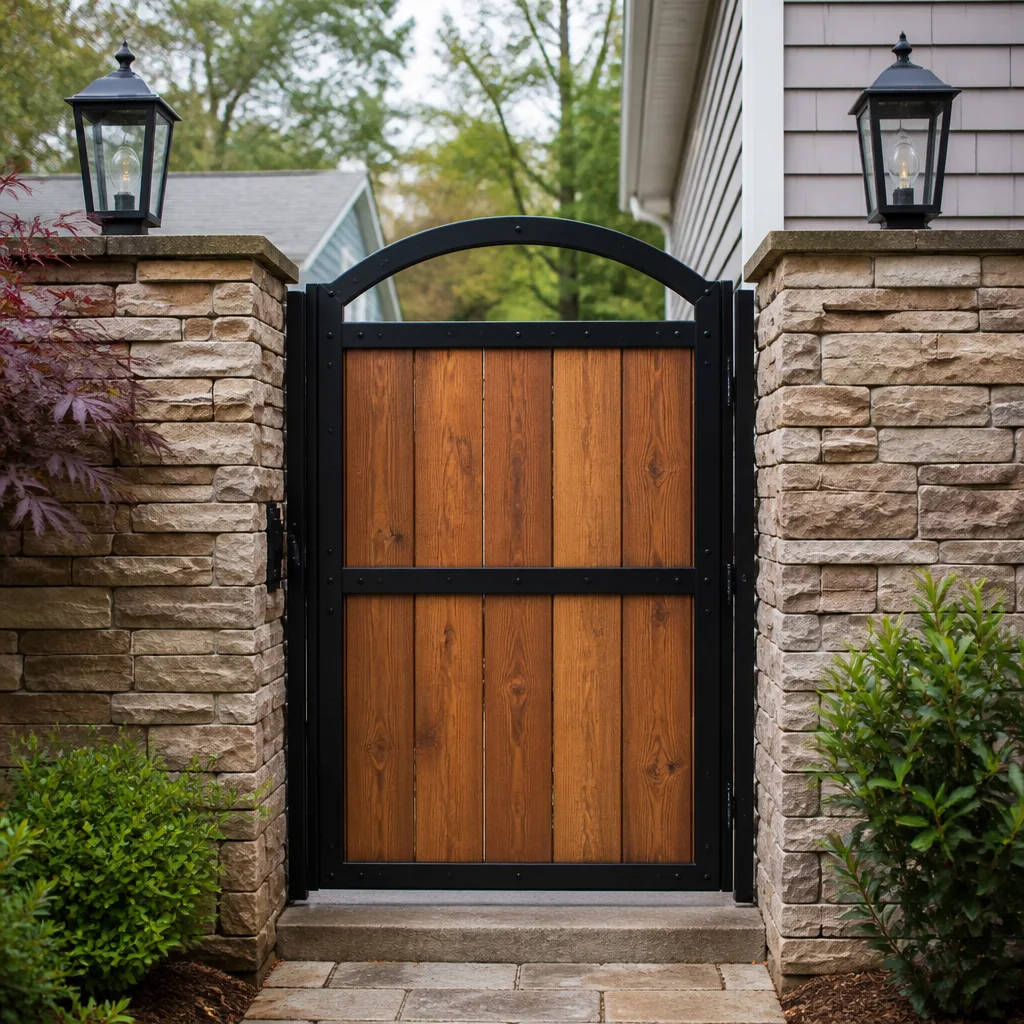 Wood & steel frame
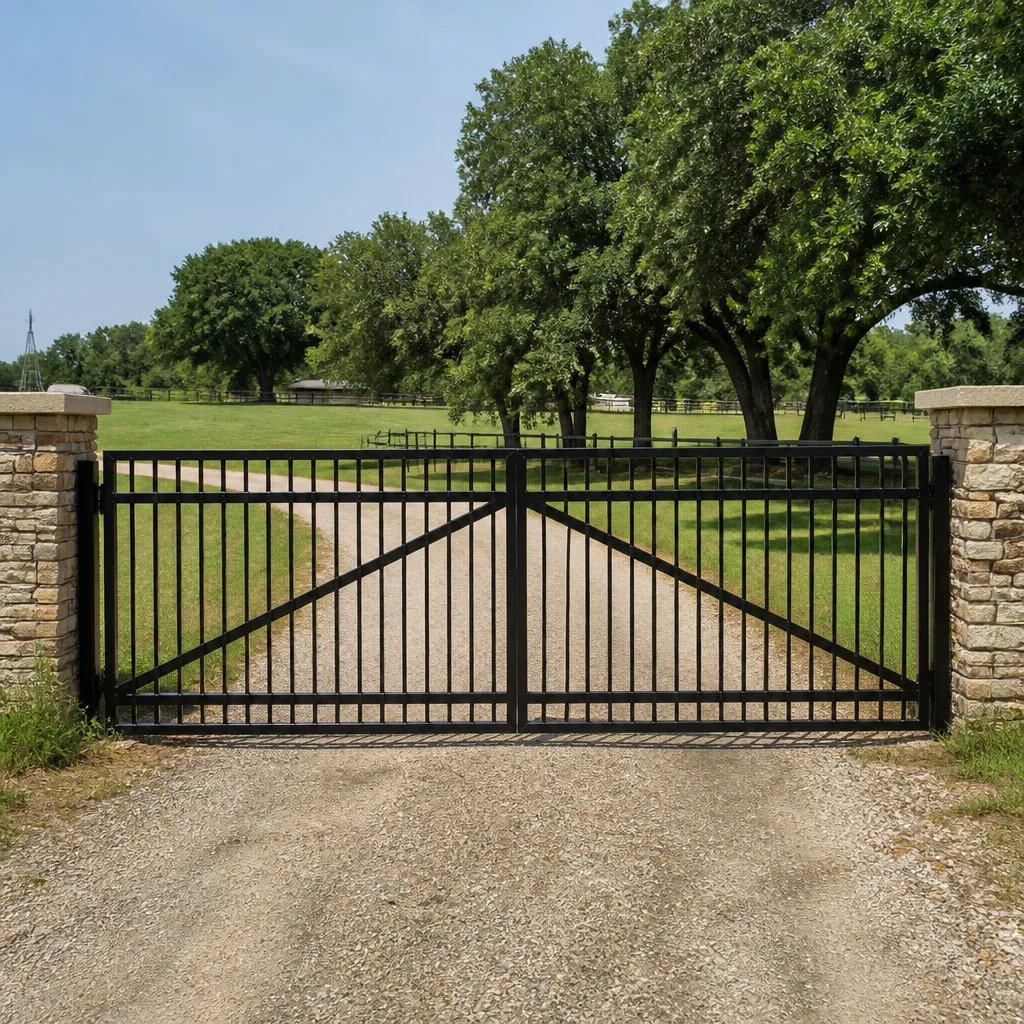 Farm & ranch
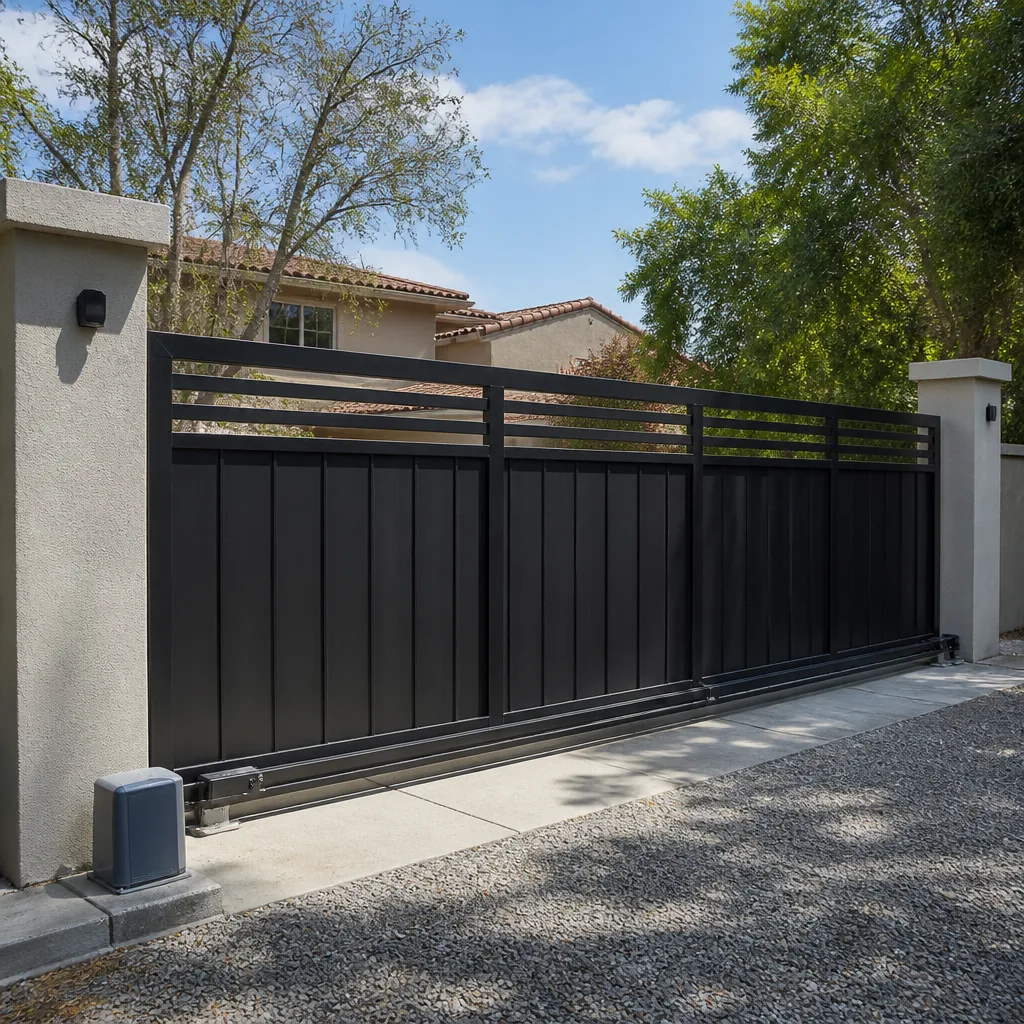 Sliding driveway gates
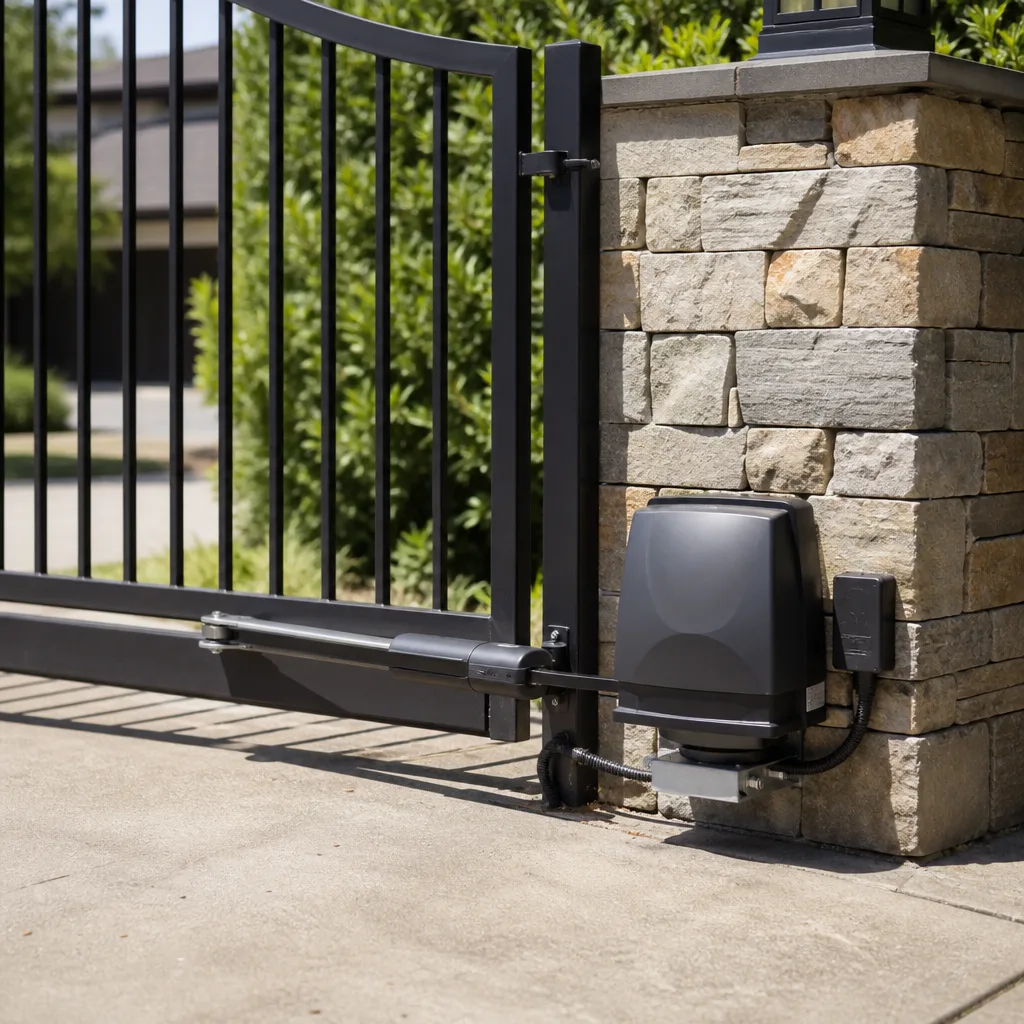 LiftMaster operators
Free on-site gate assessment - hinges, posts, and your LiftMaster or Nice gate operator checked before anything is quoted
The assessment is free and the quote is the invoice.
Get your free estimateGate Repair Maintenance Schedule: What to Do and When
Most homeowners in Eastvale assume their gate will tell them when something is wrong. By the time it does, you’re already looking at a repair bill that could have been a $40 hinge adjustment. The truth is that gate failures are rarely sudden. They’re the result of months of accumulated wear that nobody noticed because nobody knew what to look for, or when to look for it. This guide gives you a maintenance calendar built around how Eastvale’s heat and dust actually affect gate hardware, not a generic schedule copied from a manufacturer brochure. You’ll learn what to check each season, how often to lubricate specific components, and which tasks you should never attempt yourself.
Quick Answer
A practical gate maintenance schedule for Eastvale breaks into four seasonal checks: pre-summer preparation in May, heat-load inspection in July and August, post-Santa Ana cleanup in October and November, and a full system audit in January or February. Lubricate roller hinges and chain drives every 3 to 4 months, inspect the operator motor and control board every 6 months, and test battery backup capacity twice a year, before peak heat and before winter rains. Skip the summer checks and you’ll join the crowd of Eastvale homeowners calling us in September when motors that ran hot for three months finally give out.
Styles & brands we work with
- Wrought iron
- Wood & steel frame
- Farm & ranch
- Sliding driveway gates
- LiftMaster operators
Table of Contents
- Why Eastvale Is Harder on Gates Than the Manufacturer Assumes
- The Month-by-Month Maintenance Calendar for Eastvale
- Lubrication by Component: What Gets What, and How Often
- Battery Backup Health: Testing Before the Outage Exposes It
- The Maintenance Tasks That Void Your Warranty When Skipped
- HOA and Commercial Property Checklist: Documentation That Protects You
- Common Mistakes to Avoid
- When to Call a Professional
Why Eastvale Is Harder on Gates Than the Manufacturer Assumes
Manufacturers like LiftMaster and Mighty Mule print maintenance intervals based on average operating conditions. They assume a reasonable ambient temperature, typical dust levels, and a motor that gets to cool down between cycles. Eastvale doesn’t play by those rules. Summer temperatures routinely push into the high 90s and triple digits, and your gate motor sits inside a metal housing that absorbs direct sun all afternoon. That housing gets hotter than the air around it, which means the motor inside runs hotter than its design temperature. Heat degrades motor windings, control board capacitors, and the grease in your roller hinges. Add the fine dust that blows through the Inland Empire and settles into every moving joint, and you have a machine that’s working harder than the spec sheet ever imagined.
We’ve been doing gate repair in this city long enough to know the pattern. Gates in Eastvale don’t fail randomly. They fail in September, after a full summer of heat stress and dust accumulation has pushed a marginal component past its limit. The gate that’s been slowing down for a week, stuttering on startup, or making a grinding noise on the track is telling you August, loud and clear, that September is coming. Most people don’t listen until the gate doesn’t open at all on a Monday morning. That’s why the maintenance schedule we recommend to homeowners, landlords, and HOA managers in Eastvale isn’t the one in the owner’s manual. It’s a local calendar that accounts for what this climate actually does to your hardware.
If you have an automated gate, electric gate repair is core to what we do, not an add-on. We work on your brand, whether it’s a residential Ghost Controls unit or a commercial FAAC system. That matters because different brands have different failure points under heat load. A Mighty Mule retail opener has a small motor that can overheat quickly. A BFT commercial operator has thermal protection that shuts the system down rather than burn out the motor, but repeated thermal trips still shorten component life. Knowing which behavior your brand exhibits tells you what to watch for in July and August. Residential or commercial, we’ve seen that system before.
The Month-by-Month Maintenance Calendar for Eastvale
Here’s the schedule we recommend to our customers throughout Eastvale. It’s built around three stressors: summer heat, Santa Ana winds, and winter rain. Each season has a specific job, and the order matters.
May: Pre-Summer Preparation
This is the most important maintenance window of the year. Do it before the first heat wave hits, when you can still work on the gate without standing in full sun.
- Clean the track and roller path. Remove accumulated dust, leaves, and debris from slide gate tracks, swing gate arc paths, and wheel guides. Dust acts as an abrasive. Left in place, it turns every cycle into sandpaper.
- Inspect and tighten all hinge bolts. Swing gates sag over time. A sagging gate puts load on the operator motor that it wasn’t designed to carry. Check top hinge, bottom hinge, and the mounting plate where the operator attaches.
- Lubricate roller hinges and chain drives. More on the specific products below, but the May lubrication is the one that carries you through summer.
- Check the battery backup. Test capacity now, before power outages become a seasonal risk. We cover the full test procedure below.
- Listen to the motor. Run the gate through a full open and close cycle. A smooth hum is normal. A grinding, clicking, or laboring sound in May is a warning about August.
July and August: Peak Heat Monitoring
During the hottest months, your job is observation, not correction. What you’re watching for:
- Thermal shutdowns. If your gate stops mid-cycle on a 100-degree afternoon and works again an hour later, that’s thermal protection tripping. It’s not a fluke. It means the motor is running too hot, and you should have someone look at it before September.
- Slowed operation. Heat increases electrical resistance. If the gate is visibly slower in July than it was in April, note it. It tells you something about motor health.
- Photo-eye misalignment. Heat expansion can shift mounting brackets just enough to break the sensor beam. If the gate reverses for no reason or refuses to close, check the alignment before assuming the control board is bad.
- Dust buildup on the limit switches. Fine Inland Empire dust settles into every opening. A dirty limit switch causes the gate to stop short or travel too far. This is a quick clean, but it requires working near electrical components, which we don’t recommend for homeowners.
October and November: Post-Santa Ana Cleanup
Santa Ana winds push dust, sand, and debris into everything. After the wind season subsides, do a thorough cleaning:
- Blow out the operator housing. Use compressed air to clear dust from the motor, control board, and wiring connections. Never use water or a garden hose near the operator.
- Inspect cantilever wheels and rollers. Wind-driven grit gets into wheel bearings and pivot points. Clean and re-lubricate.
- Check gate alignment. Strong winds can push a gate slightly off its track or out of its swing arc. A small misalignment now becomes a big problem when winter rains soften the soil under the posts.
- Re-test the battery backup. Winter rain brings power outages. You don’t want to discover a dead battery when the gate won’t open after a storm.
January and February: Full System Audit
Winter is the right time for a comprehensive review. The gate has made it through summer heat and fall winds. Before spring, you want a clean bill of health.
- Post inspection. Check for signs of movement, especially after winter rains. Soft ground plus gate weight equals leaning posts. In Eastvale’s clay-heavy soil, this is a real concern.
- Full wiring inspection. Look for cracked insulation, corroded connections, or signs of rodent damage. Rodents seek warmth in winter, and an operator housing is a favorite nesting spot.
- Control board evaluation. Capacitors age faster under heat stress. If you had thermal shutdowns in summer, January is the time to evaluate whether the board or the motor needs replacement before the next heat season.
- Operator fluid check (hydraulic systems only). Some commercial FAAC and BFT systems use hydraulic operators. Check fluid levels and look for leaks around seals.
- Never spray lubricant on the control board or any electrical component. This should go without saying, but we’ve seen it.
- Never use penetrating oil on hinges expecting it to lubricate. Penetrating oil is for breaking loose rusted parts, not for ongoing lubrication.
- Never grease a steel gate that has a nylon insert or bushing. Some newer gates use self-lubricating bushings. Grease degrades the nylon and makes the problem worse. Check your manufacturer’s documentation if you’re not sure.
- Find the battery. On most residential systems, including LiftMaster and Mighty Mule openers, the battery is inside the operator housing or in a separate weatherproof box near the motor.
- Kill the power to the operator. Use the circuit breaker or the disconnect switch. Do not unplug the battery itself.
- Cycle the gate. Open and close it fully while running on battery power alone. If the gate moves noticeably slower than on line power, the battery is degraded.
- Count the cycles. A healthy residential backup battery should open and close the gate at least 5 to 10 times before showing strain. If it can’t manage 3 full cycles, plan to replace it.
- Restore power. Turn the breaker back on and let the battery recharge.
- Date and time of inspection. Include the inspector’s name and company.
- Gate cycle count. Commercial operators often track cycles internally. Record the number to establish wear rates over time.
- Observations. Note anything unusual: unusual noise, slow operation, visible wear, alignment issues, photo-eye obstructions.
- Corrective actions taken. What was lubricated, adjusted, cleaned, or replaced.
- Parts replaced. Brand, model, and serial number of any component that was swapped out.
- Safety system test results. Did the photo-eyes work? Did the reverse-on-obstruction function engage? Did the battery backup cycle the gate?
- Photos. Before and after photos of any wear points or repairs, with timestamps.
- Using the wrong lubricant. WD-40 on a chain drive is the most common mistake we see. It’s a cleaner, not a lubricant. It strips away whatever grease was there and leaves the chain dry within days, which accelerates wear and stretches links. Then the chain starts skipping teeth on the sprocket, and you’re buying a new drive system instead of a can of chain lube.
- Waiting for the gate to fail before doing anything. By the time an Eastvale gate fails in September, the problem started in July. A noisy hinge in July is a $40 fix. A burned-out motor in September is a $900 repair. The maintenance schedule exists because the warning signs are cheap and the failures are not.
- Ignoring the battery backup. Most people don’t think about the backup battery until the power is out and they can’t get through their own gate. Testing takes ten minutes, twice a year. Replacement costs less than a tow truck if you’re stuck outside your property.
- Assuming a new gate doesn’t need maintenance. New gates still settle. New operators still heat up. New batteries still degrade. The first year of service is when alignment issues and installation errors show up most often.
- Treating all gates the same. A Ghost Controls residential swing gate has different maintenance needs than a DoorKing commercial slide gate. Applying a residential maintenance schedule to a commercial system leaves gaps. Applying commercial procedures to a budget residential opener wastes money.
- Letting multiple handymen touch the gate. Every time someone new works on a gate, they don’t know what the last person did. Parts get swapped unnecessarily, adjustments un-do each other, and the maintenance history becomes unreadable. A gate-only specialist who sees the system consistently builds a maintenance record that actually means something.
Lubrication by Component: What Gets What, and How Often
The single most frequent mistake we see in Eastvale is wrong lubricant on the wrong part. A spray can of WD-40 does not lubricate a chain drive. It cleans it briefly, then evaporates and leaves the metal drier than before. Here’s what actually works, by component.
Roller Hinges on Swing Gates
These need a heavy, water-resistant grease that stays in place under load. Use a lithium-based grease or a marine-grade bearing grease. Apply twice a year, in May and November. Work the grease into the hinge pin by cycling the gate a few times after application. Wipe off excess, because excess grease attracts dust in Eastvale’s dry climate. A roller hinge should move smoothly with no play. If you can feel wobble when you lift the gate slightly, the hinge is worn past the point where grease helps.
Chain Drives
Slide gates with chain drives need a lighter lubricant than hinges. Use a spray-on chain and cable lubricant, the kind designed for motorcycle chains. It penetrates the chain links and leaves a film that resists dust. Apply every 3 to 4 months during the dry season, and more often if the chain looks dry. A chain that’s been running dry shows bright metal where the links rub together. That’s friction wear, and it shortens chain life significantly. In our experience working on gates across Eastvale, a chain that’s lubricated on schedule lasts roughly twice as long as one that isn’t.
Rack-and-Pinion Systems
Some commercial slide gates use a rack-and-pinion drive instead of a chain. The rack is the toothed bar along the gate, and the pinion is the gear on the motor that drives it. These need a heavy gear grease, not a spray lubricant. Apply a thin coat to the rack teeth twice a year. Too much grease turns into a dust trap. Too little means metal-on-metal wear that chews up the pinion gear, which is an expensive repair.
What to Skip
Battery Backup Health: Testing Before the Outage Exposes It
Battery backup systems fail quietly. You don’t know the battery is dead until the power goes out, the gate won’t open, and you’re standing on the wrong side of it. In Eastvale, that happens during summer brownouts when the grid strains under air conditioning load, and during winter storms when lines go down. Testing on a schedule is the only way to catch a battery before it fails.
How to Test a Residential Battery Backup
Typical Replacement Windows
Residential backup batteries in Eastvale typically last 2 to 3 years. Heat accelerates chemical degradation, so a battery that lives in a sun-baked operator housing on the west side of a property will age faster than one in the shade. Commercial systems with larger battery banks, like those on Viking or DoorKing operators, often last 3 to 5 years, but the batteries themselves are more expensive to replace. For both residential and commercial systems, the smart move is to test capacity twice a year, in May and again in October or November. If the test shows degradation, you have time to schedule a replacement before the season when you’ll actually need it. Replacing a battery on your schedule is cheaper than discovering the failure during an outage. Call us at (855) 601-8166 and we can test your backup system during a routine maintenance visit.
The Maintenance Tasks That Void Your Warranty When Skipped
Here’s what most homeowners never read: your gate operator warranty includes a list of maintenance tasks that are manufacturer requirements, not suggestions. Skip them, and the warranty is void when you file a claim. We’ve pulled the key requirements from the documentation for the brands we work on most often in Eastvale.
LiftMaster
LiftMaster’s residential slide and swing gate operator warranties require periodic inspection and lubrication of the gate hardware, including hinges, rollers, and the chain or belt drive. The documentation specifies that failure to maintain the gate itself, not just the operator, can void motor and gearbox coverage. The reasoning is simple: if a sagging hinge creates excess load and the motor burns out, that’s a maintenance failure, not a manufacturing defect.
Mighty Mule
Mighty Mule’s warranty language is explicit about the gate itself. The operator warranty does not cover damage caused by an improperly maintained gate, a gate that binds or drags on the ground, or a gate that’s been modified after installation. It’s not enough to have the gate installed correctly. You have to keep it aligned, lubricated, and free of obstructions throughout the warranty period.
FAAC
Commercial operators from FAAC carry longer warranties than residential units, often 2 to 3 years on the motor and gearbox, but the documentation ties coverage to documented maintenance. For commercial and HOA properties, FAAC expects a maintenance log. If the motor fails and you can’t show that the gate was inspected and lubricated at reasonable intervals, the claim can be denied. This is relevant for Eastvale HOAs that run FAAC systems on entry gates.
Bottom line: if your gate squeaks, grinds, or needs a push to get moving, fix it before the operator fails. The warranty doesn’t cover what happens when neglect kills the motor. And if you need help documenting maintenance for a commercial property, we can provide inspection and service records as part of our gate repair and maintenance work in Eastvale.
HOA and Commercial Property Checklist: Documentation That Protects You
If you manage an HOA entry gate or a commercial property in Eastvale, maintenance documentation isn’t about convenience. It’s about liability. When a gate injures someone, the first question asked is whether the property owner performed reasonable maintenance. If you can’t produce records showing that the gate was inspected, lubricated, and repaired on a schedule, you’ve handed the plaintiff’s attorney an easy argument. Here’s what to document at each service interval.
What to Record
Who Should Keep the Log
The HOA board or property management company should keep a single maintenance log for each gate, not scattered records across multiple vendors. When you use one gate specialist for all maintenance and repairs, the documentation stays consistent. Gate Repair Eastvale works on LiftMaster, FAAC, BFT, Linear, Viking, Ghost Controls, DoorKing, Elite, and Mighty Mule systems, so we can document every gate on a mixed-brand commercial property without the hand-off problems that come from juggling multiple contractors. From the motor to the hinge, the same set of eyes documents the whole system. That continuity matters when someone in a deposition asks to see your maintenance history.
Common Mistakes to Avoid
When to Call a Professional
Some maintenance tasks are safe for a homeowner. Cleaning the track, wiping down the gate surface, and listening for unusual noises are all things you can do without risk. But the moment you’re working near the operator motor, the control board, the wiring, or the power supply, you should stop. Gate operators carry line voltage. A wrong move near a capacitor can cause a serious electrical shock. And heavy gate panels can crush. A slide gate that comes off its track weighs hundreds of pounds. If your maintenance inspection turns up any of these signs, call us: the gate is binding or dragging, the motor is laboring or hot to the touch, the photo-eyes won’t stay aligned, the chain is visibly stretched or skipping, or the gate reverses unexpectedly. Gate Repair Eastvale offers free estimates in Eastvale. Call (855) 601-8166 and we’ll send a technician who knows your brand. We answer 24/7. Fast dispatch from 7am to 7pm, Sunday through Friday.
See the difference
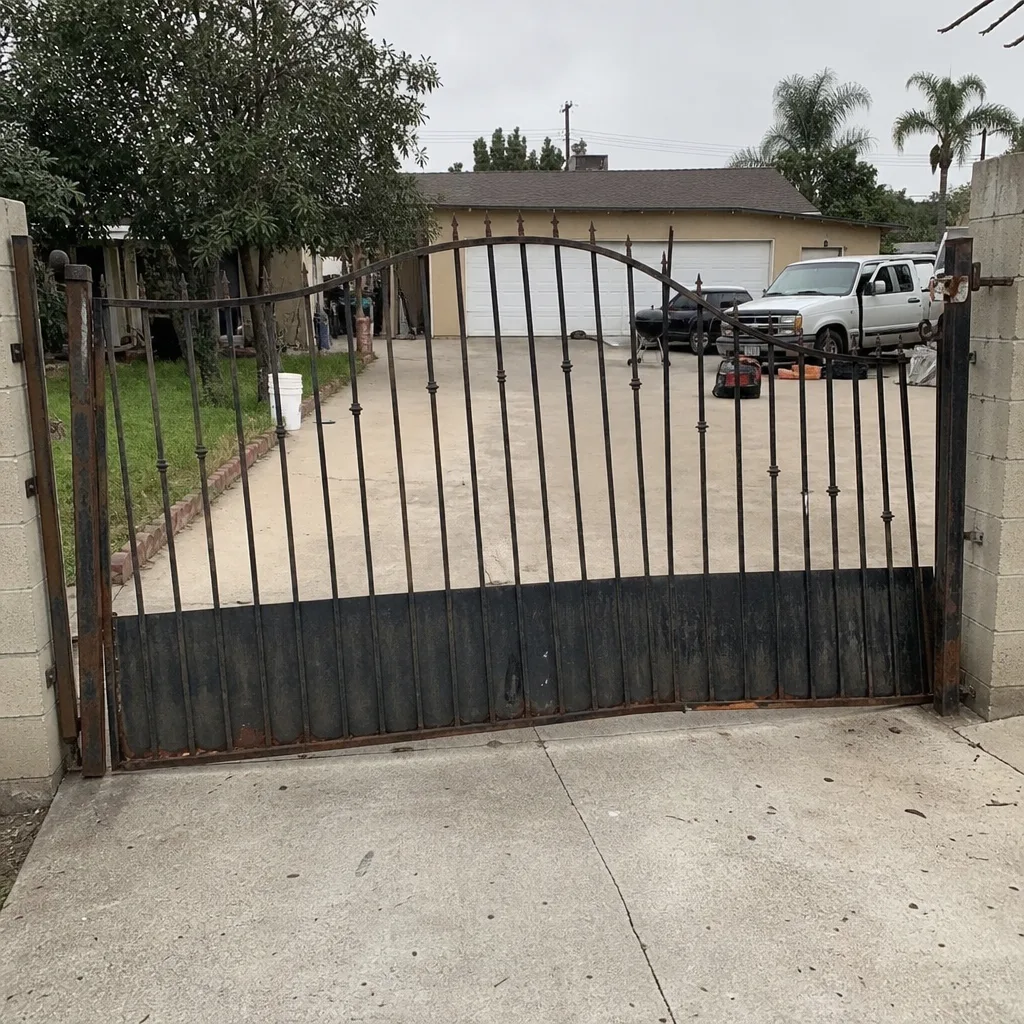 Before
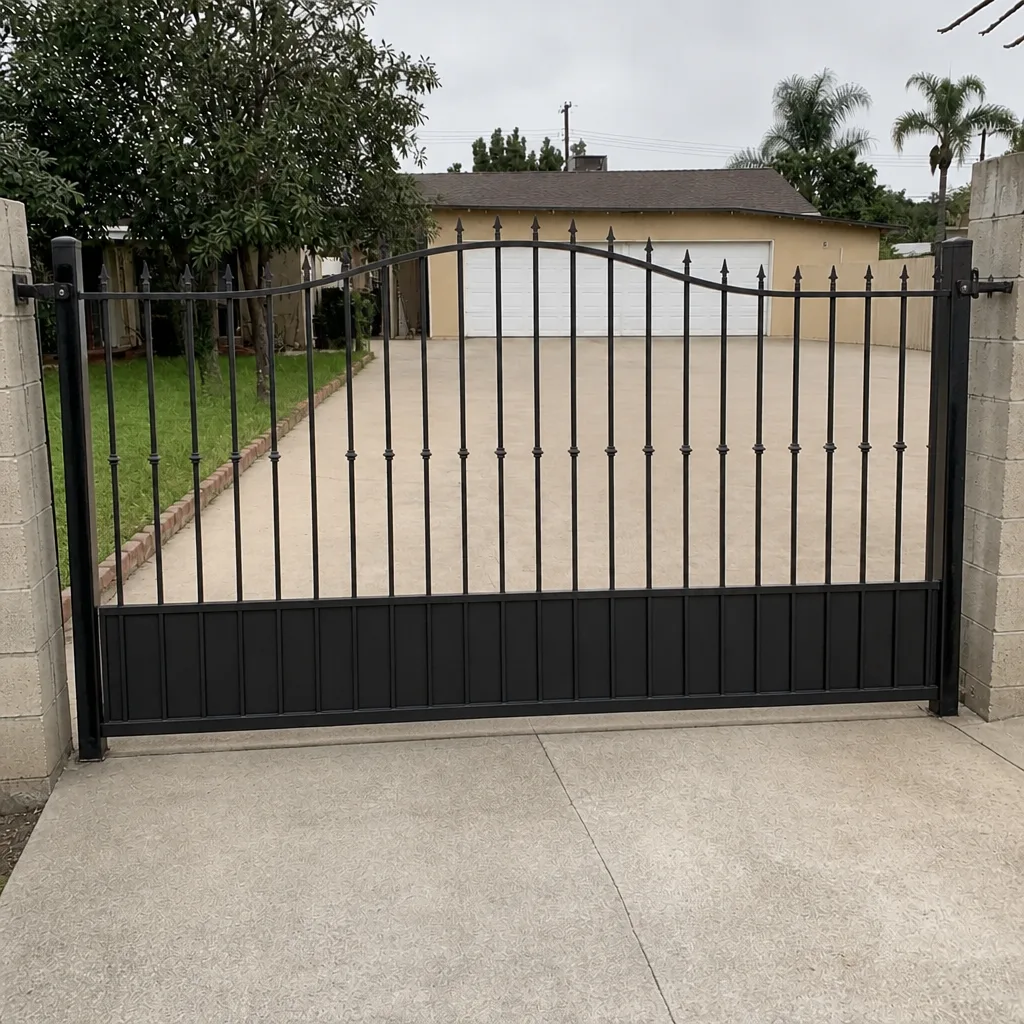 After
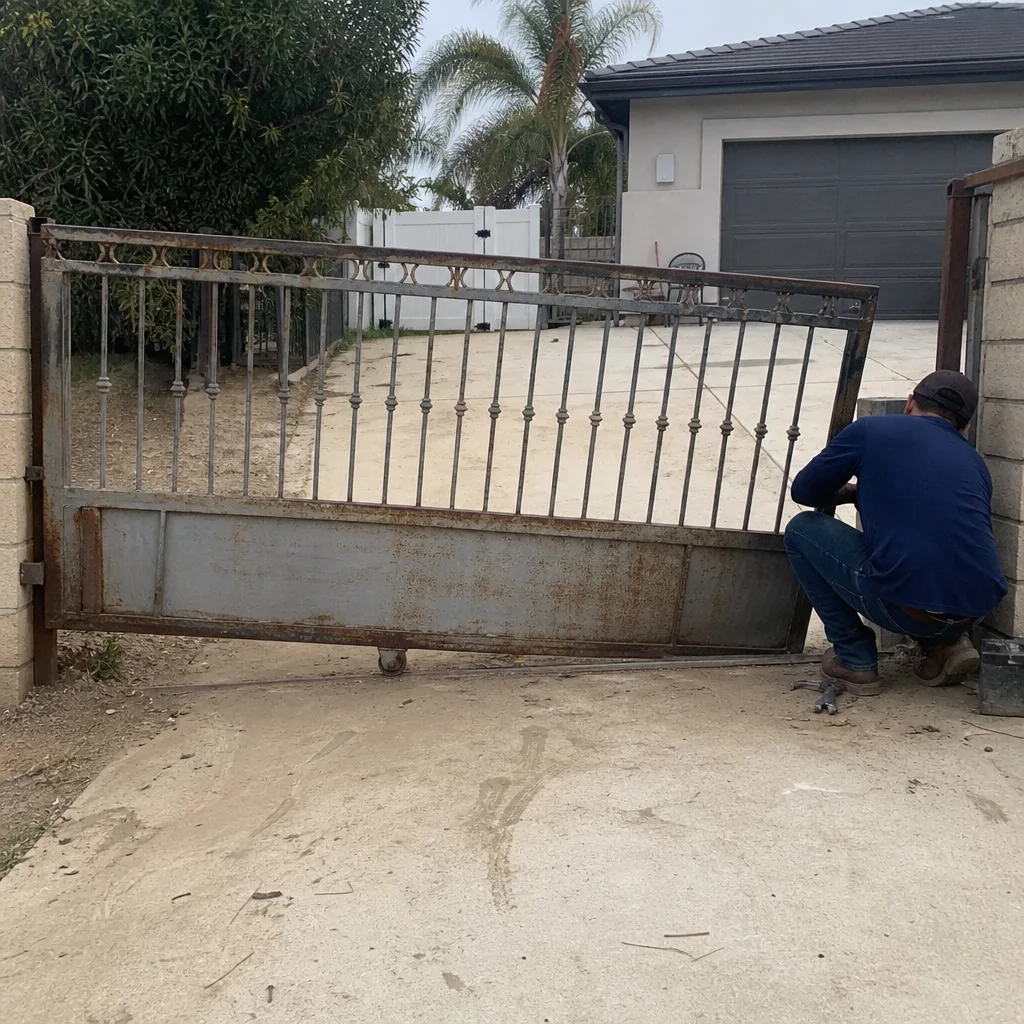 Before
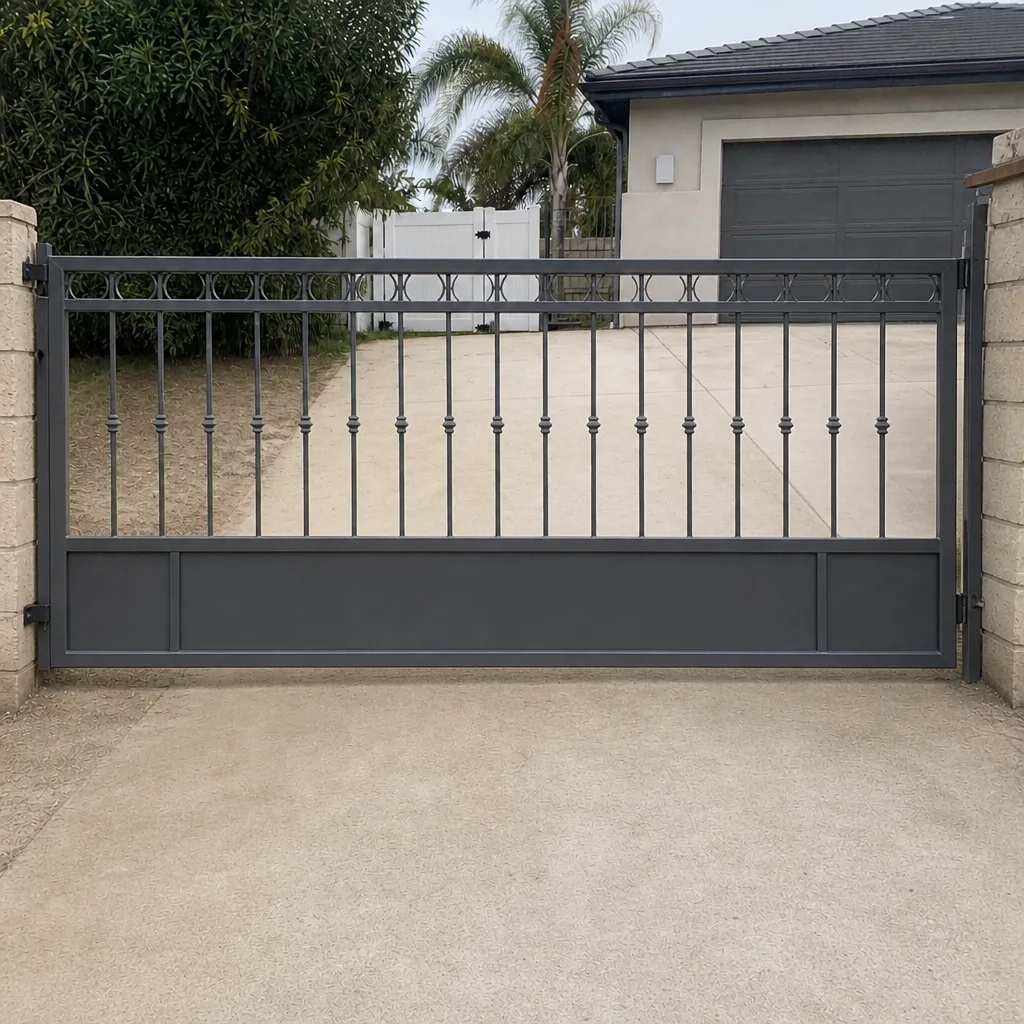 After
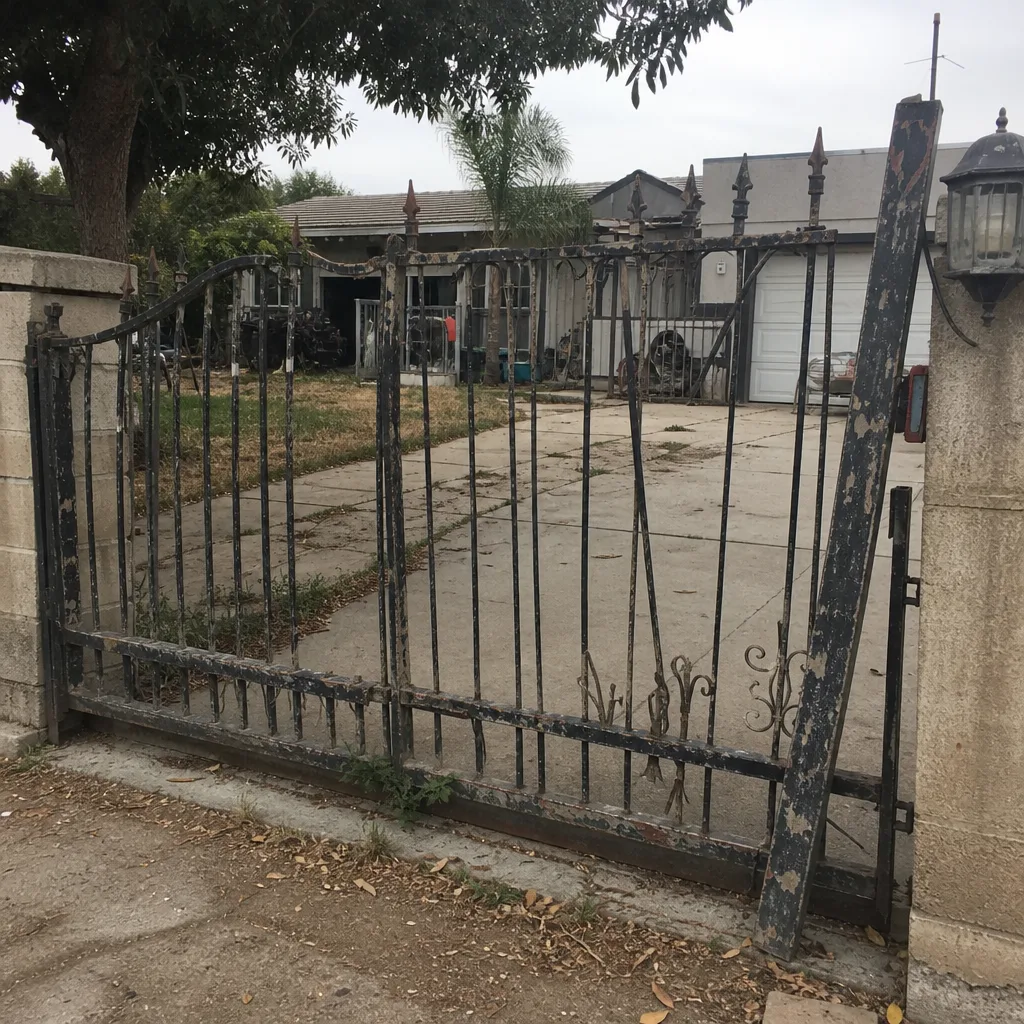 Before
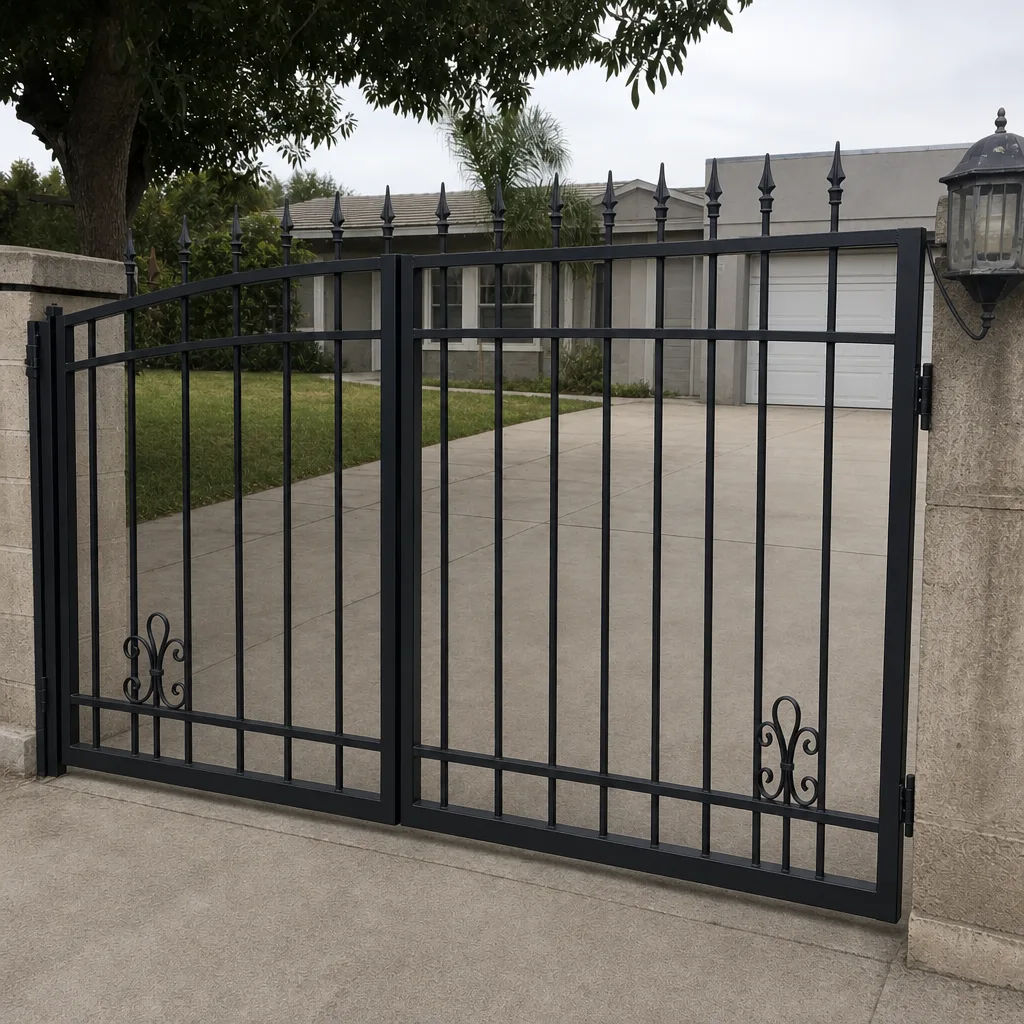 After
Frequently Asked Questions
Lubricate roller hinges and chain drives every 3 to 4 months in Eastvale, with heavier applications in May and November. The dry, dusty climate means lubrication breaks down or gets contaminated faster than in coastal areas. Call (855) 601-8166 for a maintenance visit and we’ll handle the full lubrication schedule for you. Estimates are free.
September failures are the result of cumulative heat stress from June, July, and August. The motor, control board capacitors, and lubricant all degrade under sustained high temperatures. By September, a marginal component that survived the first heat wave has finally reached its limit. That’s why pre-summer maintenance in May is so important in Eastvale.
Yes, you can test a residential backup battery by cutting power at the breaker and cycling the gate on battery alone. If it can’t manage 5 to 10 full cycles or moves noticeably slower, the battery is degrading. For commercial systems or if you’re not comfortable working near the operator, call (855) 601-8166 and we’ll test it. We answer 24/7.
Heat itself doesn’t void the warranty, but skipped maintenance does. Manufacturers like LiftMaster, Mighty Mule, and FAAC require periodic lubrication and inspection as a condition of coverage. If a neglected gate creates excess motor load and the motor fails, the warranty claim can be denied. Document your maintenance or use a professional who does.
HOAs should document the inspection date, gate cycle count, observations, corrective actions, parts replaced with serial numbers, safety system test results, and photos. This log is the property’s liability protection if the gate ever injures someone and the maintenance history becomes evidence.
Gate maintenance in Eastvale is quoted per job after we look at the gate system, the number of gates on the property, and the operator brand. Residential maintenance visits typically cost less than commercial multi-gate service contracts. The written estimate sets the final price before any work begins. Call (855) 601-8166 for a free estimate.
The Bottom Line
A gate maintenance schedule for Eastvale isn’t the one in your operator manual. It’s a local calendar built around triple-digit summers, Santa Ana dust, and winter rain. The core tasks are simple: lubricate hinges and chains every 3 to 4 months, inspect the operator and safety systems every 6 months, test battery backup in May and October, and do a full system audit each winter. Skip the May preparation and you’re rolling the dice on September. The work is inexpensive compared to motor replacement. Gate-only specialists mean the person checking your gate knows your specific brand, whether it’s a Mighty Mule on a backyard gate or a FAAC on a commercial entry. The schedule you keep today is the repair bill you don’t pay this fall.
Written by the team at Gate Repair Eastvale, serving Eastvale since 2014.