
Last updated November 4, 2026
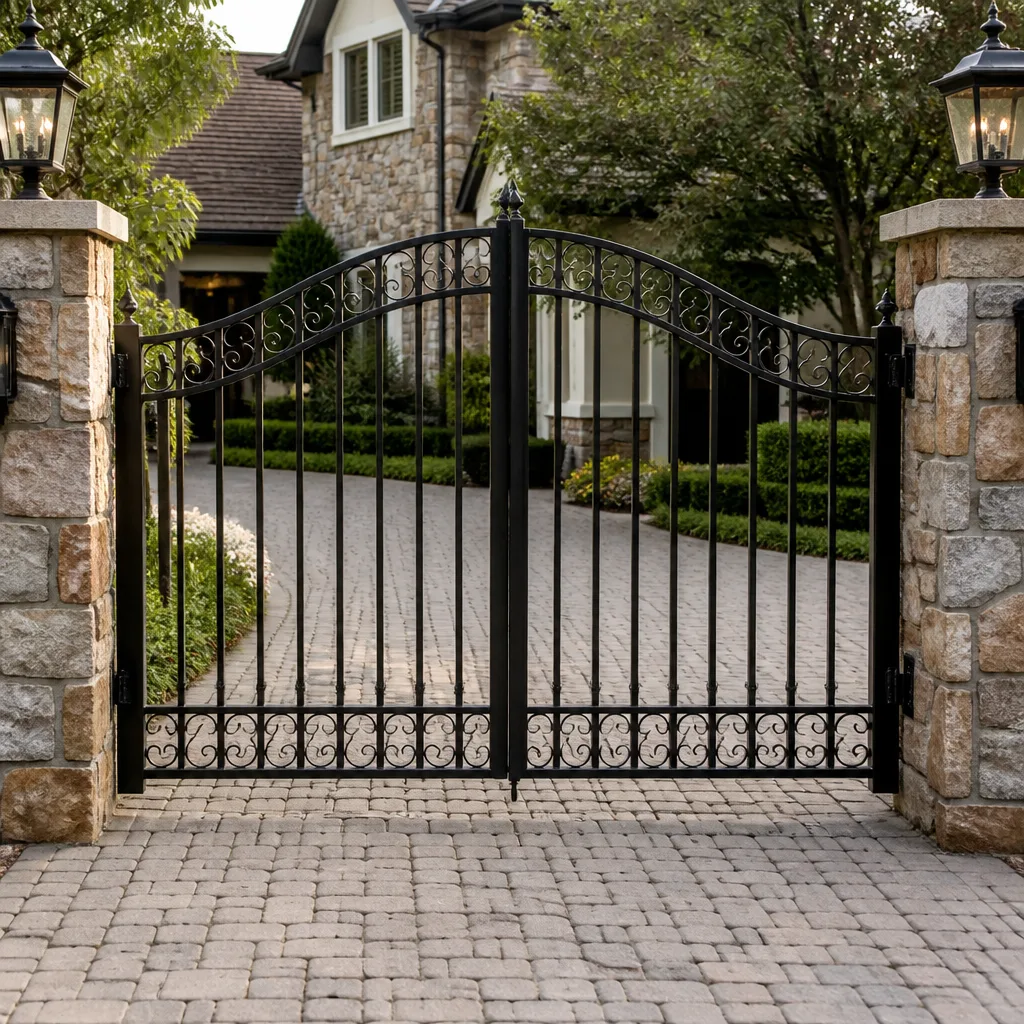 Wrought iron
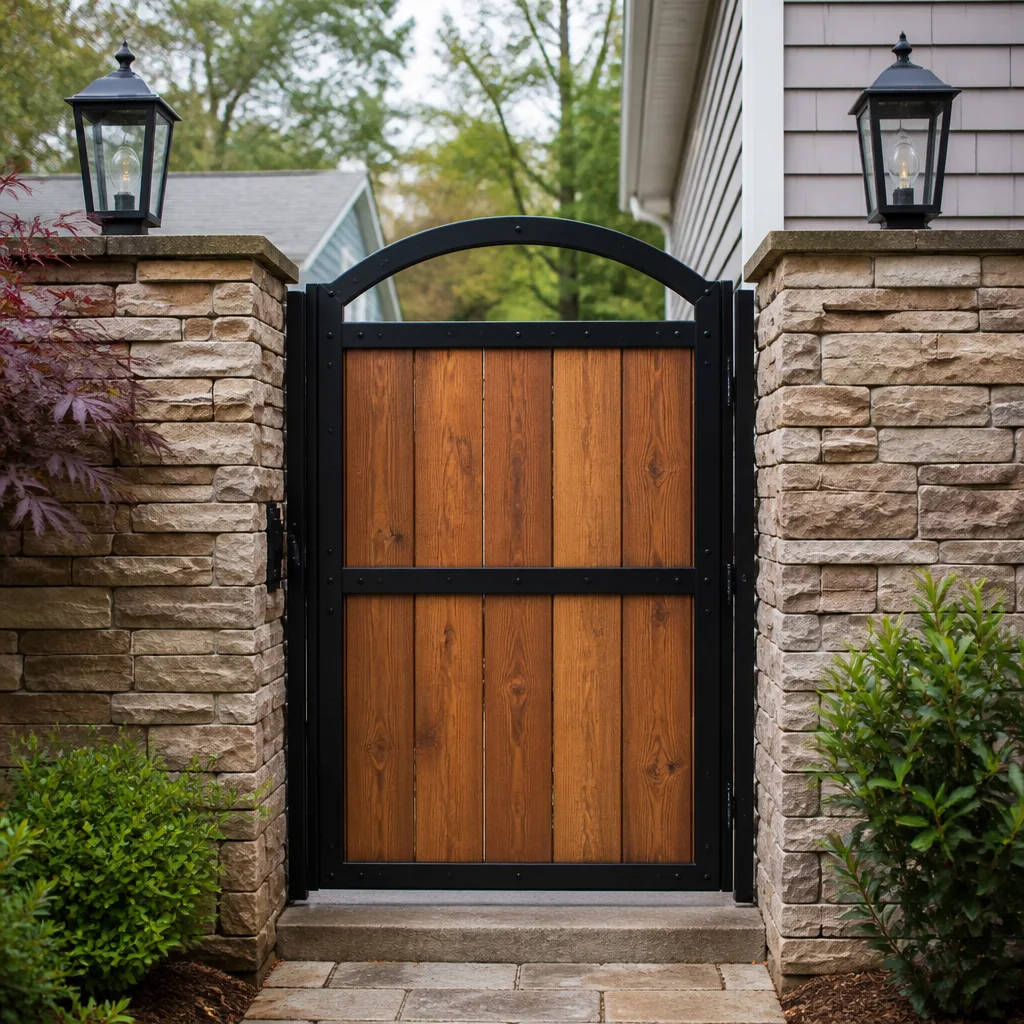 Wood & steel frame
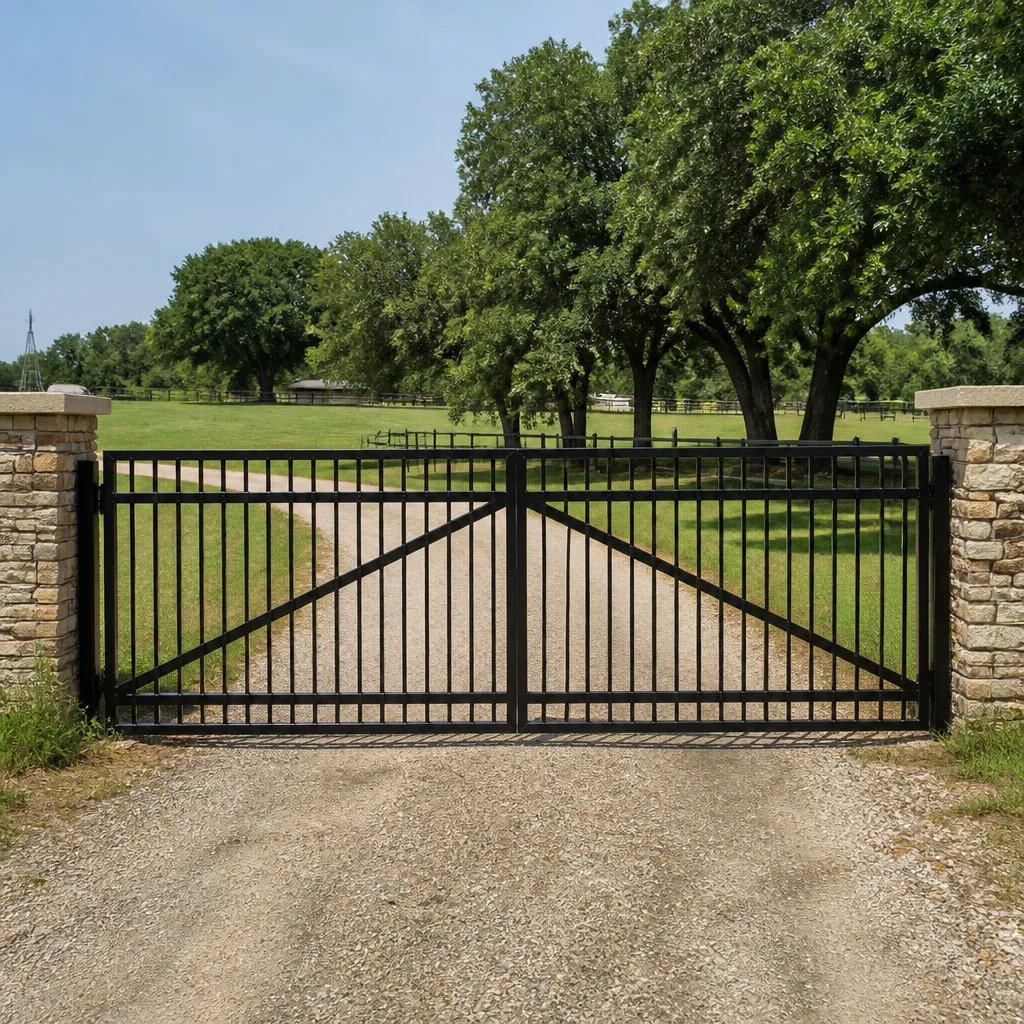 Farm & ranch
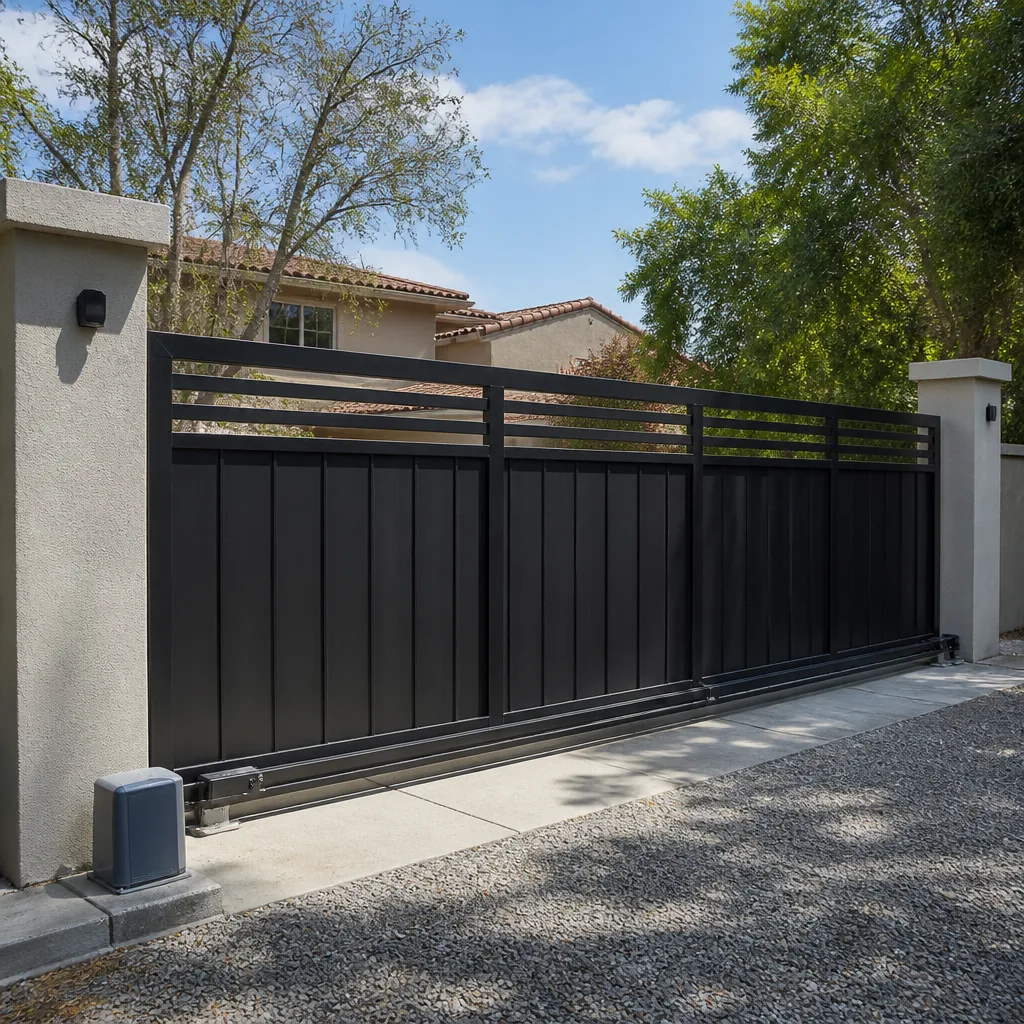 Sliding driveway gates
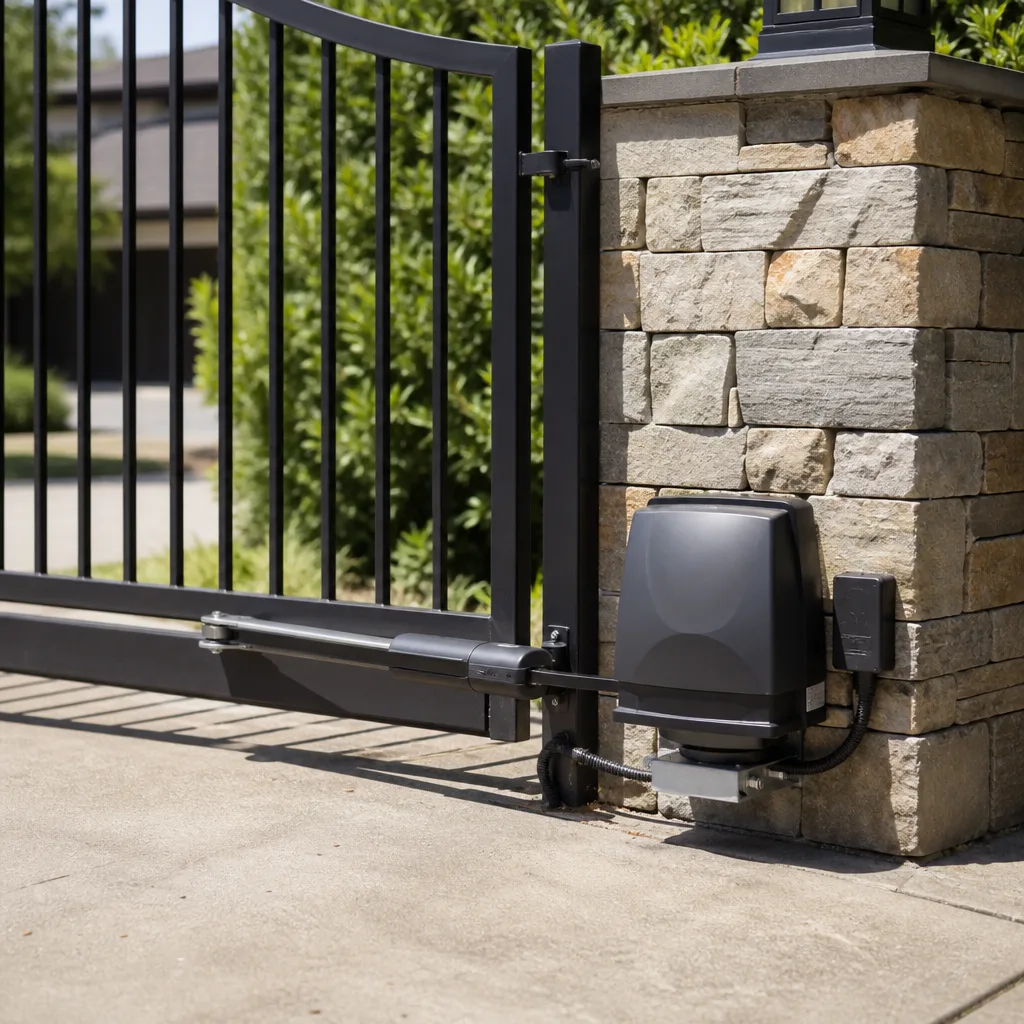 LiftMaster operators
Free on-site gate assessment - hinges, posts, and your LiftMaster or Nice gate operator checked before anything is quoted
The assessment is free and the quote is the invoice.
Get your free estimateChoosing the Right Gate Repair Brand: A Buyer’s Guide for Eastvale
The gate brand that’s perfect for a lightly-used single-family driveway in Eastvale will fail within two years on a high-traffic HOA entry, and the spec sheet won’t tell you that. The duty cycle rating will. Most buyers compare horsepower and price, then wonder why a “powerful” opener burns out on a gate that cycles 300 times a day. This guide explains how to read the ratings that actually matter, which brands hold up in Inland Empire heat, and how to match a brand to the way your Eastvale property actually uses its gate.
Quick Answer
The best gate brand in Eastvale depends on cycles per day and property type. For a standard single-family driveway, LiftMaster, Mighty Mule, and Ghost Controls offer reliable residential operators with solid parts availability. For HOA entries, apartment communities, and commercial properties that cycle more than 100 times daily, you need a commercial-rated system from FAAC, BFT, DoorKing, or Viking. At Gate Repair Eastvale, we repair all nine of these brands and can tell you honestly which one fits your gate’s workload.
Styles & brands we work with
- Wrought iron
- Wood & steel frame
- Farm & ranch
- Sliding driveway gates
- LiftMaster operators
Table of Contents
- The Spec That Actually Predicts Failure: Duty Cycle
- How Eastvale Heat Separates Good Gate Brands from Bad Ones
- Brand Recommendations by Property Type
- Parts Availability in the Inland Empire: Why It Changes Repair Costs
- The Real Five-Year Cost of a Gate System
- What “Electric” Gate Repair Actually Covers
- Residential vs. Commercial Gate Brands: Where the Line Really Is
- Common Mistakes to Avoid
- When to Call a Professional
- Frequently Asked Questions
The Spec That Actually Predicts Failure: Duty Cycle
Duty cycle is the percentage of time a gate operator can run before it needs to rest. It tells you how many open-close cycles the motor is built to handle per hour and per day. This single rating matters more than horsepower, more than brand name, and more than price, because it determines whether the motor will last five years or fail in fourteen months.
Here’s the plain-English version:
- Residential duty cycle: Built for 10 to 20 cycles per day. Think a single home where the gate opens when you leave for work and when you come home, with a few visitor openings in between. Brands like Mighty Mule and Ghost Controls are designed for exactly this pattern and they do it well.
- Commercial duty cycle: Built for 100-plus cycles per day, often continuous duty. Think an HOA entry serving 80 homes, or an apartment complex where residents and deliveries cycle the gate every few minutes during rush hours. FAAC, BFT, DoorKing, and Viking build for this, and their motors cost accordingly.
- Industrial duty cycle: Continuous operation. Think distribution centers or parking structures. These systems are specified by engineers, not picked from a catalog.
To figure out what your Eastvale property needs, count the actual trips through the gate on a normal weekday. If you live on a single lot and the gate opens maybe 15 times total, a residential operator is fine. If your HOA entry in the neighborhoods around Eastvale opens 200 times between 6am and 9am alone, a residential motor will overheat, trip its thermal protection, and eventually burn out its capacitor or windings. That’s not a defect; that’s the wrong tool for the job.
Our technicians at gate repair calls throughout Eastvale regularly see residential openers installed on HOA entries because the bid was lower. The repair bill within two years wipes out the savings. Duty cycle is the first thing we check before recommending any repair or replacement.
How Eastvale Heat Separates Good Gate Brands from Bad Ones
Eastvale summers routinely cross 100°F. The control board inside your gate operator sits in a metal housing, often in direct sun, with ambient temperatures inside that box reaching 140°F or more. Some operator brands are tested in controlled lab conditions at 72°F and their components degrade quickly in real Inland Empire conditions. Others are built for Mediterranean or desert climates and shrug off the heat.
Here’s what heat actually does to a gate system:
- Capacitors fail first. Electrolytic capacitors have a rated lifespan that drops sharply above 85°F. A board with undersized or cheap capacitors will start clicking, fail to start the motor, or cause intermittent operation within a few Eastvale summers.
- Plastic gears and housings warp. Some budget residential operators use polymer gears that soften at sustained high temperatures. You hear a grinding sound and the gate moves sluggishly. That’s heat deformation, not normal wear.
- Thermal overload circuits trip more often. A motor that’s already running near its thermal limit from the air temperature has less headroom before it shuts down for self-protection. That’s why gates work fine in January and “randomly” stop in August.
In our experience across Eastvale, European automation brands like FAAC and BFT handle sustained heat well because their engineering assumes Mediterranean summers not unlike Riverside County’s. Linear and LiftMaster also build motors with adequate thermal margins for Southern California. Ghost Controls and Mighty Mule are straightforward about their residential positioning: they’re fine for a driveway gate that operates a few dozen times daily, but you should not push them beyond their rating in Eastvale’s summer conditions. If you need a gate that runs all day in August, budget for a commercial-rated motor with a metal gearbox and an aluminum housing.
Brand Recommendations by Property Type
Here’s the brand matrix we use when helping Eastvale customers choose a system. It’s based on how the gate is actually used, which matters more than any brand loyalty.
Single-family driveway, under 20 cycles per day
- Good choices: LiftMaster, Mighty Mule, Ghost Controls, Elite
- Why: These operators are affordable, widely stocked, and perfectly matched to light-duty residential use. Parts are easy to get in the Inland Empire, and any qualified gate technician knows them well.
- Watch for: If your driveway gate also serves a guest house, a granny flat, or a home business with steady visitor traffic, count the extra cycles. You may cross into a heavier duty rating without realizing it.
HOA entry, apartment building, or multi-tenant property
- Good choices: FAAC, BFT, DoorKing, Viking
- Why: These are commercial-grade operators built for 100-plus cycles per day. They use hydraulic or heavy-duty electromechanical drives, metal gears, and control boards rated for continuous exposure. They’re the standard on multi-family and community gates throughout Eastvale for good reason.
- Watch for: Commercial operators need more than just a bigger motor. The access control system, safety loops, and edge sensors all have to be sized for the traffic load too. A cheap residential keypad on a commercial gate will fail long before the operator does.
Commercial or industrial property, constant traffic
- Good choices: FAAC, BFT, Viking
- Why: These brands dominate parking structures, distribution yards, and high-volume commercial entries. Their engineering assumes continuous operation. Hydraulic FAAC operators in particular can run all day without overheating concerns when properly maintained.
- Watch for: At this level, programming matters as much as hardware. A misconfigured limit switch or soft-start setting causes premature wear even on a quality operator. This is where electric gate repair expertise from a gate-only specialist matters.
Parts Availability in the Inland Empire: Why It Changes Repair Costs
A gate brand is only as good as its parts supply chain. When an operator fails, the cost of the repair includes the part, the labor, and the days you wait without a working gate. That third cost is invisible in the brochure and enormous in real life, especially when the gate secures an apartment complex or a commercial yard.
- Brands with strong local and regional distribution: LiftMaster and Linear parts are widely stocked by distributors in Riverside, Ontario, and throughout Southern California. A common control board or limit switch can often be sourced the same day. DoorKing is also well-supported in California, as the company has deep roots in the state’s access control industry.
- Brands that may require out-of-state shipping: FAAC and BFT are excellent systems, but certain components are warehoused on the East Coast or shipped from European distribution centers. A specialized hydraulic pump or a specific BFT control board can take several days to arrive. The operator itself may still be the right choice, but you should know the repair timeline risk before you buy.
- DIY-positioned brands: Mighty Mule and Ghost Controls sell through retail channels, so common parts like remotes and photoelectric sensors are easy to find. But less common parts, like a specific control board revision, may mean waiting on an online order.
Our advice for Eastvale property owners: before you commit to a gate brand, ask your gate company which parts they keep on their truck and which ones they have to order. A brand with scarce parts support turns a $400 repair into a two-week security gap. That’s a real cost, even if it never appears on an invoice.
The Real Five-Year Cost of a Gate System
Purchase price is the smallest part of what a gate actually costs. Over five years, the true cost is purchase price plus repair frequency plus parts cost trajectory plus downtime. Here’s how that breaks down by brand tier, based on what we see across Eastvale service calls.
Budget residential tier (Mighty Mule, Ghost Controls, entry-level Elite)
- Typical purchase price: Lower upfront cost, which makes these attractive for a single-family driveway.
- Five-year repair outlook: One to two minor repairs, usually a sensor, remote board, or capacitor. Parts are affordable and often available locally.
- When it’s the right call: A private driveway with under 20 cycles per day, a homeowner willing to replace a $150 part every few years, and no major security concerns if the gate is down for a day.
- The risk: Pushing these operators beyond their duty cycle shortens their life to two or three years. The failure pattern is repetitive: motor overheats, board caps fail, and the owner faces a full replacement rather than a repair.
Mid-tier commercial (LiftMaster commercial line, Linear commercial, DoorKing)
- Typical purchase price: Moderate. You pay for a heavier gearbox, better board, and a real thermal margin.
- Five-year repair outlook: One significant repair, often a limit switch, loop detector, or access control component. The operator itself should still be running strong at year five with basic maintenance.
- When it’s the right call: HOA entries with 40 to 120 cycles per day, apartment buildings, and commercial properties that need dependable access without a commercial-grade price tag.
- The risk: Underbuying at this tier by picking a residential operator to save money. That’s the most expensive mistake we see in Eastvale.
Premium commercial tier (FAAC, BFT, Viking)
- Typical purchase price: Highest upfront cost. You’re buying industrial engineering, hydraulic or heavy electromechanical drives, and components rated for continuous duty.
- Five-year repair outlook: Very low repair frequency. When these systems do need work, it’s usually the access control peripherals or a component that’s simply reached the end of its service life. Parts can be more expensive and sometimes slower to arrive, but you pay for that infrequently.
- When it’s the right call: High-traffic commercial properties, luxury HOAs that cannot tolerate downtime, and any gate that cycles more than 120 times daily.
- The risk: Paying for premium engineering on a lightly-used driveway. That’s overkill, not a bad decision, but the money is wasted if the gate opens ten times a day.
The pattern is consistent: match the operator to the duty cycle, and five-year costs stay predictable. Mismatch them, and the cheap operator becomes the most expensive one. We quote the written estimate before any work starts, so the number you approve is the number you pay.
What “Electric” Gate Repair Actually Covers
The term “electric gate” gets used loosely, but it means something specific to a gate technician. An electric gate has a motorized operator that receives a command from a remote, keypad, phone system, or access reader, then moves the gate leaf and confirms its position through limit switches and safety sensors. Most gate failures we see in Eastvale are not mechanical hinge or wheel problems. They’re electric system failures: a dead control board, a faulty loop detector, a misaligned photoelectric sensor, or a motor capacitor that’s given up.
Here’s what a proper electric gate repair actually involves:
- Diagnosing the control board. The board is the brain. It interprets commands, manages the soft-start and soft-stop motor control, and monitors the safety inputs. A board that’s partially failed can behave erratically: the gate opens but won’t close, or responds to one remote but not another.
- Testing the safety loops and sensors. Vehicle loop detectors buried in the driveway and photoelectric sensors on the gate posts are safety devices first and convenience features second. When they fail, the gate may refuse to close or may reverse for no visible reason. A technician who only knows mechanics will chase this problem for hours.
- Checking the motor and capacitor. Single-phase motors use capacitors to start and run. A weak capacitor makes the motor hum, buzz, or hesitate. This is a common failure in Eastvale summers and an easy fix for a technician who carries the right part.
- Verifying access control integration. On apartment and commercial gates, the operator has to work with the property’s telephone entry, card reader, or cellular system. Integration faults look like gate faults, but the operator is fine and the access hardware is the problem.
Electric gate repair is core to what we do, not an add-on. It’s the main reason our team runs electric gate repair calls across Eastvale every week: the wiring, the motor, the control board, the sensors, all diagnosed as one system. From the motor to the hinge.
Residential vs. Commercial Gate Brands: Where the Line Really Is
The line between residential and commercial gate systems is not the brand name on the housing. It’s the duty cycle, the weight of the gate leaf, and the safety requirements of the site. Some brands sell only residential lines. Some sell both, with very different engineering in each line. And a few brands focus almost entirely on commercial and industrial work, which is why some local generalists won’t touch them: they don’t see enough of those systems to know them well.
What actually separates a residential operator from a commercial one:
- Motor type. Residential operators usually use AC induction or DC motors with plastic or light metal gear reduction. Commercial operators use hydraulic pumps, heavy electromechanical drives, or three-phase motors with metal gearboxes built to run hot and keep running.
- Control board sophistication. Commercial boards have more inputs for safety loops, more programmable settings, and better heat-tolerant components. A Viking or DoorKing board has features a Mighty Mule board simply doesn’t need.
- Safety system compatibility. Commercial properties and HOAs in Eastvale generally require vehicle loop detectors, photoelectric sensors, and sometimes edge sensors on the gate leaf. These have to integrate with the operator’s control logic. Residential openers often have minimal safety inputs.
- Access control expectations. A residential gate opens with a remote or a keypad. A commercial gate integrates with telephone entry, card readers, vehicle transmitters, and sometimes cellular access apps. The operator has to talk to all of it.
If you’re not sure which category your property falls into, count the cycles and think about who uses the gate. If strangers use it daily, if the HOA relies on it for access control, or if the gate protects shared property, treat it as a commercial system regardless of brand. Residential or commercial, we’ve seen that system before.
Common Mistakes to Avoid
- Buying by horsepower alone. A 1-horsepower residential operator will not outlast a 1/2-horsepower commercial operator if the commercial unit is built for 100 cycles a day and the residential one for 15. Horsepower sells motors; duty cycle predicts lifespan.
- Ignoring parts availability. An operator that takes three days to get parts for is a security problem in Eastvale, where the gate may be the only thing between your property and street traffic. Ask about parts before you buy.
- Putting a residential opener on an HOA entry. The upfront savings evaporate within two years. We see this pattern constantly: the board fails in a heat wave, the HOA needs it fixed immediately, and the replacement is a commercial operator anyway. Buy it once.
- Skipping safety loops because they’re “optional.” On any shared gate, vehicle loops prevent the gate from closing on a car. On a residential driveway, they prevent your own gate from damaging your own car. They’re not optional accessories. In Eastvale, where many driveways slope, a gate that closes too early and clips a car is a predictable failure of a missing loop system.
- Choosing a brand no local technician knows. An obscure European brand might have excellent engineering and zero support in Riverside County. You’ll wait longer and pay more for every repair. The best brand is the one your local gate specialist can fix quickly.
- Assuming a gate failure is always the motor. More often it’s a sensor, a loop, a capacitor, or a control board. Replacing the operator without diagnosing the failure means paying for a new motor that doesn’t solve the problem. The diagnosis comes first.
- Treating maintenance as optional. Grease wears out, bolts loosen, sensors drift. A $200 service visit every couple of years catches a failing hinge before it destroys a $2,000 operator. For commercial gates in Eastvale with high cycle counts, a single annual check is cheap insurance.
When to Call a Professional
If your gate opens but won’t close, closes but won’t open, or moves halfway and reverses, call a gate specialist before you keep pressing the remote. Repeating the cycle on a failing operator damages the motor and the board, turning a $300 sensor repair into a $1,500 replacement. If you hear grinding, buzzing, or a humming sound with no movement, the motor capacitor or gear train is failing and needs attention quickly. And if your gate hit a car or a person, don’t reset it and hope: the safety system must be diagnosed and corrected before the gate touches another cycle.
We work on your brand, whichever of the nine it is. Gate Repair Eastvale offers free estimates in Eastvale. Call (855) 601-8166. We answer 24/7. Fast dispatch from 7am to 7pm, Sunday through Friday.
Frequently Asked Questions
For residential driveways in Eastvale with under 20 cycles per day, LiftMaster and Elite are the most dependable choices with good local parts support. For HOA and commercial entries that cycle more than 100 times daily, FAAC, BFT, DoorKing, and Viking are the reliable options because they’re engineered for that workload. The most reliable brand is the one sized correctly for your gate’s actual cycle count and gate leaf weight. Call (855) 601-8166 and we’ll help you match the brand to the job.
Gate repair in Eastvale varies widely by what failed and which brand you own. A simple sensor replacement or remote programming costs significantly less than a commercial control board for a FAAC or Viking operator. The written estimate sets the price before any work begins, so you’re never surprised by the invoice. Call (855) 601-8166 for a free estimate on your specific system.
Yes. Our technicians can identify most gate brands on sight, and the brand-agnostic diagnosis means we work from the system in front of us, not a preferred parts supplier. We’re fluent in nine brands: LiftMaster, FAAC, BFT, Linear, Viking, Ghost Controls, DoorKing, Elite, and Mighty Mule. If your gate isn’t one of those, we’ll still diagnose it and give you an honest answer about parts and repair feasibility.
A residential gate in Eastvale should be checked every one to two years, and a commercial or HOA gate should be serviced once a year minimum. The summer heat accelerates capacitor aging and sensor drift, so an annual check before the hottest months is smart. Service catches loose hardware, worn hinges, and drifting sensors before they cause a breakdown. Maintenance with us is a one-time visit priced per job after we look at the gate.
That’s a classic heat-related failure pattern we see throughout Eastvale summers. The control board or capacitor works when ambient temperatures are moderate, then fails when the sun has been on the operator housing for a few hours. It usually points to a board or capacitor near the end of its life, not a motor failure. A proper diagnosis identifies the heat-sensitive component and replaces it before the gate quits completely.
Most cities require a permit for new gate installations, especially when electrical work is involved, but the rules vary by city and by the scope of the work. Ask your city’s building department directly. For operator replacement on an existing gate, permits are often simpler, but you should still confirm. The best practice is to check with the city before the install date so there are no surprises.
The Bottom Line
The right gate brand for your Eastvale property depends on duty cycle, heat tolerance, parts availability, and your five-year cost tolerance. A residential operator on a single-family driveway is a fine choice; that same operator on an HOA entry is a future repair bill waiting to happen. European and commercial brands like FAAC and BFT excel at continuous duty but may mean slower parts. LiftMaster and Linear give you local support and solid engineering. Match the operator to the workload, and the brand question mostly answers itself.
Written by the team at Gate Repair Eastvale, serving Eastvale since 2014.
See the difference
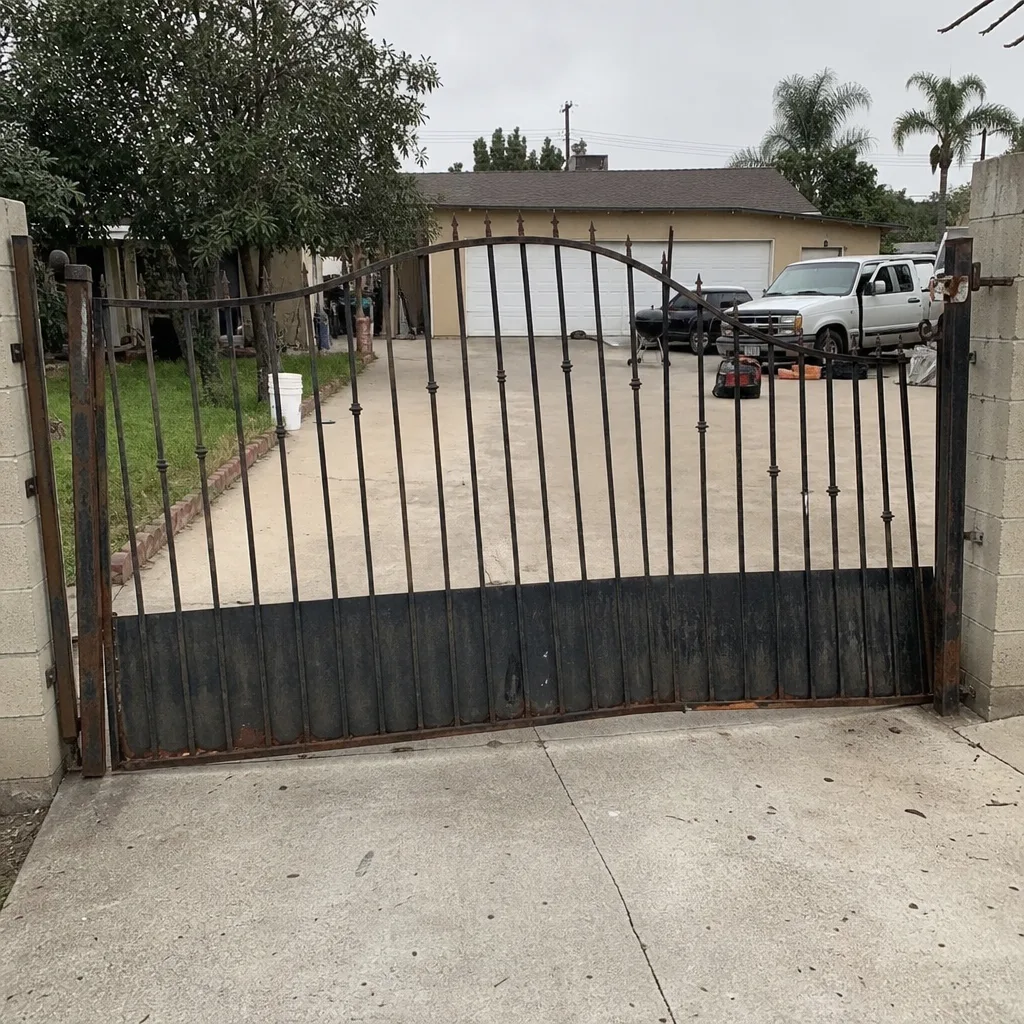 Before
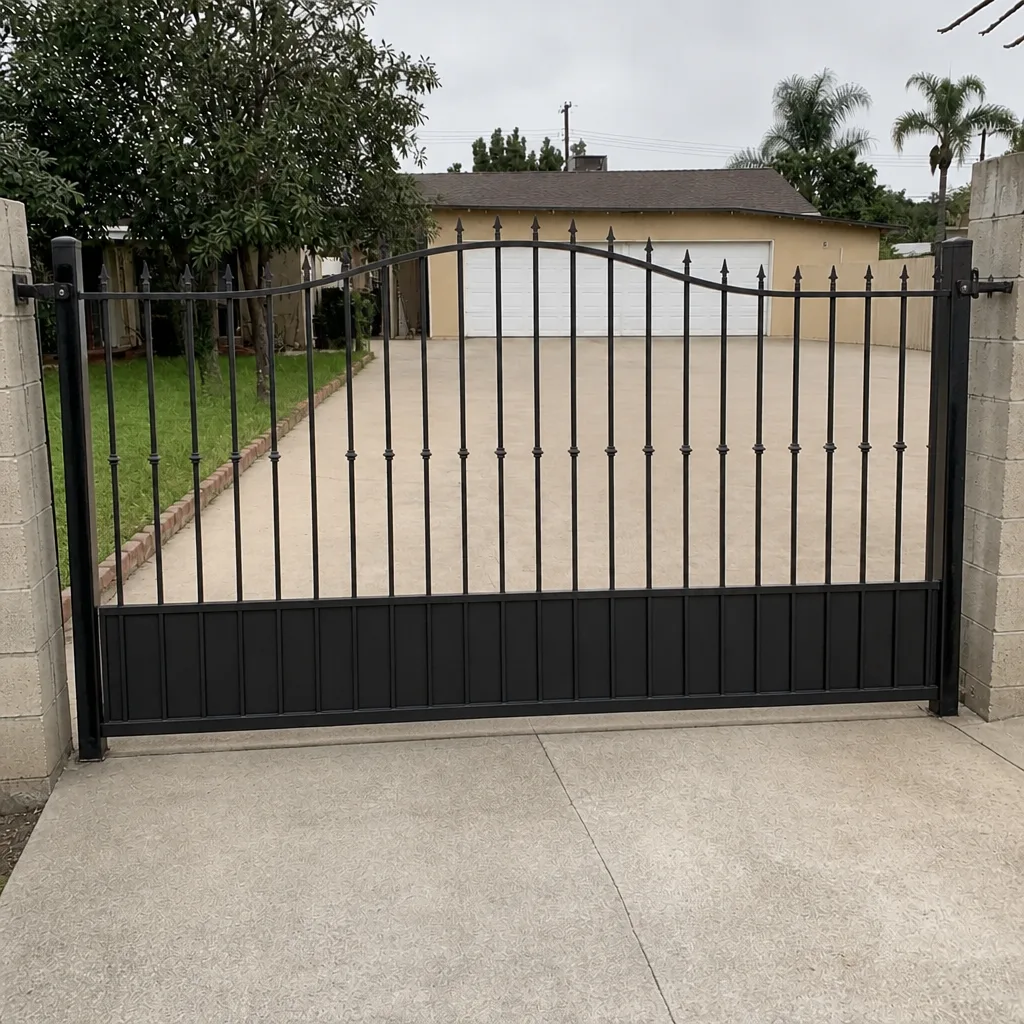 After
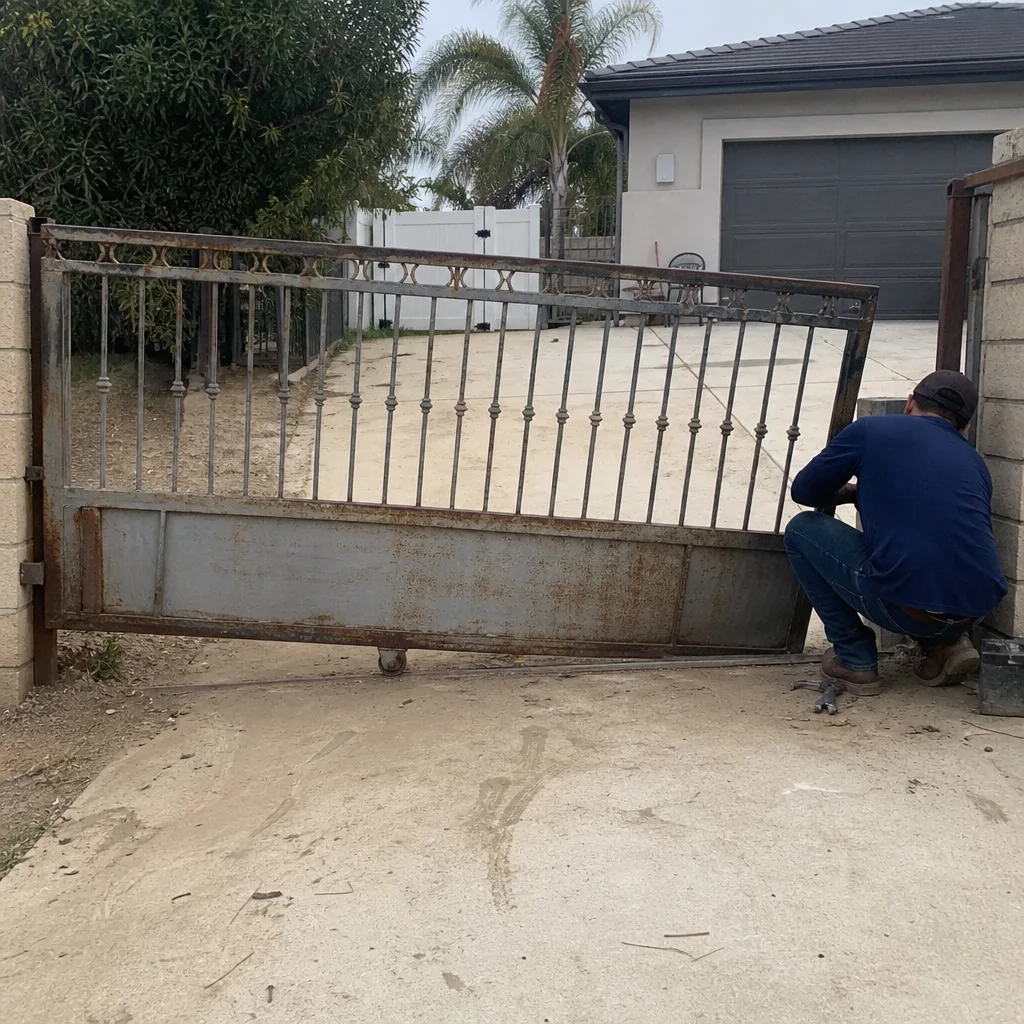 Before
 After
 Before
 After